In modern electronics and industrial systems, effective thermal management is critical for performance and reliability. Devices such as CPUs, power electronics, LED systems, and EV components generate significant heat during operation. Without proper cooling, overheating can lead to reduced efficiency, shorter lifespan, or even system failure.
This is where heat sinks and advanced solutions like heat pipe thermal modules come into play. But what exactly is a heat sink, and how do heat sink pipes work?
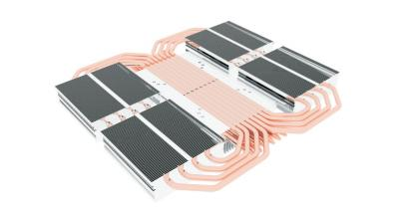
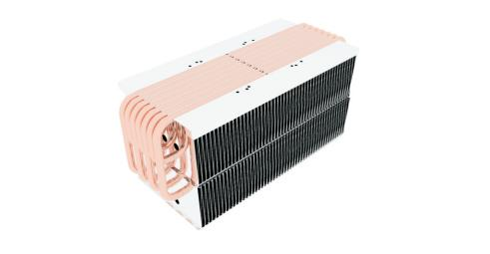
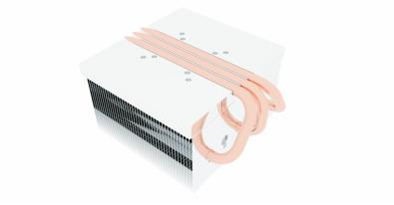
What Is a Heat Sink?
A heat sink is a passive heat dissipation device designed to absorb and release heat from electronic components into the surrounding environment.
It works by:
Conducting heat away from the heat source
Spreading heat across a larger surface area
Dissipating heat through air (natural or forced convection)
Heat sinks are typically made from:
Common Types of Heat Sinks
Each type is selected based on thermal performance requirements, cost, and structural design.
What Is a Heat Pipe?
A heat pipe is a highly efficient heat transfer device that uses a sealed tube filled with a working fluid to rapidly transfer heat from one location to another.
What Is the Purpose of a Heat Pipe?
The main purpose of a heat pipe is to:
Transfer heat quickly away from the heat source
Improve overall cooling efficiency
Enable heat dissipation over a larger area
Compared to traditional heat sinks, heat pipes can move heat much faster and more efficiently, making them ideal for high-power applications.
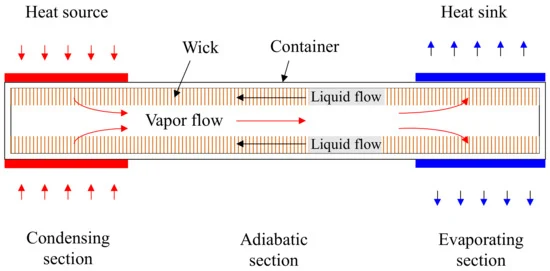 How Do Heat Sink Pipes Work?
Understanding how heat sink pipes work is key to understanding advanced cooling systems.
A heat pipe operates based on a continuous cycle:
1. Evaporation
Heat from the source causes the internal liquid to evaporate into vapor.
2. Vapor Flow
The vapor rapidly moves to the cooler end of the pipe.
3. Condensation
The vapor cools and condenses back into liquid, releasing heat to the heat sink fins.
4. Return Cycle
The liquid returns to the heat source via capillary action or gravity.
This cycle repeats continuously, allowing extremely efficient heat transfer.
This is why heat pipe heat sinks perform much better than traditional heat sinks in high thermal load conditions.
A heat pipe thermal module is an advanced cooling system that combines:
It is designed to handle high heat flux applications where standard heat sinks are not sufficient.
Key Advantages of Heat Pipe Thermal Modules
Extremely high thermal performance
Fast heat spreading
Suitable for compact designs
Supports high-power systems
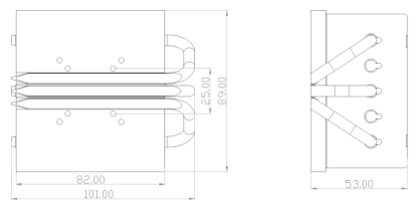
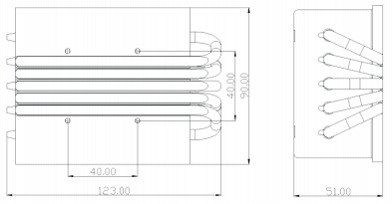
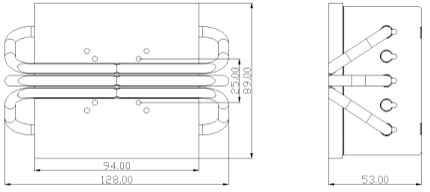
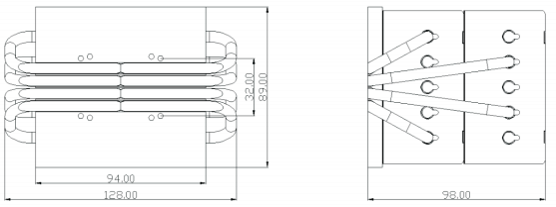
Types of Heat Pipe Solutions
1. Heat Pipe Heat Sink
A heat pipe heat sink integrates heat pipes directly into a heat sink structure.
Benefits:
Improved heat transfer efficiency
Better cooling performance than standard heat sinks
Widely used in CPUs, LEDs, and industrial electronics
2. Heat Sink With Heat Pipe
A heat sink with heat pipe is designed to enhance traditional cooling by adding heat pipe technology.
Best for:
3. Heat Pipe Assemblies
Heat Pipe Assemblies are customized combinations of:
Multiple heat pipes
Heat sinks
Mounting structures
They are tailored for specific applications such as:
Server cooling
Automotive electronics
Power modules
Heat Pipe Thermal Module Parts include:
Heat pipes
Fins
Base plates
Connectors
These components work together to form a complete cooling solution.
Heat pipe-based solutions are widely used in industries that require efficient cooling:
In these applications, heat pipe thermal modules are often the best solution for handling high thermal loads.
Why Choose Heat Sink With Heat Pipe Solutions?
Compared to traditional heat sinks, heat sink with heat pipe solutions offer:
Faster heat transfer
Improved thermal efficiency
Better performance in compact spaces
Higher reliability in high-power systems
This makes them an ideal choice for modern electronics and advanced industrial applications.
How to Choose the Right Heat Pipe Thermal Module?
When selecting a heat pipe thermal module, consider:
A professional heat sink manufacturer like KINGKA can provide customized solutions based on your specific requirements.

So, what is a heat sink and how do heat sink pipes work?
A heat sink dissipates heat into the air
A heat pipe transfers heat efficiently inside a sealed system
A heat pipe thermal module combines both for maximum performance
For high-performance applications, solutions like:
heat pipe heat sink
heat pipe assemblies
heat sink with heat pipe
are often the best choice.
As a professional manufacturer, KINGKA provides a full range of thermal solutions, helping customers achieve efficient and reliable heat management across various industries.