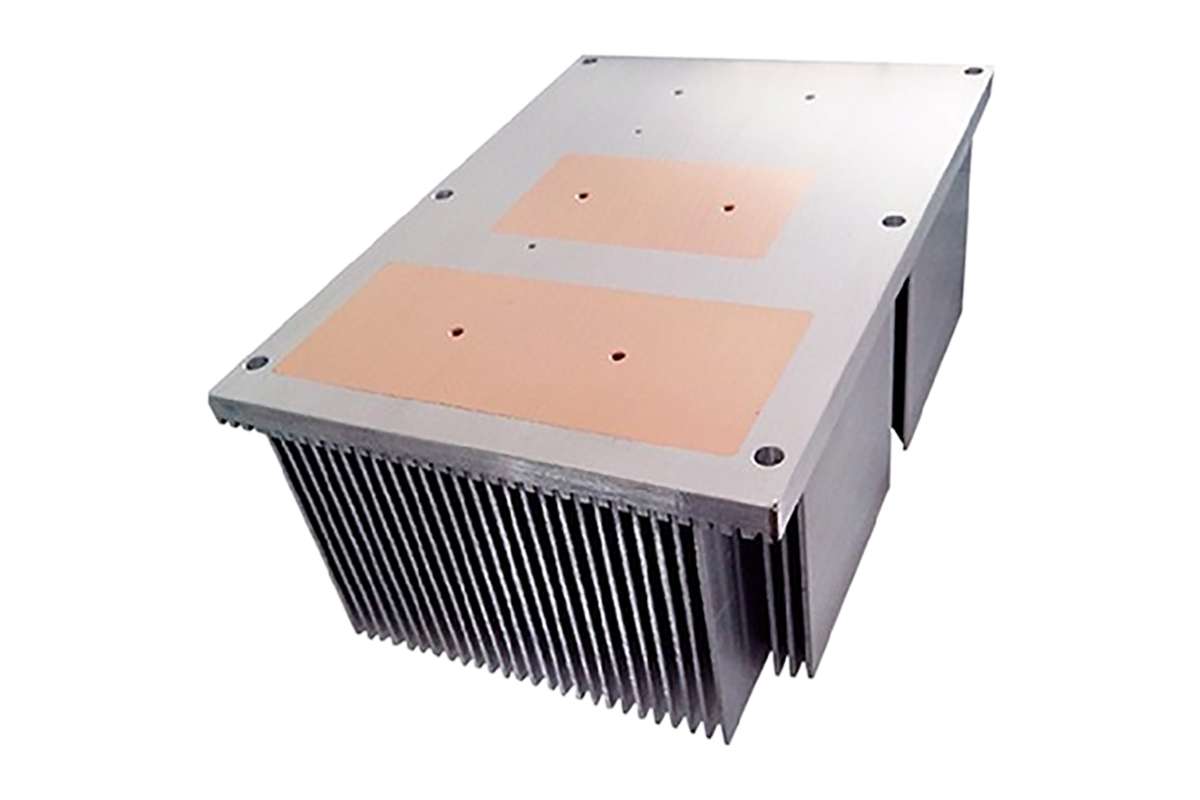
When buyers ask, “What is the best type of heat sink?”, the real answer is: the best heat sink depends on the thermal load, available space, airflow, weight target, and production budget. There is no single universal winner. In practical thermal design, manufacturers choose different structures for different jobs: skived fin heat sink for high fin density, Extrusion Heat Sink for cost-effective standard profiles, bonded fin heat sink for large surface area, cold Forging Heat Sink for compact high-performance shapes, heat pipe thermal module for very high heat loads, and die casted heat sink for complex integrated housings. KINGKA’s product range reflects exactly these mainstream thermal solution paths.
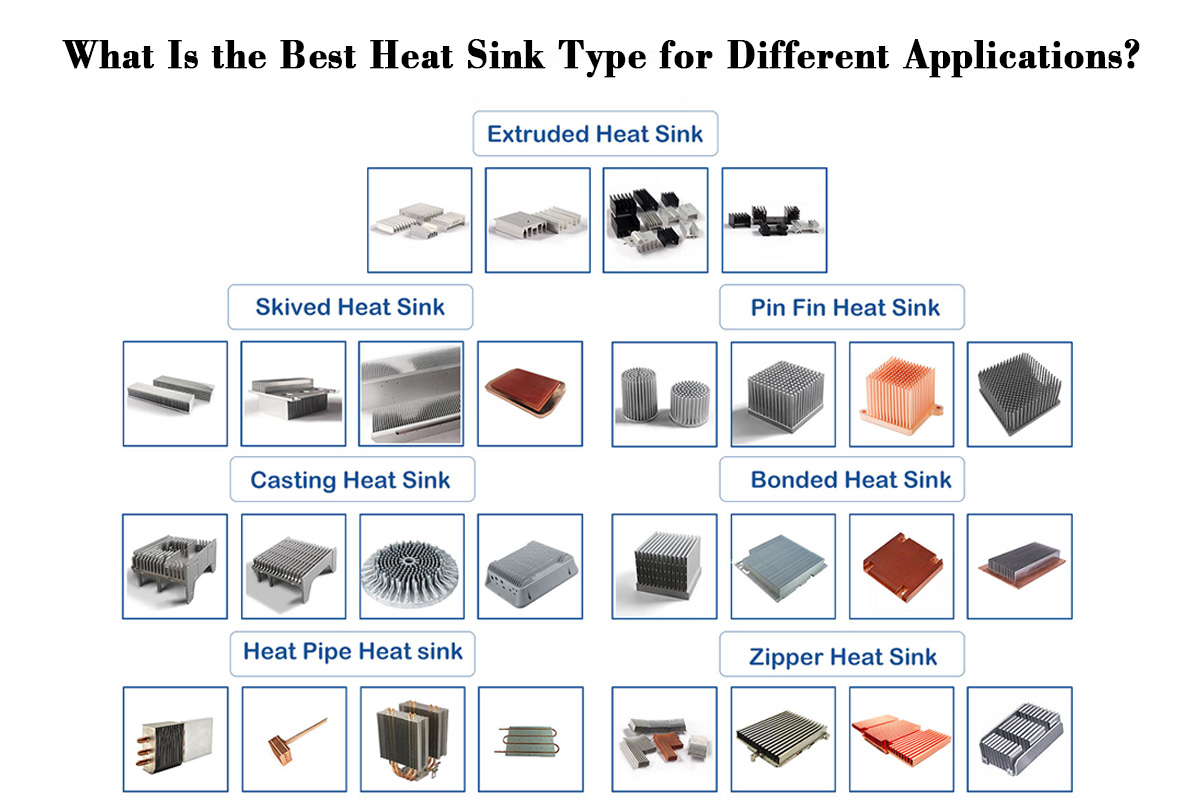
Which Type Is Best?
If you only want the quick answer:
Best for overall high-performance cooling: Heat Pipe Thermal Module
Best for high fin density and compact power devices: Skived Fin Heat Sink
Best for cost-effective mass production: Extrusion Heat Sink
Best for compact pin-fin or natural-convection designs: Cold Forging Heat Sink
Best for maximizing surface area with flexible fin geometry: Bonded Fin Heat Sink
Best for integrated housings and complex shapes in volume production: Die Casted Heat Sink
That is because heat sinks are usually selected by manufacturing process and thermal target, not by one simple “better or worse” ranking.
| Heat Sink Type | Thermal Performance | Cost Level | Fin Density | Design Flexibility | Best Applications |
|---|
| Skived Fin Heat Sink | ★★★★★ (Very High) | High | Very High | Medium | High-power electronics, telecom, compact devices |
| Extrusion Heat Sink | ★★★☆☆ (Moderate) | Low | Limited | Low | LED lighting, consumer electronics, industrial equipment |
| Bonded Fin Heat Sink | ★★★★☆ (High) | Medium-High | High | High | Custom cooling systems, power modules |
| Cold Forging Heat Sink | ★★★★☆ (High) | Medium | High (Pin Fin) | High | CPU cooling, compact devices, natural convection |
| Heat Pipe Thermal Module | ★★★★★ (Ultra High) | High | Depends on design | Very High | Servers, EV systems, high heat flux applications |
| Die Casted Heat Sink | ★★★☆☆ (Moderate) | Medium | Limited | Very High | LED housing, integrated structures, mass production |
What Makes One Heat Sink Better Than Another?
Before choosing the best heat sink type, it helps to understand what engineers actually compare.
1. Thermal Performance
The first question is how much heat must be removed. Higher-power electronics usually need more surface area, better fin efficiency, or faster heat spreading from the source to the fins. KINGKA states that its thermal solutions are developed around natural convection, forced convection, and liquid-cooling analysis, which matches how real projects are evaluated.
2. Fin Density
If space is limited, a design with thinner and denser fins can dissipate more heat in a smaller footprint. Skived structures are commonly chosen when extrusion cannot achieve the required fin density. Columbia-Staver notes skived fins are used as an alternative to extruded heat sinks when higher fin density is needed, with fins commonly around 0.5 mm and sometimes as thin as 0.2 mm.
3. Material
Most heat sinks use aluminum or copper. KINGKA’s extrusion heat sink page notes aluminum alloys such as 6063 and 6061 are common, and also cites approximate thermal conductivity values of about 200 W/m·K for aluminum and 390 W/m·K for copper, which helps explain why copper is chosen for more aggressive cooling demands.
4. Airflow Condition
Some designs perform better in forced-air environments, while others are better for natural convection. Pin-fin and forged structures are often useful when airflow direction is less predictable.
5. Cost and Production Volume
A custom, high-performance solution is not always the best commercial choice. For example, die casting may support complex integrated structures, but tooling costs can be higher, making it more suitable for volume production.
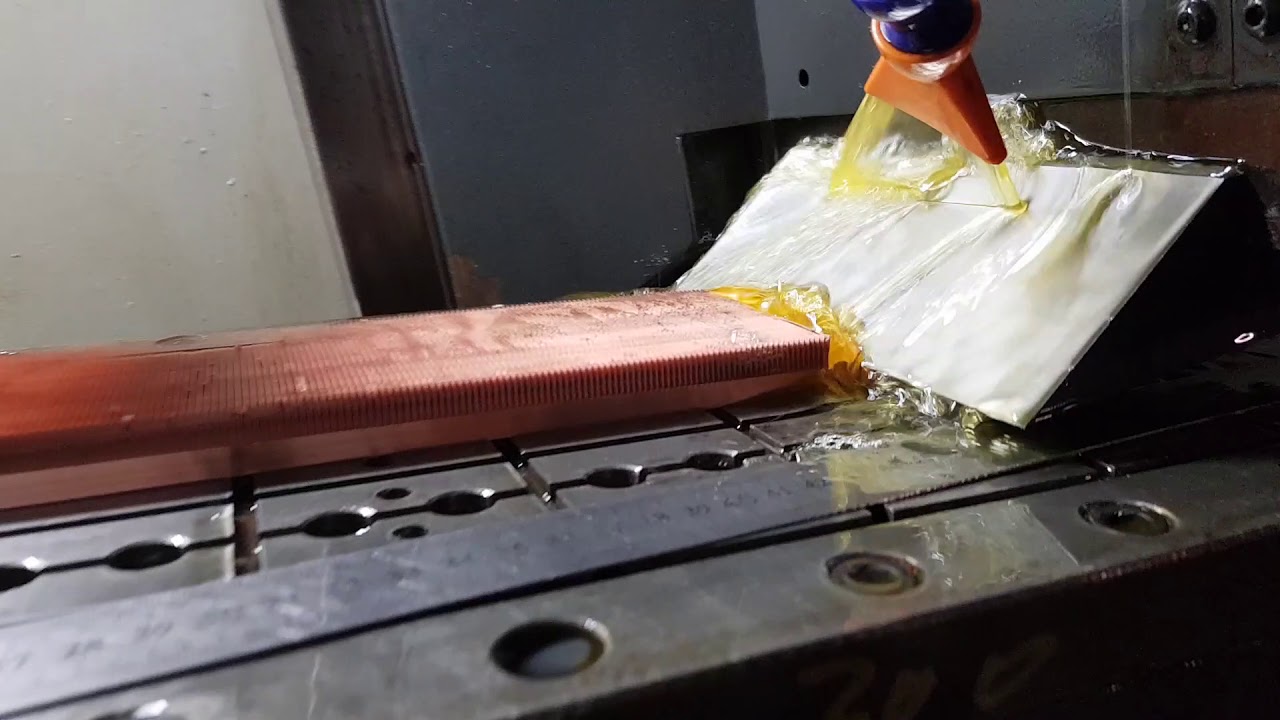
A skived fin heat sink is one of the best choices when you need dense fins and strong thermal conductivity in a limited footprint. In skiving, fins are carved directly from the same metal block as the base, so the base and fins remain one continuous piece. That helps reduce thermal resistance between fin and base. Columbia-Staver explains that skived heat sinks are formed by slicing fine fins from the raw block, and because the fins and base are part of the same block, they offer excellent thermal conductivity between them.
KINGKA positions Skived Fin Heat Sink as one of its core heat sink categories, and its product page emphasizes fine fin structure, large dissipation area, and use of aluminum or copper materials.
Best for:
High-power electronics
Tight installation space
High fin density requirements
Telecom, industrial control, and power electronics
Why buyers choose it:
If your project needs better cooling than a standard extrusion heat sink can provide, skiving is often the upgrade path.
Extrusion Heat Sink: Best for Cost-Effective Standard Cooling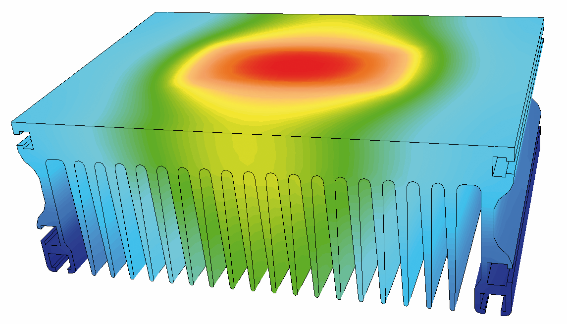
If you ask what the most practical heat sink type is for many mainstream products, the answer is often the extrusion heat sink. Extrusion is widely used because it is efficient, scalable, lightweight, and relatively economical. KINGKA’s extrusion heat sink page says these parts are typically made from aluminum alloys such as 6063 and 6061, are lightweight and durable, and are used in LED lighting, computer hardware, EVs, communications equipment, and industrial equipment.
Extruded heat sinks are often the best option when:
Best for:
LED lighting
Consumer electronics
Power tools
Communication equipment
Industrial equipment
Why buyers choose it:
An extrusion heat sink offers one of the best balances of cost, lead time, and cooling performance for large-volume programs.
A bonded fin heat sink is typically used when the design needs greater surface area or more flexible fin geometry than extrusion allows. Zaward describes bonded aluminum/copper heat sink constructions as one of the common manufacturing options, and KINGKA lists Bonded Fin Heat Sink among its primary heat sink categories.
In general, bonded fin structures let designers combine a base with separately attached fins, which helps when optimizing fin count, fin height, or material combinations.
Best for:
Why buyers choose it:
A bonded fin heat sink can be a smart choice when performance needs to improve without jumping immediately to a more complex liquid-cooled system.
A cold forging heat sink is commonly chosen for compact, dense structures, especially pin-fin designs. KINGKA includes Cold Forging Heat Sink in its heat sink portfolio, and industry references note that cold-forged heat sinks offer excellent thermal performance and strong design flexibility for more complex geometries.
Cold forging is especially useful when:
Space is limited
A pin-fin style is preferred
Natural convection matters
You need a denser, more three-dimensional cooling structure
Best for:
Why buyers choose it:
When a flat linear-fin structure is not enough, a cold forging heat sink can deliver a more compact and efficient shape.
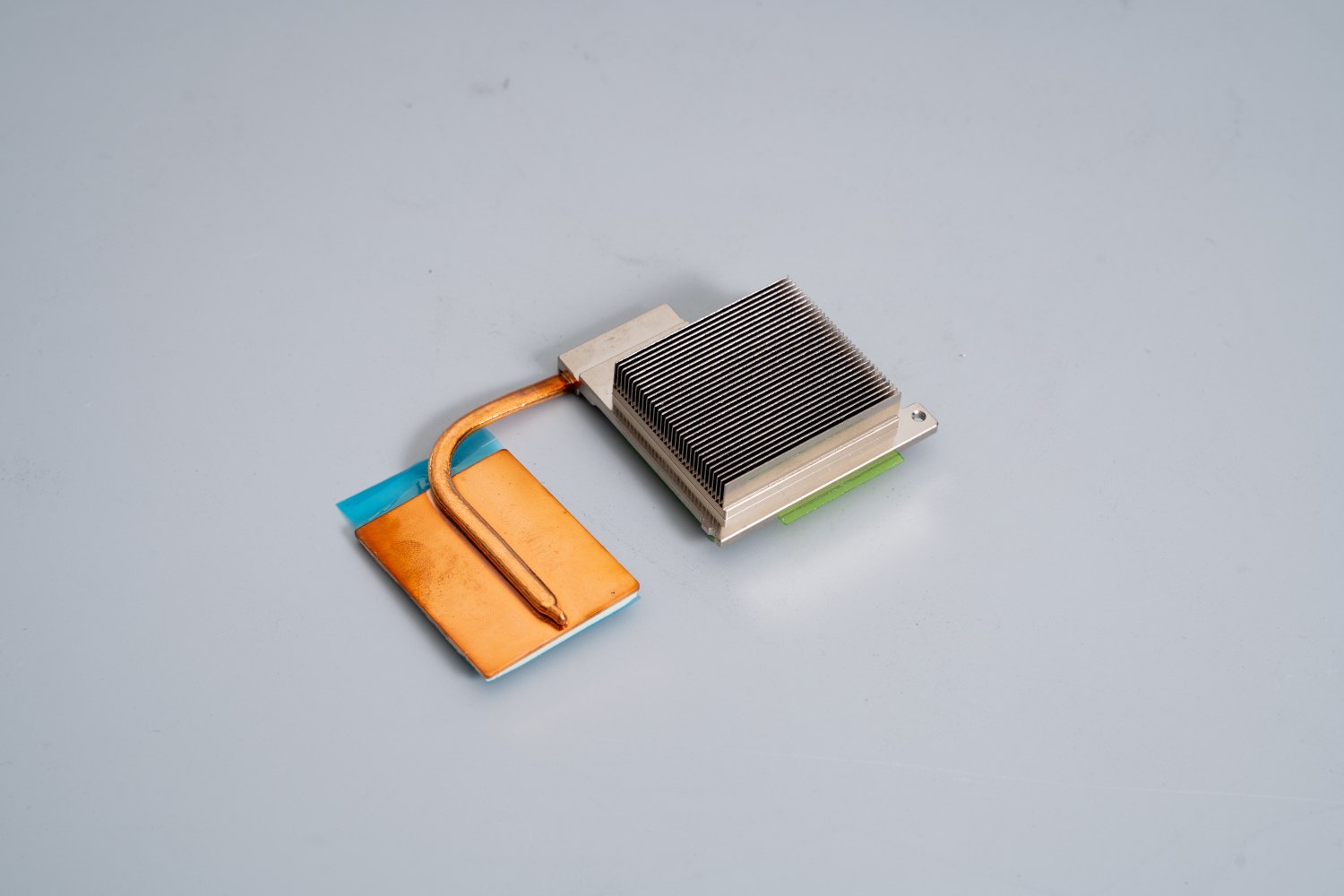
If the question is purely about maximum thermal performance, the heat pipe thermal module is often the strongest answer. A heat pipe solution moves heat quickly away from the source and spreads it to a larger fin area. KINGKA’s heat pipe thermal module page says its modules can support thermal loads of 200 W or more, and its heat-sink-with-heat-pipe page explains that heat pipes use a working fluid cycle to transfer heat efficiently from the evaporation end to the condensation end.
That is why heat pipe thermal modules are commonly chosen for:
Best for:
Why buyers choose it:
When normal fin structures are close to their limit, a heat pipe thermal module is often the best type of heat sink solution.
Die Casted Heat Sink: Best for Complex Integrated Housings
A die casted heat sink is not always the absolute best for raw thermal efficiency, but it can be the best manufacturing choice when the project needs complex geometry, integrated housing features, and high-volume production. Columbia-Staver explains that die casting is effective for forming complex high-tolerance shapes with added features like holes, slots, and pins, though its thermal conductivity is typically not as good as that of extruded heat sink materials and tooling is usually more expensive than extrusion tooling.
KINGKA also lists Die Casted Heat Sink as one of its standard product categories.
Best for:
Integrated enclosures
LED housings
Complex structural parts
High-volume projects
Why buyers choose it:
A die casted heat sink can reduce secondary machining and combine cooling with structural functions.
What Is the Best Heat Sink Type for Different Applications?
Here is the most practical way to answer the user’s search intent.
For general electronics
An extrusion heat sink is often best because it is affordable, proven, and easy to customize.
For high-power compact devices
A skived fin heat sink is often better because extrusion may not deliver enough fin density.
For very high wattage systems
A heat pipe thermal module is often the best solution because it improves heat spreading and handles heavier thermal loads.
For natural-convection or compact pin-fin layouts
A cold forging heat sink is often preferred.
For custom fin structures and larger surface area
A bonded fin heat sink can be the best compromise.
For complex housings in large volumes
A die casted heat sink may be the best commercial solution.
Why Choose KINGKA as Your Heat Sink Manufacturer?
KINGKA says it was founded in 2010 and supplies heat sinks and liquid-cooling solutions for telecom, aerospace, automotive, industrial control, power electronics, medical instruments, security electronics, LED lighting, and consumer applications. It also states that it supports thermal analysis for natural convection, forced convection, and liquid cooling solutions.
For buyers, that matters because choosing the best heat sink is rarely about only one product category. It is about matching the right manufacturing method to the right application.
KINGKA’s heat sink portfolio includes:
Skived Fin Heat Sink
Extrusion Heat Sink
Bonded Fin Heat Sink
Cold Forging Heat Sink
Heat Pipe Thermal Module
Die Casted Heat Sink
That range makes it easier for OEM buyers to compare solutions within one supplier instead of forcing every project into the same process.
So, what is the best type of heat sink?
The best answer is not one product for every project.
If you want the simplest rule:
Choose Extrusion Heat Sink for cost-effective mainstream cooling.
Choose Skived Fin Heat Sink for higher fin density and stronger cooling in limited space.
Choose Bonded Fin Heat Sink for flexible, higher-surface-area structures.
Choose Cold Forging Heat Sink for compact, high-performance forged geometries.
Choose Heat Pipe Thermal Module for the most demanding thermal loads.
Choose Die Casted Heat Sink for complex integrated structures and volume production.
For a professional buyer, the best heat sink is the one that matches the real thermal target, structure, airflow, and budget. For that reason, a full-range manufacturer like KINGKA is in a better position to recommend the right solution instead of pushing only one process.