Designing a liquid cooled plate is more than selecting a piece of metal with internal flow channels. To achieve efficient and reliable thermal performance, engineers must evaluate thermal requirements, coolant characteristics, mechanical constraints, and manufacturing processes. Whether the application is an EV battery pack, IGBT module, AI server, or industrial power electronics, providing the right design parameters is essential for developing an optimized custom Liquid Cold Plate.
As an experienced Liquid Cold Plate manufacturer, KINGKA works closely with customers to design high-performance thermal management solutions tailored to specific cooling requirements.
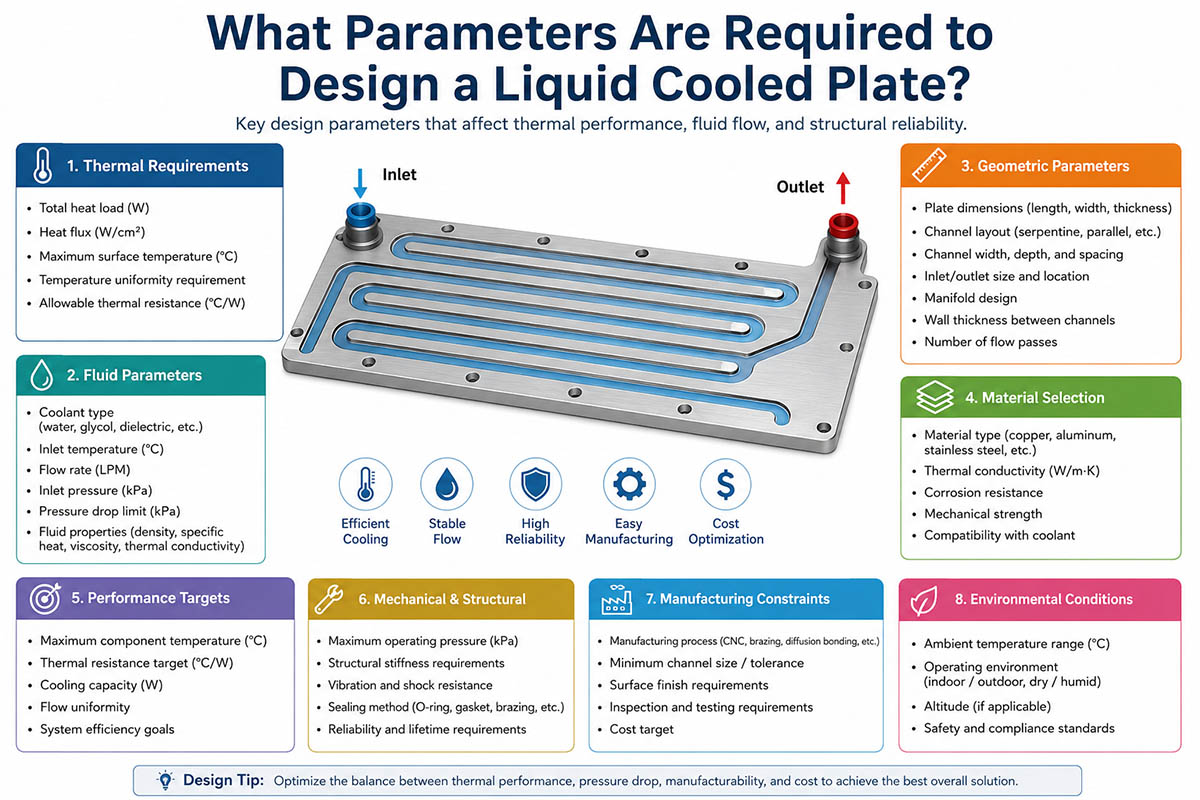
1. Thermal Parameters
Thermal performance is the foundation of every liquid cooled plate design.
Heat Load (W)
The first and most important parameter is the total heat load, which indicates how much heat the cooling plate must remove.
Typical heat loads include:
100–300W for CPUs and communication equipment
500–1,000W for industrial electronics
1,000–2,000W for IGBT modules
2,000W+ for EV batteries and energy storage systems
The higher the heat load, the greater the cooling capacity required.
Heat Flux Density
Heat flux density (W/cm²) describes how concentrated the heat source is. High heat flux applications often require optimized flow channel designs or microchannel structures to improve heat transfer.
Maximum Operating Temperature
Specify the maximum allowable temperature of the component, such as:
CPU
GPU
IGBT module
Battery cell
Maintaining components within their recommended operating temperature improves performance and extends service life.
Ambient Temperature
The surrounding environment also affects cooling performance. Systems operating in high-temperature industrial environments require more robust Liquid Cooling Plate designs than those used in climate-controlled facilities.
Thermal Resistance
Thermal resistance (K/W) measures the efficiency of heat transfer.
Lower thermal resistance means better cooling performance and faster heat dissipation.
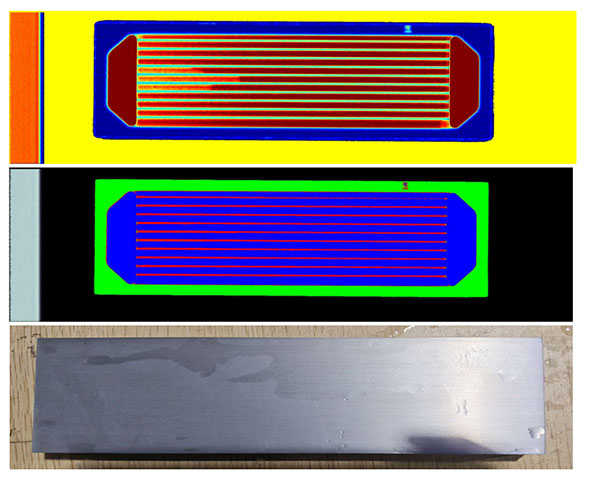
2. Coolant and Fluid Parameters
The coolant is responsible for carrying heat away from the liquid cooled plate, making fluid characteristics critical to system performance.
Coolant Type
Common coolants include:
Water
Water-Glycol
Ethylene Glycol
Deionized Water
Dielectric Fluids
Each coolant offers different thermal properties, corrosion resistance, and compatibility with materials.
Coolant Flow Rate
Flow rate determines how much coolant passes through the plate per minute.
Typical operating range:
0.5–5 L/min
Higher flow rates generally improve cooling but also increase pump requirements.
Inlet Coolant Temperature
The temperature of the coolant entering the plate directly influences heat dissipation efficiency.
Typical inlet temperatures range from:
Maximum Allowable Pressure Drop
Pressure drop must remain within the capability of the cooling pump.
Proper flow channel design minimizes pressure loss while maintaining excellent heat transfer.
Coolant Properties
Important coolant characteristics include:
Specific Heat Capacity
Thermal Conductivity
Viscosity
A coolant with high specific heat capacity can absorb more heat, while low viscosity helps reduce flow resistance.
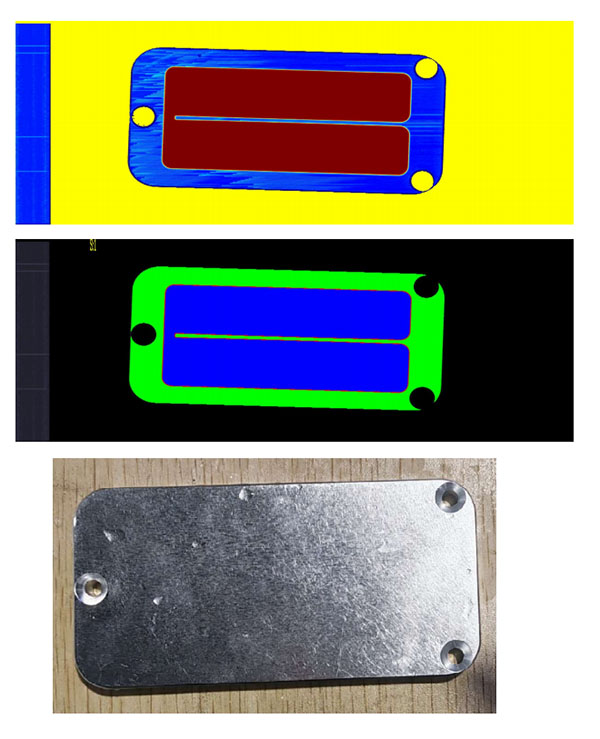 3. Material Selection
Material selection significantly impacts both thermal performance and manufacturing cost.
Common materials include:
Aluminum
Copper
Many Custom Liquid Cold Plates combine aluminum plates with copper tubing to achieve the ideal balance between performance and cost.
4. Flow Channel Design
The internal cooling channels determine how efficiently coolant removes heat.
Common channel layouts include:
Straight Channels
Serpentine Channels
Parallel Channels
Microchannels
The optimal layout depends on heat distribution, coolant flow rate, and allowable pressure drop.
For applications with high heat density, advanced channel optimization can significantly improve cooling performance.
5. Mechanical Design Parameters
A reliable liquid cooled plate must also satisfy mechanical and installation requirements.
Typical design parameters include:
These dimensions ensure compatibility with the customer's equipment while maximizing cooling efficiency.
6. Manufacturing Process
Manufacturing technology affects sealing performance, structural strength, and long-term reliability.
Common manufacturing processes include:
The appropriate process depends on pressure requirements, cooling performance, production volume, and budget.
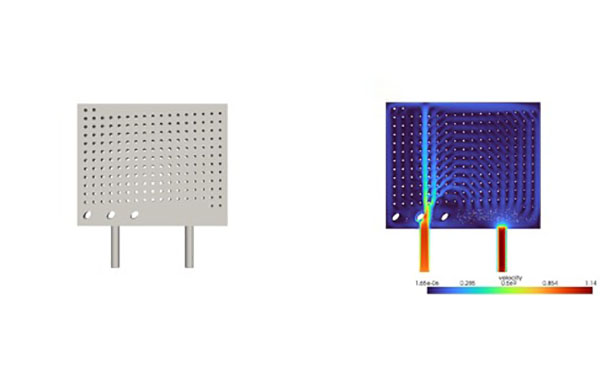
7. Reliability Requirements
For industrial and automotive applications, additional reliability requirements should be considered.
Typical evaluation items include:
Leak testing
Pressure testing
Thermal cycling
Corrosion resistance
Vibration resistance
Mechanical strength
Long-term durability
These tests help ensure stable operation throughout the product's service life.
Typical Liquid Cooled Plate Design Parameters
| Parameter | Typical Requirement |
|---|
| Heat Load | 100–3,000W+ |
| Thermal Resistance | 0.05–0.15 K/W |
| Coolant | Water, Water-Glycol, Dielectric Fluid |
| Flow Rate | 0.5–5 L/min |
| Inlet Temperature | 20–35°C |
| Working Pressure | Up to 5–10 Bar |
| Plate Material | Aluminum 6061/6063, Copper |
| Channel Layout | Straight, Serpentine, Parallel, Microchannel |
| Manufacturing | CNC, Vacuum Brazing, FSW, Embedded Tube |
| Surface Finish | Anodizing, Nickel Plating, Chromate Conversion |
Why Work with a Professional Liquid Cold Plate Manufacturer?
Every cooling application is unique. Working with an experienced liquid cold plate manufacturer ensures that thermal simulations, flow analysis, material selection, and manufacturing processes are optimized for your project.
KINGKA provides complete custom liquid cold plate development services, including:
Thermal simulation (CFD)
Structural analysis (FEA)
Flow channel optimization
Material selection
Prototype manufacturing
OEM & ODM production
Complete thermal management solutions
Our engineering team can develop high-performance liquid cooling solutions for EV batteries, AI servers, power electronics, industrial equipment, and renewable energy systems.