As electronic devices become smaller and more powerful, efficient thermal management is essential for maintaining performance and reliability. Whether used in electric vehicles, data centers, or industrial equipment, a cooling plate plays a critical role in removing excess heat from sensitive components.
So, how does a cooling plate work? The answer lies in an efficient liquid cooling process that transfers heat away from electronic devices through a closed-loop cooling system.
What Is a Cooling Plate?
A cooling plate is a thermal management device designed to absorb heat from electronic or electrical components and transfer it to a cooling medium, typically liquid coolant. Compared with conventional air cooling, a Liquid Cooling Plate provides significantly higher heat transfer efficiency and is capable of handling much greater thermal loads.
Cooling plates are widely used in:
Depending on the application, cooling plates may also be referred to as Liquid Cold Plates, water cooling plates, or battery cooling plates.
How Does a Cooling Plate Work?
The working principle of a cooling plate can be divided into four simple steps.
Step 1. Heat Transfer
Electronic components generate heat during operation. This heat is first transferred from the device to the cooling plate through a thermal interface material (TIM), such as thermal grease or a thermal pad, ensuring efficient thermal contact.
Step 2. Heat Absorption
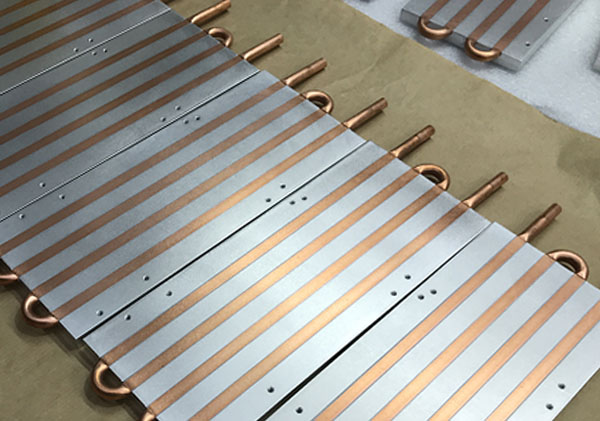
Once the heat reaches the plate, the liquid cooling plate absorbs it. Coolant flows through internal cooling channels or embedded copper tubes inside the plate, carrying heat away from the metal surface.
Most cooling plates are manufactured from aluminum or copper because of their excellent thermal conductivity.
Step 3. Coolant Circulation
A pump continuously circulates coolant through the closed-loop system.
The cooling cycle is as follows:
Electronic Device
        │
        ▼
Cooling Plate
        │
        ▼
Coolant Flow
        │
        ▼
Radiator / Heat Exchanger
        │
        ▼
Pump
        │
        ▼
Cooling Plate
The heated coolant transports thermal energy to the radiator, where it is prepared for the next cooling cycle.
Step 4. Heat Dissipation
Inside the radiator or heat exchanger, the coolant releases the absorbed heat into the surrounding air. The cooled liquid then returns to the cooling plate, continuously repeating the cycle to maintain stable operating temperatures.
 Why Is a Cooling Plate More Efficient Than Air Cooling?
Compared with traditional air-cooled heat sinks, liquid cooling plates provide several important advantages:
Higher heat transfer efficiency
Lower thermal resistance
More uniform temperature distribution
Reduced operating noise
Compact design for high-power-density electronics
Ability to dissipate hundreds or even thousands of watts of heat
These advantages make liquid cold plates the preferred solution for high-performance thermal management.
Common Types of Cooling Plates
Different manufacturing processes are used depending on the cooling requirements.
A Tube Liquid Cold Plate uses embedded copper or aluminum tubing to circulate coolant. It is widely used because of its cost-effectiveness, excellent reliability, and efficient cooling performance.
Embedded Tube Cold Plate
An Embedded Tube Cold Plate installs precision-formed copper tubes into CNC-machined grooves in an aluminum base. This design offers excellent heat transfer with low thermal resistance and is commonly used in power electronics and battery systems.
Vacuum Brazed Cold Plate
A Vacuum Brazed Cold Plate is manufactured by brazing internal flow channels under vacuum conditions, creating a strong, leak-free structure suitable for demanding industrial applications.
Friction Stir Welded Cold Plate
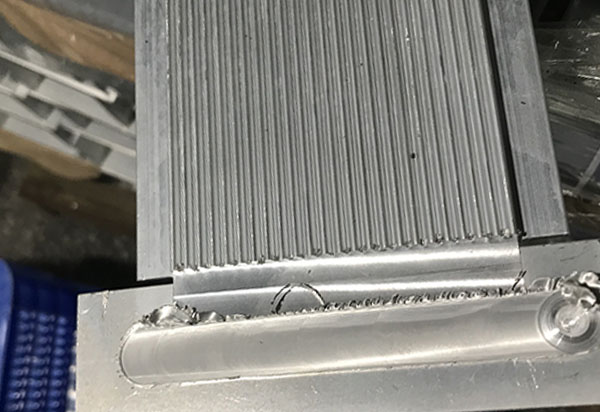
A Friction Stir Welded Cold Plate uses solid-state welding technology to join the cooling plate without filler materials, providing excellent mechanical strength and sealing performance.
Machined Cold Plate
A Machined Cold Plate features internal cooling channels produced by precision CNC machining, making it suitable for applications requiring complex flow path designs and high cooling capacity.
Battery Cooling Plate
A Battery Cooling Plate is specifically designed for electric vehicle battery packs and energy storage systems, ensuring uniform cell temperatures to improve safety, efficiency, and battery life.
CPU Cooling Plate
A CPU Cooling Plate efficiently removes heat from processors in servers, workstations, and high-performance computing systems, helping maintain stable operating temperatures under heavy workloads.
 Custom Cooling Plate Solutions
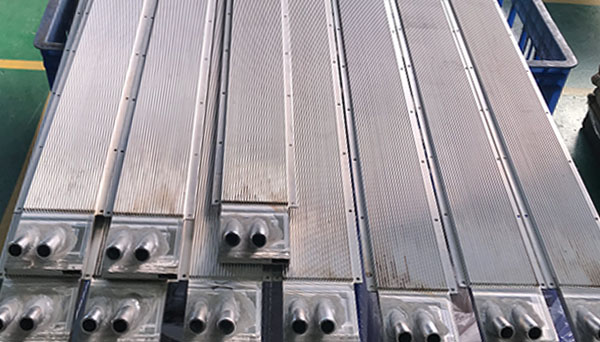
Every application has unique thermal requirements. Factors such as heat load, available installation space, coolant type, and operating environment all influence the optimal cooling plate design.
As a professional liquid cold plate manufacturer, KINGKA provides customized thermal management solutions, including:
Tube Liquid Cold Plates
Embedded Tube Cold Plates
Vacuum Brazazed Cold Plates
Friction Stir Welded Cold Plates
Battery Cooling Plates
CPU Cooling Plates
Custom liquid cooling plates
OEM and ODM manufacturing services
Our engineering team performs thermal simulation, structural optimization, and precision manufacturing to deliver reliable cooling solutions for electronics, automotive, energy storage, and industrial equipment.
FAQ
What is a cooling plate?
A cooling plate is a thermal management device that removes heat from electronic components by transferring it to a circulating coolant, helping maintain safe operating temperatures.
How does a cooling plate work?
A cooling plate transfers heat from electronic devices to flowing coolant. The heated coolant then carries the heat to a radiator or heat exchanger before returning to the cooling plate in a continuous closed-loop system.
What is the difference between a cooling plate and a heat sink?
A traditional heat sink dissipates heat directly into the air, while a liquid cooling plate uses circulating coolant to remove heat more efficiently, making it suitable for high-power applications.
Where are cooling plates commonly used?
Cooling plates are widely used in EV battery packs, IGBT modules, AI servers, data centers, power electronics, medical devices, laser equipment, and industrial automation systems.
Can cooling plates be customized?
Yes. Custom cooling plates can be designed with different materials, flow channel structures, dimensions, connectors, and cooling capacities to meet specific thermal management requirements.