As electronic devices become more powerful and compact, thermal management has become a critical factor in system reliability. CPUs, power modules, battery packs, laser equipment, inverters, and industrial electronics all generate concentrated heat during operation. If this heat is not removed efficiently, the system may experience overheating, performance degradation, shortened component life, or unexpected failure.
A Liquid Cold Plate, also known as a Liquid Cooling Plate, water cooling plate, water cold plate, or water cooled cold plate, is designed to transfer heat from electronic components to a circulating coolant. Compared with traditional air-cooled heat sinks, a cold plate cooling system can provide higher heat removal capacity, better temperature uniformity, and more stable performance for high-power applications.
At Kingka, we provide custom cold plates, custom liquid cold plate design, copper cold plates, battery liquid cold plates, brazed liquid cold plates, tubed cold plates, and complete thermal management solutions for electronics, batteries, power modules, and industrial cooling systems.
What Is a Liquid Cold Plate?
A liquid cold plate is a metal plate with internal coolant channels. It is installed directly under or near the heat source. Heat is transferred from the electronic component into the cold plate body, then removed by coolant flowing through the internal channels.
The basic heat transfer path is:
Electronic component → thermal interface material → cold plate base → internal coolant channel → circulating coolant → heat exchanger or radiator
This makes cold plate liquid cooling especially effective for high heat flux applications where air cooling is not enough.
Liquid cold plates are widely used in:
CPU cooling plate systems
Power electronics cooling
Battery liquid cold plate applications
Cold plates for electronics
EV battery thermal management
Energy storage systems
Laser equipment cooling
Industrial inverter cooling
Data center cooling
Medical and automation equipment
Why Liquid Cooling Plates Are Needed
Traditional air-cooled heat sinks are simple and cost-effective, but they have clear limitations when heat density increases. Air has limited heat carrying capacity, so high-power electronics may require very large heat sinks, strong fans, or high airflow.
In contrast, a liquid cooling plate uses coolant such as water, water-glycol mixture, or other compatible fluids to remove heat more efficiently. Because liquid can carry much more heat than air, a water cooling plate can keep component temperature more stable in demanding applications.
Air Cooling vs. Liquid Cold Plate Cooling
| Cooling Method | Cooling Medium | Cooling Capacity | Suitable Applications | Key Limitation |
|---|
| Air-cooled heat sink | Air | Low to medium | General electronics | Limited for high heat flux |
| Heat Pipe Heat Sink | Heat pipe + air | Medium to high | Compact heat spreading | Affected by orientation and environment |
| Liquid cold plate | Liquid coolant | High | Power electronics, CPUs, batteries | Requires pump, coolant loop, and sealing |
| Water cooled cold plate | Water or glycol coolant | High to very high | Industrial systems, EV, data center | Requires system-level design |
For high-power applications, a liquid cold plate is often selected when traditional air cooling cannot meet the required temperature target or when space is limited.
How Does Cold Plate Cooling Work?
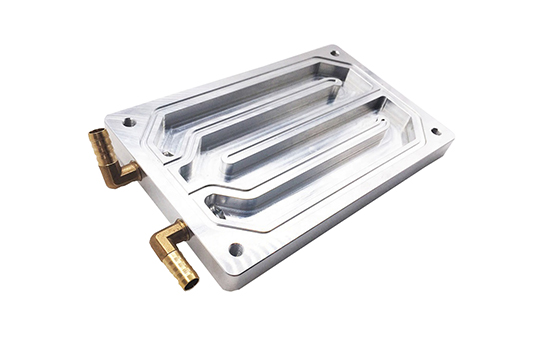
In a cold plate cooling system, coolant enters the cold plate through the inlet, flows through the internal channel, absorbs heat from the plate, and exits through the outlet. The heated coolant is then sent to a radiator, chiller, or heat exchanger.
The performance of a cold plate cooling solution depends on several engineering factors:
Cold plate material
Internal channel structure
Coolant flow rate
Pressure drop
Contact surface flatness
Thermal interface material
Heat source size
Coolant inlet temperature
Welding or brazing quality
Leak testing standard
A reliable liquid cold plate design must balance thermal performance, hydraulic resistance, manufacturing cost, and long-term safety.
Common Types of Liquid Cold Plates
Different applications require different cold plate structures. The best design depends on the heat load, available space, coolant type, material requirements, and cost target.
 1. Tubed Cold Plate
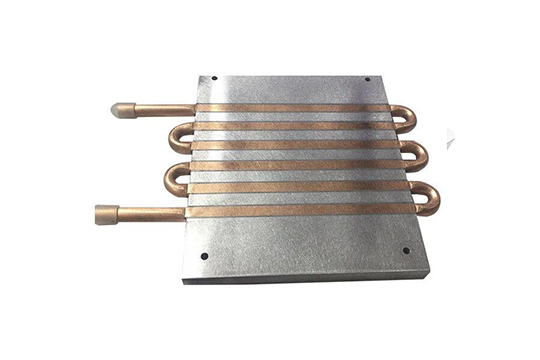
A tubed cold plate is made by embedding or attaching a metal tube into a base plate. Coolant flows through the tube and removes heat from the plate.
Advantages of Tubed Cold Plates
Limitations
Tube-to-plate contact quality affects thermal performance
Not ideal for very high heat flux areas
Thermal resistance may be higher than machined channel designs
A tubed cold plate is commonly used in battery packs, industrial equipment, power supplies, and cost-sensitive cooling systems.
2. Brazed Liquid Cold Plate
A brazed liquid cold plate is manufactured by creating internal channels and then joining the plate structure through brazing. This design provides better sealing and more flexible channel layout.
Advantages of Brazed Liquid Cold Plates
Strong structural bonding
Good sealing reliability
Suitable for customized channel design
Better thermal performance than simple tubed designs
Suitable for power electronics and industrial cooling
Limitations
Higher manufacturing cost
Requires strict process control
Internal cleanliness and leak testing are critical
A brazed liquid cold plate is suitable for power modules, inverters, converters, industrial systems, and other applications requiring stable long-term cooling.
3. CNC Machined Liquid Cold Plate
A CNC machined liquid cold plate uses precision machining to create internal flow channels. The cover plate is then sealed through welding, brazing, friction stir welding, or other processes.
This structure is commonly used for custom liquid cold plate projects because the channel can be designed according to the customer’s heat source layout.
Advantages
High design flexibility
Suitable for complex channel structures
Good for prototypes and custom production
Can match specific mounting holes and component layouts
Suitable for aluminum, copper, or hybrid structures
Limitations
Cost depends on channel complexity
Sealing process must be carefully controlled
Pressure and leak testing are required
CNC machined cold plates are widely used in cold plate electronics cooling, CPU cooling, laser systems, medical equipment, and power modules.
4. Copper Cold Plate
A copper cold plate provides excellent thermal conductivity and strong heat spreading performance. It is often selected when the heat source has high heat flux or when temperature uniformity is critical.
Advantages of Copper Cold Plates
Excellent thermal conductivity
Better heat spreading than aluminum
Suitable for high heat flux electronics
Good for CPU, GPU, laser, and semiconductor cooling
Limitations
A copper cold plate is suitable for high-performance applications such as CPU cooling plate, GPU cooling, laser diode cooling, high-power semiconductor cooling, and precision electronics cooling.
5. Battery Liquid Cold Plate
A battery liquid cold plate is designed to control the temperature of battery cells or battery modules. In electric vehicles, energy storage systems, and high-power battery packs, temperature uniformity is extremely important.
If the battery temperature is too high, safety and service life may be affected. If the temperature difference between cells is too large, the battery pack may age unevenly.
Battery Liquid Cold Plate Design Goals
| Design Goal | Benefit |
|---|
| Uniform battery temperature | Improves battery consistency and lifespan |
| Efficient heat removal | Reduces overheating risk |
| Compact structure | Fits battery pack layout |
| Lightweight design | Helps reduce system weight |
| Custom channel layout | Matches cell arrangement |
| Reliable sealing | Prevents coolant leakage |
Battery liquid cold plates are widely used in EV battery packs, energy storage systems, hybrid vehicles, charging systems, and high-power battery modules.
Applications of Liquid Cold Plates
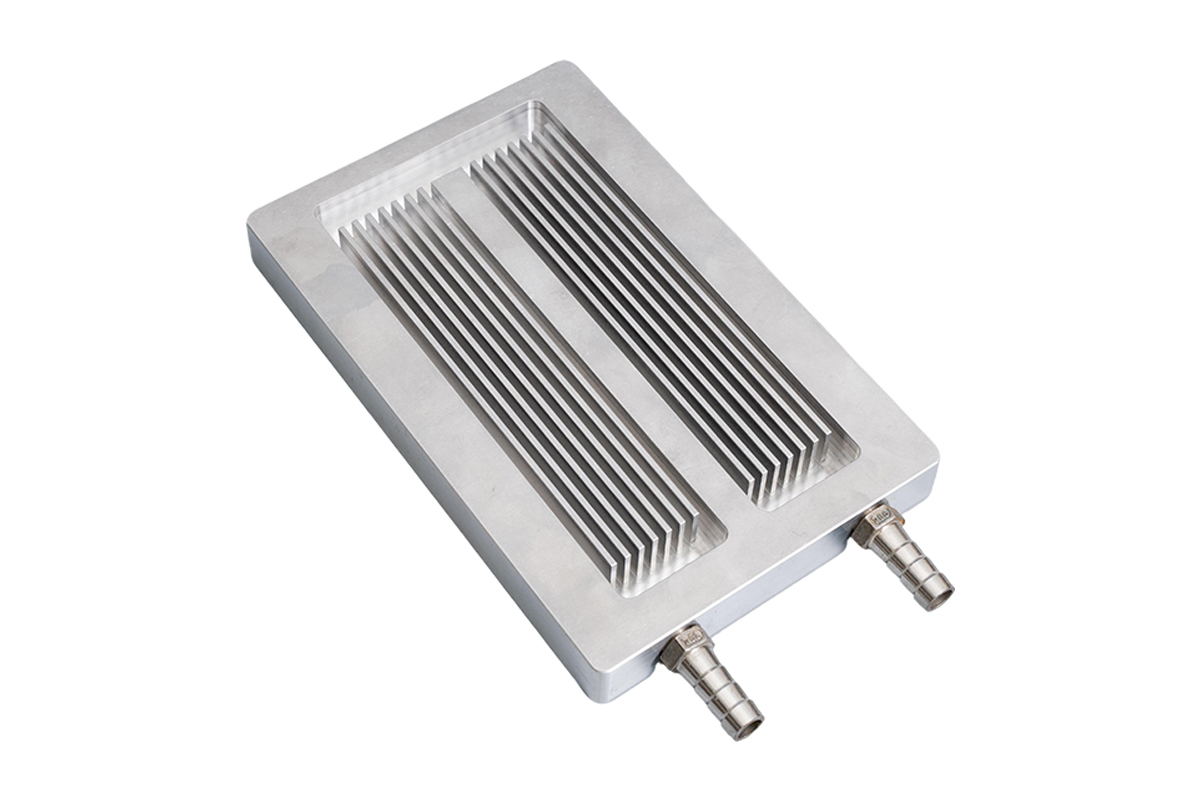
Liquid cold plates are used wherever air cooling cannot meet the thermal requirement.
Cold Plates for Electronics
Cold plates for electronics are widely used for CPUs, GPUs, power modules, laser devices, telecom equipment, medical devices, and industrial controllers.
A cold plate electronics cooling solution helps maintain stable component temperature and improves long-term reliability.
CPU Cooling Plate
A CPU cooling plate is used to remove heat from processors in servers, workstations, data centers, and high-performance computing systems. For high-power CPUs and GPUs, liquid cooling can reduce chip temperature and improve system stability.
Battery Liquid Cold Plate
A battery liquid cold plate helps control battery pack temperature and reduce temperature difference between cells. This is important for electric vehicles, energy storage systems, and high-power battery modules.
Power Electronics Cooling
Power electronics such as IGBT modules, MOSFETs, inverters, converters, and motor controllers often require strong thermal management. A custom water cooling plate can provide stable cooling under continuous high-load operation.
How to Choose the Right Custom Liquid Cold Plate
Before designing or purchasing a custom liquid cold plate, customers should confirm the following information.
| Selection Factor | What to Confirm | Why It Matters |
|---|
| Heat source power | Total watts and heat flux | Determines cooling capacity |
| Heat source size | Contact area and component layout | Affects channel design |
| Material | Aluminum, copper, or hybrid | Affects thermal performance, weight, and cost |
| Coolant type | Water, glycol, dielectric fluid | Affects corrosion and sealing |
| Flow rate | Required LPM | Impacts thermal resistance |
| Pressure drop limit | Pumping power limit | Affects channel selection |
| Space limitation | Length, width, thickness | Determines cold plate structure |
| Mounting method | Screws, brackets, clamps | Affects contact pressure |
| Manufacturing method | Tubed, brazed, CNC, FSW | Affects cost and reliability |
| Testing standard | Leak test and pressure test | Ensures safety and long-term use |
The more complete the project information is, the easier it is to design a cold plate that fits the real application.
Why Choose Kingka for Custom Cold Plates?
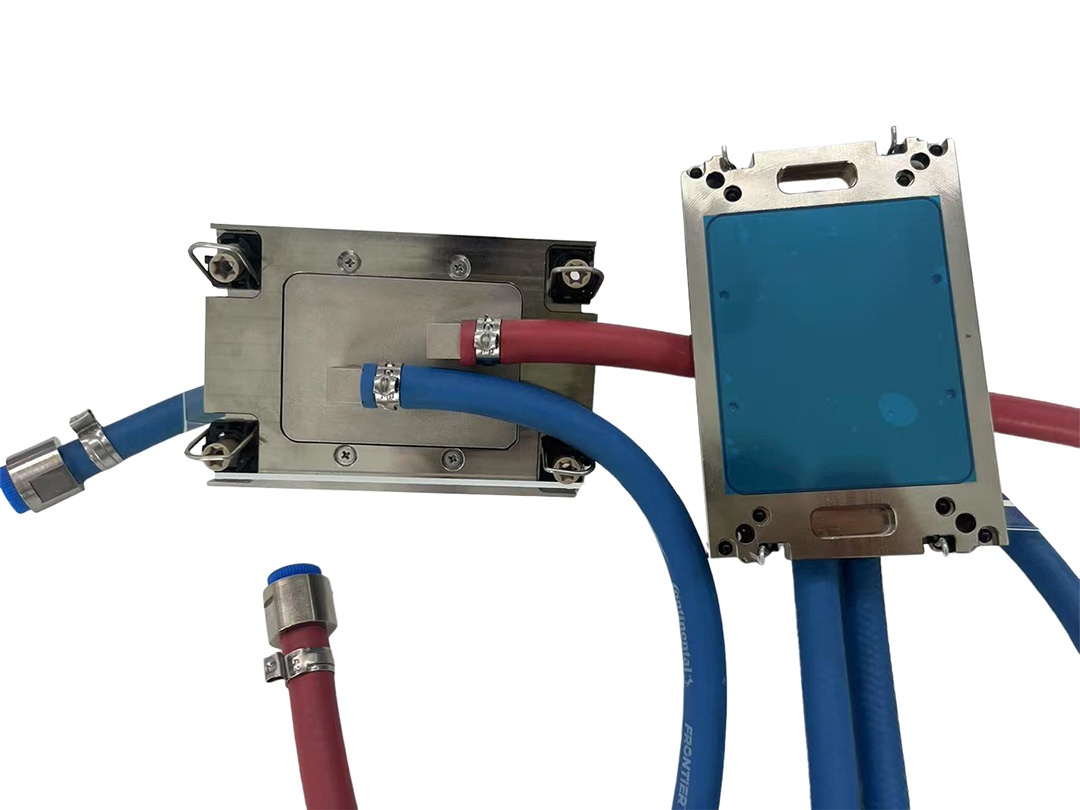
Kingka provides customized liquid cold plate, liquid cooling plate, water cooling plate, water cold plate, copper cold plate, brazed liquid cold plate, tubed cold plate, and complete thermal management solutions for high-power electronics.
Our capabilities include:
Custom liquid cold plate design
Aluminum and copper cold plate manufacturing
CNC machined cold plates
Brazed liquid cold plates
FSW Liquid Cold Plates
Tubed cold plates
Battery liquid cold plates
Cold plates for electronics
Heat sinks and heat pipe heat sinks
Surface treatment
Leak testing and pressure testing
Custom production according to drawings or application requirements
Kingka can support customers from concept design to manufacturing, helping optimize thermal performance, pressure drop, sealing reliability, and production cost.
Practical Questions Customers Should Ask Before Starting a Cold Plate Project
To avoid design changes and unnecessary cost, customers can prepare the following information before requesting a custom cold plate:
| Question | Why It Helps |
|---|
| What is the heat load of the component? | Helps estimate cooling capacity |
| What is the maximum allowable temperature? | Defines thermal design target |
| What coolant will be used? | Affects material and corrosion design |
| What is the available space? | Determines cold plate size and thickness |
| What flow rate and pressure drop are acceptable? | Helps optimize internal channels |
| Does the cold plate need to be lightweight? | Helps decide between aluminum and copper |
| Is leak testing required? | Defines quality control standard |
| Is this for prototype or mass production? | Affects manufacturing method selection |
This preparation allows Kingka to provide a more accurate and practical thermal management solution.
A liquid cold plate is one of the most effective solutions for high-power electronics cooling. Whether it is called a liquid cooling plate, water cooling plate, water cold plate, or cold plate liquid cooling solution, its purpose is to transfer heat from electronic components to circulating coolant efficiently and reliably.
Different applications require different designs. A tubed cold plate may be suitable for cost-sensitive and large-area cooling. A brazed liquid cold plate provides better sealing and thermal performance for power electronics. A copper cold plate is ideal for high heat flux applications. A battery liquid cold plate is designed for EV and energy storage temperature control. For high-performance electronics, a fully customized liquid cold plate design is often the best choice.
Kingka provides custom cold plates, cold plate cooling systems, water cooled cold plates, and complete thermal management solutions for electronics, batteries, CPUs, power modules, and industrial equipment. By selecting the right material, channel structure, manufacturing process, and testing method, customers can achieve better cooling performance, longer component life, and more reliable system operation.