A cpu heatsink is a specialized cooling device designed to absorb and dissipate the excess thermal energy generated by a computer's central processing unit (CPU). Without a heatsink, modern processors would rapidly overheat under heavy workloads, leading to performance throttling, system instability, or permanent hardware damage.
How a CPU Heatsink Works
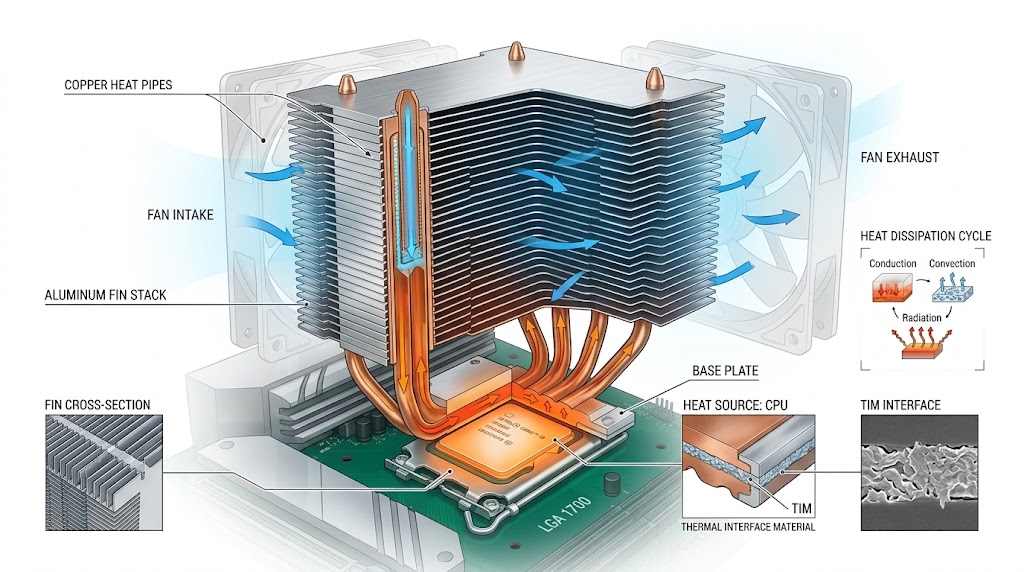
The operation of a CPU heatsink relies on basic thermodynamic principles: conduction and convection.
Base Plate Contact: The metal base of the heatsink attaches directly to the Integrated Heat Spreader (IHS) of the CPU. A thin layer of thermal paste (thermal interface material) is applied between them to fill microscopic air gaps and ensure maximum heat transfer.
Thermal Conduction: As the CPU operates, heat conducts rapidly through the base plate into Heat Pipes or directly into the cooling fins.
Heat Distribution: Copper heat pipes containing a tiny amount of liquid vaporize heat at the base, travel up to the cooler fin stack, condense back into liquid, and return to the base in a continuous cycle.
Heat Dissipation (Convection): The heat transfers to thin, stacked aluminum fins that drastically increase the total surface area exposed to air. Attached fans then force ambient air across these fins to carry the heat away into the computer chassis and out through exhaust vents.
Main Types of CPU Heatsinks
| Type | Design Characteristics | Ideal Use Case |
| Passive Heatsinks | Uses large metal fins with no fans; relies entirely on natural airflow inside the case. | Silent builds, low-power CPUs, and home theater PCs. |
| Active Air Coolers | Combines a metal heatsink (fin tower + heat pipes) with one or more forced-air fans. | Standard gaming rigs, workstations, and everyday desktop PCs. |
| Liquid Coolers (AIOs) | Uses a pump and water block on the CPU to transport heat via liquid to a remote radiator heatsink. | High-end gaming, heavy multi-core rendering, and overclocked systems. |
Key Component Materials
Copper: Offers superior thermal conductivity, making it the preferred choice for CPU base plates and heat pipes. However, it is heavier and more expensive.
Aluminum: Provides fast heat dissipation into the air and is lightweight and cost-effective. Consequently, most cooling fin towers are constructed from aluminum.