Aluminum and copper are two of the most common materials used for
Liquid Cold Plates.
Aluminum offers a useful combination of thermal conductivity, low density, machinability, and cost. Aluminum alloys such as 6061 and 6063 are widely used in Thermal Management components and can work with processes including CNC machining, extrusion, Friction Stir Welding, and brazing.
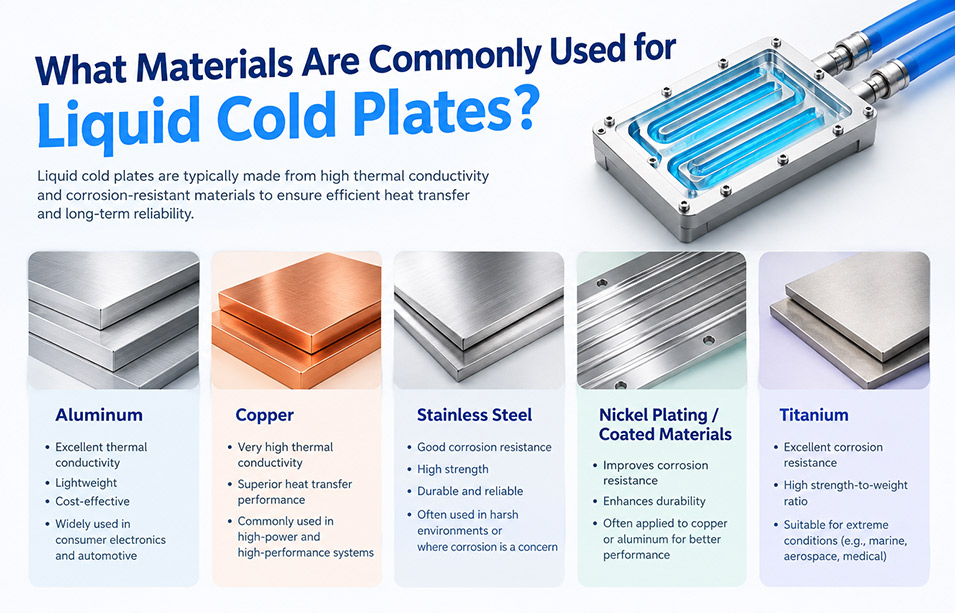
Copper has higher thermal conductivity than aluminum, making it attractive for applications where heat is concentrated over a relatively small area. CPU, GPU, semiconductor, and laser cooling systems may use copper when heat spreading is particularly important.
Material selection should not be based on thermal conductivity alone. Engineers should also consider weight, coolant compatibility, corrosion, manufacturing process, mechanical requirements, and overall system cost.
The choice between aluminum and copper is therefore application-dependent. A detailed comparison is available in this
Liquid Cold Plate design guide.