
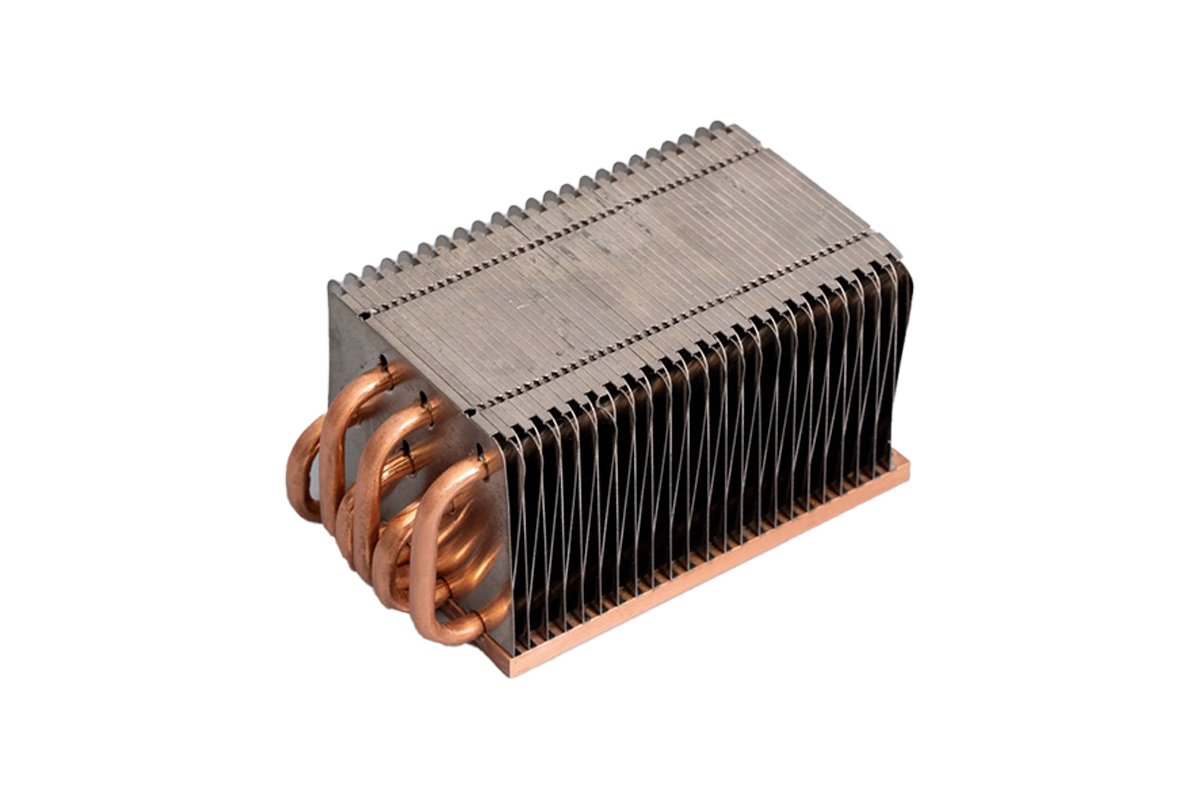
A copper pipe Heat Sink is an advanced thermal management solution designed to enhance heat transfer efficiency in high-power electronic systems. By integrating copper pipes (often heat pipes) into a traditional Heat Sink structure, it significantly improves heat spreading and dissipation performance.
This type of cooling solution is widely used in power electronics, AI servers, LED lighting, telecom equipment, and other high heat flux applications where conventional air cooling or standard aluminum heat sinks are no longer sufficient.
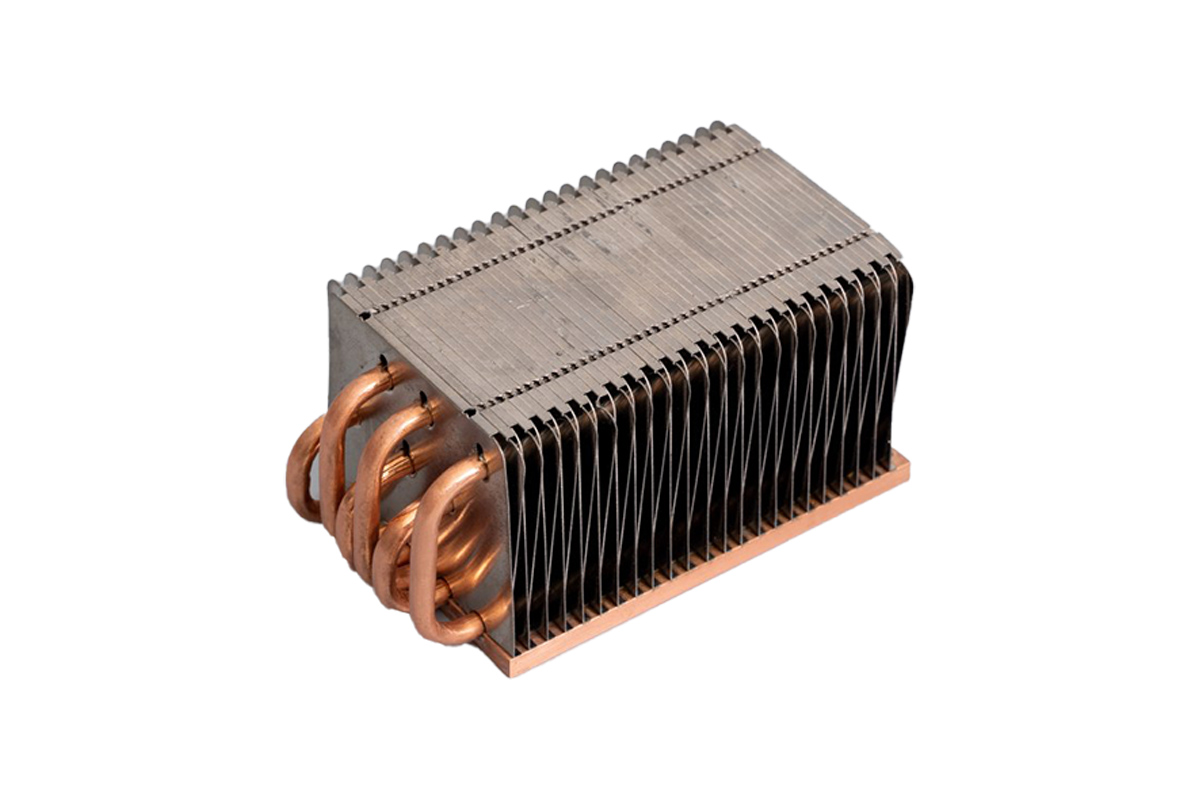
A copper pipe heat sink is a hybrid cooling device that combines a metal heat sink (usually aluminum or copper base with fins) with embedded copper pipes or heat pipes.
These copper pipes act as highly efficient thermal conductors, transferring heat rapidly from the heat source to the fin area, where it is dissipated into the air.
In thermal engineering, this structure is also closely related to:
heat sink copper pipe systems
copper pipe cooling heat sink designs
pipe heat sink assemblies
The working principle of a copper pipe heat sink involves three key stages:
Heat generated by electronic components (such as CPUs, IGBT modules, or power devices) is transferred to the heat sink base.
A thermal interface material ensures efficient contact between the device and the heat sink.
The embedded copper pipe (heat pipe) rapidly absorbs heat and transfers it through phase-change heat transfer.
Inside the pipe:
Working fluid evaporates at the hot end
Vapor moves quickly to the cooler region
Heat is transported with extremely low thermal resistance
This process significantly improves heat spreading efficiency compared to standard metal conduction.
Heat is released from the copper pipe into the heat sink fins.
The heat sink then dissipates heat into the surrounding air through natural convection or forced airflow, often enhanced with fans in high-performance systems.
Copper pipes provide extremely fast heat transfer, making them ideal for high-power density applications.
The use of heat pipes reduces thermal resistance between the heat source and the fin structure, improving overall cooling efficiency.
Heat is quickly distributed across the entire heat sink surface, preventing localized hot spots.
A copper pipe heat sink delivers strong cooling performance in a relatively compact structure.
Compared with standard aluminum or copper heat sinks:
Traditional heat sink → relies only on metal conduction
Copper pipe heat sink → combines conduction + phase-change heat transfer
This results in:
Faster heat transfer
Better performance under high thermal loads
Improved system stability
The cooling performance of a copper pipe heat sink depends on design, airflow, and heat load conditions.
Typical performance ranges:
Natural convection: 80W – 500W
Forced air cooling: 500W – 2000W+
In real applications:
Standard heat sink may allow device temperatures reaching 80°C–100°C
A copper pipe heat sink can often reduce operating temperatures to 50°C–75°C, depending on system conditions, airflow, and thermal design
This makes it highly suitable for high-performance electronic systems requiring stable temperature control.
A copper pipe heat sink is widely used in industries requiring efficient thermal management:
IGBT modules
Inverters and converters
Power supplies
Industrial drives
High-performance CPUs and GPUs require efficient heat dissipation to maintain stable performance.
High-power LED systems use copper pipe designs to prevent overheating and extend lifespan.
Used in base stations and communication equipment requiring continuous operation.
Suitable for automation systems, control units, and high-power electronics.
As a professional thermal solution provider, KINGKA offers custom copper pipe heat sink design and manufacturing services.
Our capabilities include:
Thermal simulation and optimization
Copper pipe (heat pipe) integration design
CNC machining and precision manufacturing
Aluminum or copper base structure
Fin structure customization
Prototype development and mass production
We help customers design optimized pipe heat sink solutions based on heat load, size constraints, and application requirements.
KINGKA is a professional manufacturer of advanced thermal management solutions, including copper pipe heat sink systems.
Our advantages:
Advanced heat pipe integration technology
Precision CNC machining capability
Strong engineering design support
Custom manufacturing (OEM & ODM)
Fast prototyping and mass production
Strict quality control system
Whether you need a standard heat sink copper pipe solution or a fully customized high-performance system, we can provide reliable thermal solutions for demanding applications.
A copper pipe heat sink is a cooling device that uses embedded copper pipes or heat pipes to improve heat transfer efficiency between the heat source and heat dissipation fins.
Copper pipes (heat pipes) significantly increase heat transfer speed and reduce thermal resistance, allowing faster and more efficient cooling in high-power applications.
A normal heat sink relies only on metal conduction, while a copper pipe heat sink uses heat pipes to rapidly transfer heat through phase-change technology, offering better performance.
Depending on design and airflow, a copper pipe heat sink can typically handle 80W to over 2000W, making it suitable for high-power electronic systems.
They are widely used in power electronics, AI servers, LED lighting, telecom systems, and industrial automation equipment.

Kingka Tech Industrial Limited
We specialize in Heat Sink、Liquid Cold Plate、precision CNC machining and our products are widely used in telecommunication industry, aerospace, automotive, industrial control, power electronics, medical instruments, security electronics, LED lighting and multimedia consumption.


Address:
Da Long New Village, Xie Gang Town, Dongguan City, Guangdong Province, China 523598
Email:
WhatsAPP: