
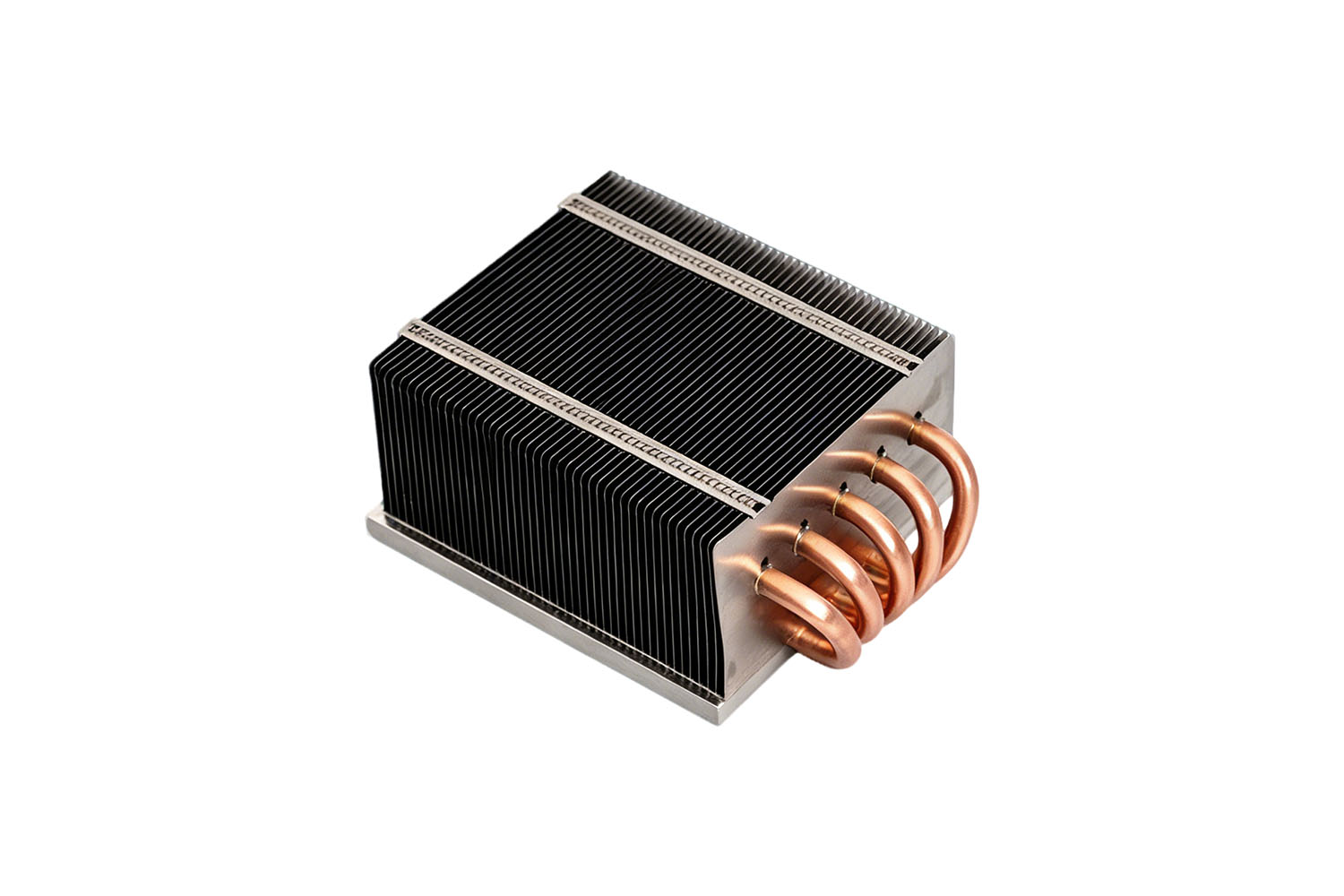
Heat Pipe Assemblies are highly efficient thermal transfer components designed to move heat quickly from a heat source to a cooling area. Unlike ordinary metal heat sinks that rely mainly on solid thermal conduction, a Heat Pipe assembly uses the phase-change cycle of an internal working fluid to transfer heat with extremely low thermal resistance.
When heat is applied to the evaporator section, the working fluid inside the heat pipe absorbs heat and vaporizes. The vapor then moves rapidly to the cooler condenser section, releases heat, and condenses back into liquid. Through the internal capillary wick structure, the liquid returns to the evaporator area and repeats the cycle continuously.
Because of this working principle, Heat Pipe Assemblies are widely used in electronic equipment cooling, power modules, LED lighting systems, battery Thermal Management, telecom equipment, aerospace systems, medical devices, solar thermal systems, and other applications where compact, stable, and high-efficiency heat dissipation is required.
For customers facing problems such as limited installation space, high local heat flux, unstable device temperature, fan noise, or insufficient heat sink performance, custom Heat Pipe Assemblies provide a reliable and practical thermal management solution.
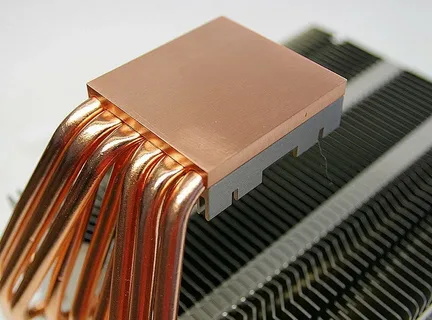
Heat Pipe Assemblies are thermal modules made by combining one or more heat pipes with heat sinks, cold plates, mounting bases, fins, brackets, or custom-machined parts. They are not just single heat pipes, but complete thermal solutions designed according to the structure, power consumption, installation environment, and cooling requirements of the final equipment.
A typical heat pipe assembly may include:
Heat pipe body
Copper or aluminum base plate
Aluminum fins or copper fins
Mounting holes and brackets
Thermal interface contact surface
Nickel plating, oxidation, or other surface treatment
Custom bending or flattening structure
Welded, soldered, or mechanically fixed connections
Compared with a traditional aluminum heat sink, a Heat Pipe Assembly can transfer heat over a longer distance and spread concentrated heat more evenly. This makes it especially suitable for high-power components where the heat source is small but the thermal load is high.
The performance of Heat Pipe Assemblies comes from three key mechanisms: evaporation, vapor movement, and capillary liquid return.
First, the evaporator section contacts the heat source, such as a CPU, GPU, power module, laser diode, LED chip, or battery pack. The internal working fluid absorbs heat and changes from liquid to vapor.
Second, the vapor carries heat energy to the condenser section at high speed. This process allows heat to be transferred much faster than through solid metal alone.
Third, after releasing heat to the cooling fins, cold plate, or airflow area, the vapor condenses back into liquid. The wick structure inside the heat pipe then pulls the liquid back to the evaporator section through capillary force.
This closed-loop process allows Heat Pipe Assemblies to achieve high thermal conductivity, fast temperature equalization, compact structure, low maintenance, and reliable long-term operation.
The following table can be used as a reference for product pages. Actual values can be customized according to heat load, installation space, pipe diameter, working temperature, and application environment.
| Item | Common Specification |
|---|---|
| Product Name | Heat Pipe Assemblies |
| Heat Pipe Material | Copper, aluminum, stainless steel optional |
| Fin Material | Aluminum, copper, or custom material |
| Base Material | Copper, aluminum, copper-aluminum composite |
| Heat Pipe Diameter | 3 mm, 4 mm, 5 mm, 6 mm, 8 mm, 10 mm or customized |
| Heat Transfer Capacity | Approx. 10W–300W+ depending on size and structure |
| Working Fluid | Water, ethanol, ammonia or customized fluid |
| Wick Structure | Sintered powder, grooved wick, metal mesh wick |
| Surface Treatment | Nickel plating, anodizing, passivation, anti-oxidation coating |
| Processing Method | Bending, flattening, soldering, brazing, welding, CNC machining |
| Leak Testing | Helium leak test, air tightness test, water pressure test |
| Thickness Inspection | Ultrasonic thickness test, laser thickness inspection optional |
| Application Temperature | Customized according to working fluid and material |
| Customization | Size, shape, mounting holes, heat pipe layout, fin structure, surface finish |
Different heat pipe diameters are suitable for different heat loads and space conditions. Selecting the correct diameter is important for thermal efficiency and structural reliability.
| Heat Pipe Diameter | Recommended Heat Load | Typical Application |
|---|---|---|
| 3 mm–4 mm | 10W–50W | Compact electronics, small LED modules, handheld devices |
| 5 mm–6 mm | 50W–120W | Power supplies, telecom equipment, medium-power electronics |
| 8 mm | 100W–180W | Industrial control systems, high-power LED, battery modules |
| 10 mm or above | 150W–300W+ | High heat flux devices, power electronics, aerospace, server cooling |
For compact products with limited space, ultra-thin or flattened heat pipe assemblies can be used. For high-power systems, multiple heat pipes can be arranged in parallel to improve heat spreading and reduce local hot spots.
Heat Pipe Assemblies can transfer heat quickly through internal phase change. Compared with ordinary metal conduction, this method greatly improves heat transfer efficiency and helps reduce the temperature of critical components.
This is especially important for high-power electronics, where excessive temperature may cause performance degradation, system instability, shortened service life, or failure.
A well-designed heat pipe assembly can reduce the thermal resistance between the heat source and the cooling area. This allows the system to maintain a more stable operating temperature, even under continuous high-load operation.
For customers, lower thermal resistance means better product reliability, less risk of overheating, and improved long-term performance.
Many devices do not have enough space for large heat sinks or complex cooling systems. Heat Pipe Assemblies can be bent, flattened, or integrated with custom heat sinks to fit narrow or irregular spaces.
This makes them ideal for compact electronics, embedded systems, communication equipment, medical devices, and automotive electronic modules.
Heat Pipe Assemblies can improve cooling performance without adding extra moving parts. In many applications, they help reduce fan dependence, lower noise, and improve system reliability.
For equipment used in offices, hospitals, laboratories, or consumer environments, low-noise thermal design is a major advantage.
Because the heat pipe is a sealed vacuum structure, it can operate continuously for a long time when properly designed and manufactured. With strict sealing, leak testing, and thermal performance inspection, Heat Pipe Assemblies can meet the reliability requirements of industrial and high-end equipment.
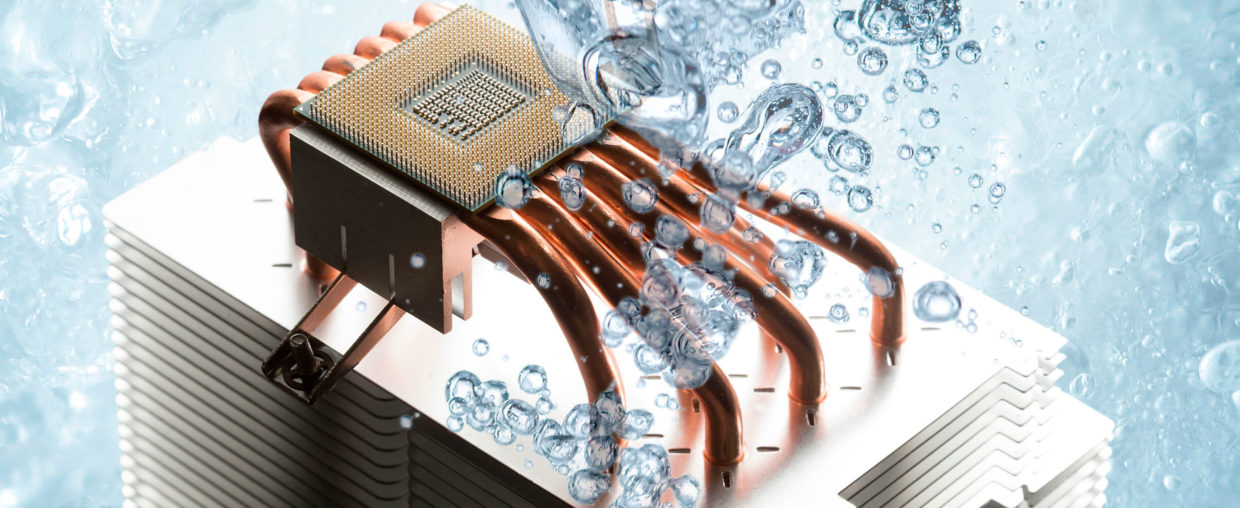
The quality of Heat Pipe Assemblies depends heavily on material selection, wick structure, vacuum control, working fluid filling, sealing technology, and finished product testing.
Suitable metal materials such as copper and aluminum are selected according to the application requirements. Copper is commonly used for heat pipes because of its excellent thermal conductivity, while aluminum is often used for fins or lightweight structures.
Before production, the pipe surface and inner wall must be cleaned carefully to remove oil, dust, oxide layers, and other impurities. Clean material surfaces help improve thermal performance and long-term stability.
The wick structure is one of the most important parts of a heat pipe. It controls how the condensed liquid returns from the condenser section to the evaporator section.
Common wick structures include:
Metal mesh wick
Grooved wick
Sintered powder wick
A metal mesh wick is suitable for general thermal transfer applications. A grooved wick offers relatively low flow resistance and is suitable for certain directional heat transfer designs. A sintered powder wick provides stronger capillary force and is often used for applications with higher reliability or more demanding installation angles.
After the internal structure is prepared, the heat pipe is evacuated to create a vacuum environment. Then, a precise amount of working fluid is injected according to the design requirements.
The filling ratio must be carefully controlled. Too little working fluid may cause dry-out, while too much liquid may reduce thermal response efficiency.
After filling, the heat pipe is sealed by argon arc welding, laser welding, or electron beam welding. A reliable seal is essential to prevent leakage, maintain vacuum stability, and ensure long-term performance.
According to the customer’s installation space, the heat pipe can be bent, flattened, or shaped into a custom structure. During this process, the deformation must be controlled carefully to avoid damaging the internal wick structure or reducing heat transfer performance.
The heat pipe is then assembled with fins, bases, mounting plates, or cold plates through soldering, brazing, welding, mechanical fixing, or other processes.
To ensure stable performance, Heat Pipe Assemblies should pass a series of inspections before delivery.
Common quality control items include:
Air tightness testing
Helium leak testing
Water pressure testing
Vacuum inspection
Wall thickness testing
Thermal conductivity testing
Temperature uniformity testing
Durability testing
High and low temperature stability testing
Appearance and dimension inspection
Strict testing helps ensure that the finished Heat Pipe Assemblies can operate reliably under real working conditions.
Surface treatment can improve corrosion resistance, appearance, wear resistance, and long-term durability.
Common options include:
Nickel plating
Anodizing
Passivation
Chemical treatment
Physical vapor deposition
Anti-oxidation coating
Nickel plating is often used for copper heat pipe assemblies to improve corrosion resistance and surface finish. Anodizing is commonly used for aluminum parts to enhance oxidation resistance. For special applications, advanced coatings can be selected to improve hardness, wear resistance, or thermal performance.
Heat Pipe Assemblies are widely used in computers, servers, power supplies, industrial control systems, embedded electronics, and communication equipment. They help transfer heat away from sensitive components and maintain stable operating temperatures.
For devices with high power density, heat pipe cooling can solve problems that traditional heat sinks cannot handle effectively.
Power modules, inverters, converters, IGBT modules, and charging equipment generate significant heat during operation. Heat Pipe Assemblies can help reduce hot spots and improve system safety.
This is especially important for equipment that must operate continuously under high load.
High-power LED modules require stable thermal management to maintain brightness, color consistency, and service life. Heat Pipe Assemblies can quickly conduct heat away from the LED chip and distribute it across a larger cooling area.
In battery packs and energy storage systems, temperature consistency is critical. Heat Pipe Assemblies can help reduce temperature differences between cells and improve safety, charging efficiency, and service life.
Aerospace and transportation systems require lightweight, compact, and reliable thermal solutions. Heat Pipe Assemblies can provide efficient heat transfer without complex moving parts, making them suitable for demanding environments.
Heat Pipe Assemblies can also be used in solar heat collection systems. Their fast heat transfer ability helps improve the stability and efficiency of solar thermal conversion.
| Customer Pain Point | Heat Pipe Assembly Solution |
|---|---|
| Device temperature is too high | Transfers heat quickly from the heat source to the cooling area |
| Installation space is limited | Supports bending, flattening, and compact custom design |
| Traditional heat sink is not enough | Combines heat pipe + fin + base for higher heat dissipation capacity |
| Local hot spots affect product life | Spreads heat evenly and reduces temperature concentration |
| Fan noise is too high | Improves passive cooling efficiency and reduces fan dependence |
| Product structure is irregular | Supports custom shape, mounting holes, and heat pipe layout |
| Outdoor or harsh environment use | Surface treatment improves corrosion and oxidation resistance |
| Concern about leakage or reliability | Vacuum sealing, helium testing, and thermal performance testing ensure stability |
Kingka Tech Industrial Limited provides customized Heat Pipe Assemblies for different industries and thermal management requirements. According to customer drawings, samples, heat source position, power consumption, installation space, and operating environment, Kingka can provide suitable heat pipe diameter, wick structure, fin design, base material, surface treatment, and assembly method.
Custom options include:
Heat pipe diameter and length
Single or multiple heat pipe layout
Round, flattened, or bent heat pipe structure
Copper or aluminum heat sink integration
CNC-machined base plates
Custom mounting holes and brackets
Nickel plating or anodized surface treatment
Thermal performance testing support
Prototype and batch production
By combining material selection, precision processing, strict quality inspection, and thermal design experience, Kingka helps customers develop Heat Pipe Assemblies that meet both performance and structural requirements.
When selecting a Heat Pipe Assembly, customers should consider the following factors:
Heat source power
Heat source size
Available installation space
Required working temperature
Heat transfer distance
Airflow condition
Product orientation during operation
Material and weight requirements
Surface treatment requirements
Expected service life
Testing and reliability standards
For example, a compact 30W electronic module may only need a small 3 mm or 4 mm heat pipe assembly. A 150W industrial power module may require multiple 6 mm or 8 mm heat pipes with aluminum fins. For a high-power 300W system, a larger copper base, multiple heat pipes, and optimized fin structure may be required.
A correct thermal design should not only focus on heat pipe size, but also consider contact surface flatness, thermal interface material, fin efficiency, airflow path, and mounting pressure.
Although Heat Pipe Assemblies are generally maintenance-friendly, proper use can help extend service life.
Keep the surface clean and avoid dust accumulation.
Avoid using corrosive cleaning agents.
Check whether the assembly is deformed, loose, or damaged.
Ensure the heat pipe operates within the designed temperature range.
Avoid excessive mechanical impact during installation.
Do not drill, cut, or disassemble sealed heat pipes.
Replace damaged or performance-degraded assemblies in time.
For critical equipment, regular inspection records are recommended to help identify potential problems early.
Heat Pipe Assemblies are an effective thermal management solution for applications that require high heat transfer efficiency, compact structure, low thermal resistance, and long-term reliability. By using phase-change heat transfer, internal wick structures, precision vacuum sealing, and customized assembly design, they can solve many cooling challenges in electronics, power systems, LED lighting, battery systems, aerospace, and industrial equipment.
For customers looking for custom heat pipe assemblies, Kingka can provide material selection, structural design, processing, surface treatment, testing, and production support according to specific application requirements. Whether the project requires compact cooling, high-power heat transfer, low-noise operation, or special installation design, custom Heat Pipe Assemblies can help improve product stability, performance, and service life.

Kingka Tech Industrial Limited
We specialize in Heat Sink、Liquid Cold Plate、precision CNC machining and our products are widely used in telecommunication industry, aerospace, automotive, industrial control, power electronics, medical instruments, security electronics, LED lighting and multimedia consumption.


Address:
Da Long New Village, Xie Gang Town, Dongguan City, Guangdong Province, China 523598
Email:
WhatsAPP: