
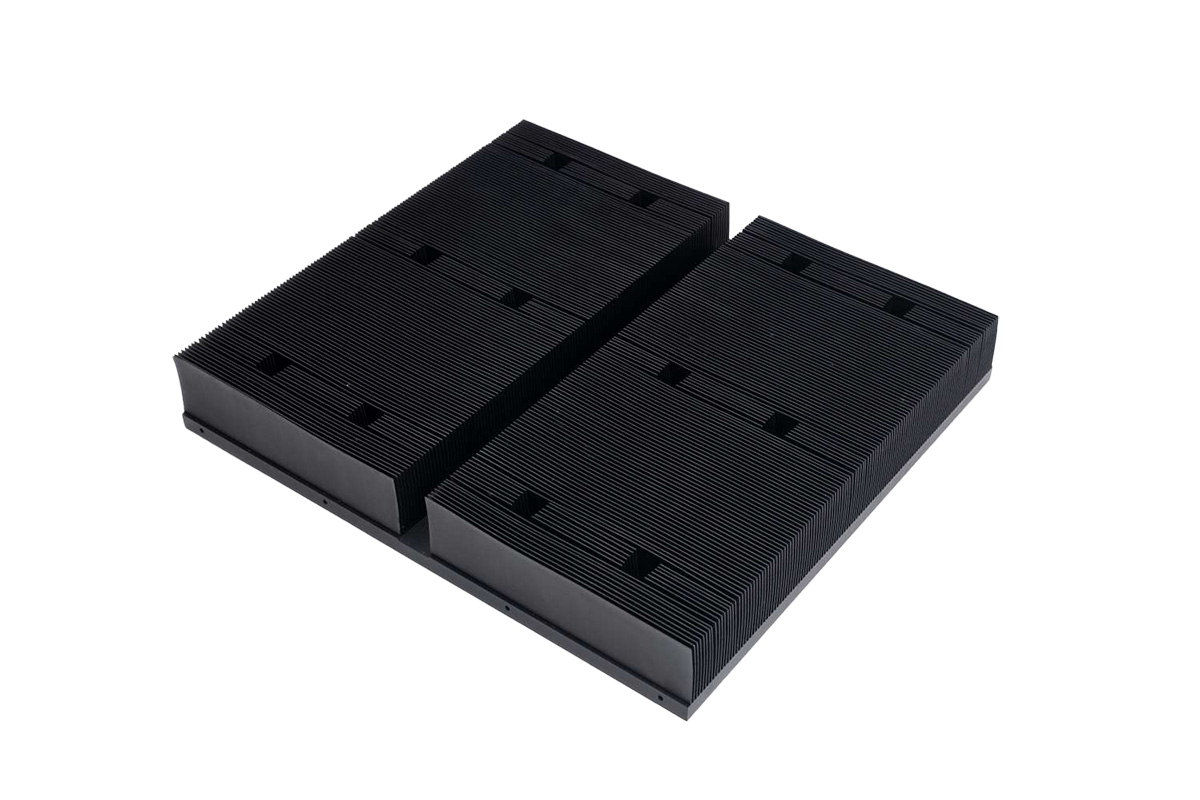
An Aluminum Extruded Radiator is a lightweight and efficient thermal management component manufactured by forcing heated aluminum alloy through a specially designed extrusion die. This process forms the base, cooling fins, mounting features, and other cross-sectional structures into a continuous aluminum profile.
Commonly manufactured from 6063 or 6061 aluminum alloy, an Aluminum Extrusion Heat Sink provides a good balance of thermal conductivity, mechanical strength, corrosion resistance, weight, and manufacturing cost.
Because the extrusion process supports a wide range of fin geometries and profile sizes, extruded aluminum radiators are widely used in power electronics, EV systems, 5G communication equipment, photovoltaic inverters, energy storage systems, industrial controls, LED lighting, and telecom applications.
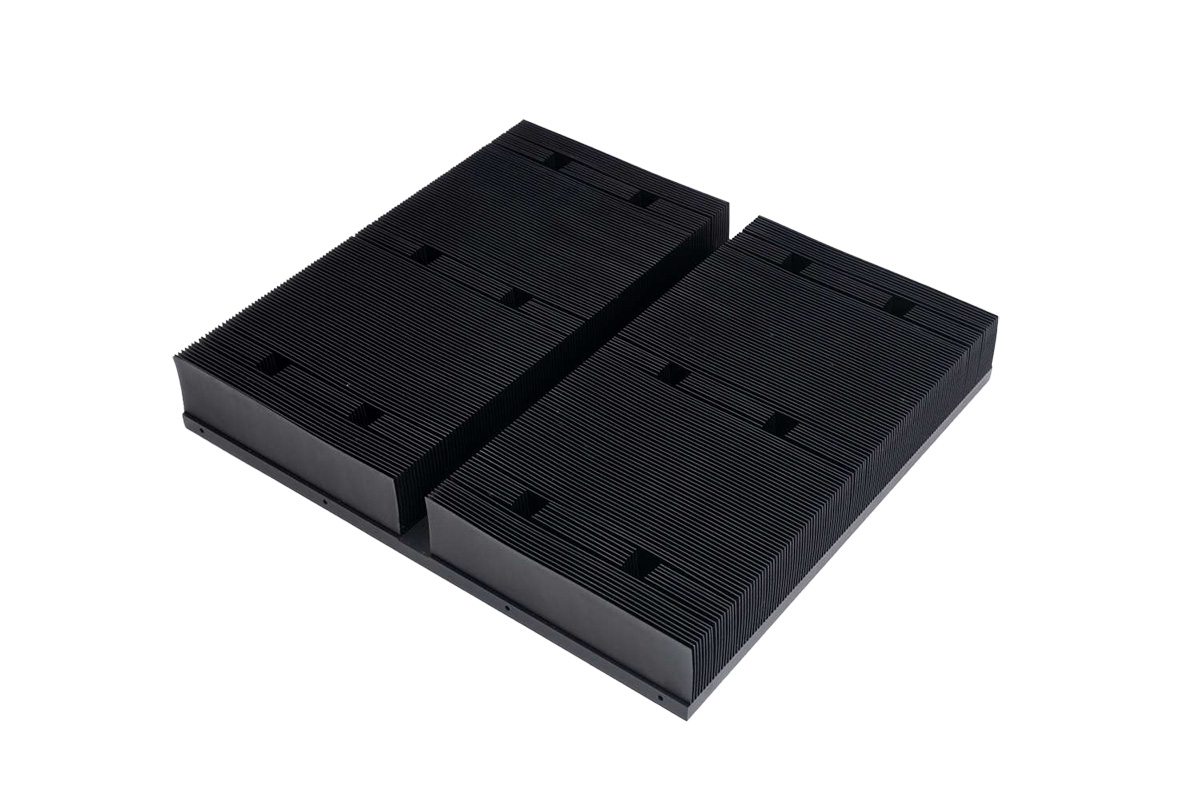
The main function of an Extruded Aluminum Heat Sink is to transfer heat from an electronic component into the surrounding air.
The heat dissipation process generally includes three stages:
Heat is transferred from the electronic component to the radiator base.
The aluminum base spreads the heat toward the cooling fins through thermal conduction.
The fins increase the heat transfer surface area and release thermal energy into the surrounding air through convection.
Depending on the application, the radiator can operate under:
Natural convection
Forced-air cooling
Fan-assisted cooling
Important design factors include fin height, fin thickness, fin pitch, fin spacing, base thickness, airflow velocity, pressure drop, and thermal resistance.
For forced-air applications, the fin structure must provide enough cooling surface area without excessively restricting airflow.
Material selection has a direct impact on thermal performance, mechanical strength, extrusion difficulty, and cost.
6063 aluminum is one of the most commonly used materials for extruded heat sinks.
Its advantages include:
Good thermal conductivity
Excellent extrudability
Good surface finish
Good corrosion resistance
Excellent anodizing performance
Suitable for relatively complex fin profiles
6063 is often preferred for aluminum heat sink extrusion profiles where thermal performance and profile complexity are important.
6061 aluminum provides higher mechanical strength and is suitable for applications requiring stronger structural performance.
It is commonly selected when the radiator must withstand:
Mechanical loading
Vibration
Impact
Industrial operating conditions
Depending on alloy composition and temper, thermal conductivity can reach approximately 167–200 W/m·K, making aluminum suitable for a wide range of electronic thermal management applications.
Aluminum provides rapid heat spreading from the heat source into the cooling fins.
The overall thermal performance can be further improved by optimizing:
Fin surface area
Fin height
Fin spacing
Base thickness
Airflow direction
Contact surface flatness
A properly designed Extruded Aluminum Cooling Fin structure helps reduce thermal resistance while maintaining efficient airflow.
Aluminum has a density of approximately 2.7 g/cm³, significantly lower than copper.
This makes an Extruded Aluminum Radiator particularly suitable for weight-sensitive applications such as:
Electric vehicles
Drones
Communication equipment
Portable power systems
Automotive electronics
The lower weight can reduce total system mass while maintaining good heat dissipation capability.
The extrusion process allows manufacturers to develop different cross-sectional profiles according to cooling requirements.
Customization can include:
Straight fins
Tapered fins
Wave-shaped fins
High-density fin arrays
Hollow profiles
Mounting channels
Irregular cross-sectional structures
Fin thickness can typically be adjusted according to profile size, extrusion ratio, material, and die capability.
| Parameter | Typical Option |
|---|---|
| Material | Aluminum 6063 / 6061 |
| Manufacturing Process | Aluminum Extrusion + CNC Machining |
| Thermal Conductivity | Approx. 167–200 W/m·K, Material Dependent |
| Fin Structure | Straight / Wave / Custom |
| Fin Thickness | Approx. 0.5–2.0 mm / Custom |
| Cooling Method | Natural / Forced-Air Cooling |
| Surface Treatment | Anodizing / Powder Coating / Natural Finish |
| Secondary Processing | CNC Milling / Drilling / Tapping / Cutting |
| Color | Natural / Black / Custom |
| Customization | OEM / ODM Available |
Actual dimensions and performance depend on extrusion profile design, heat load, airflow, installation space, and operating conditions.
The manufacturing process usually includes the following steps.
6063 or 6061 aluminum billets are selected according to the required thermal and mechanical properties.
The billet is heated and pushed through an extrusion die under high pressure.
The die defines the cross-sectional shape of the aluminum radiator, including the base and cooling fins.
After extrusion, the profile is cooled and straightened to improve dimensional stability.
The continuous aluminum profile is cut to the required product length.
Secondary machining may include:
Milling
Drilling
Tapping
Slotting
Mounting hole machining
Surface flattening
CNC machining allows the standard extrusion profile to be adapted to different electronic assemblies.
Available surface treatments include:
Black anodizing
Clear anodizing
Powder coating
Conversion coating
Custom protective finishes
Anodizing improves corrosion resistance, surface durability, and appearance.
The performance of an Aluminum Extrusion Heat Sink depends heavily on fin geometry.
Higher fins increase surface area but may also increase extrusion difficulty and airflow resistance.
Thinner fins can increase fin density, but the extrusion process has practical limits based on material flow and die strength.
Fin pitch refers to the spacing between adjacent fins.
Smaller fin pitch increases surface area but can also increase pressure drop in forced-air systems.
The radiator base spreads heat from concentrated heat sources toward the fins.
A thicker base can improve heat spreading but also increases weight, material usage, and cost.
The final design therefore requires a balance between thermal performance, airflow, mechanical strength, manufacturability, and cost.
| Feature | Aluminum Extruded Radiator | Die-Cast Heat Sink |
|---|---|---|
| Process | Aluminum Extrusion | Die Casting |
| Thermal Conductivity | Generally Higher | Generally Lower |
| Fin Geometry | Straight / Continuous Profiles | Complex 3D Structures |
| Porosity | Very Low | Possible |
| Tooling | Extrusion Die | Die-Casting Mold |
| Secondary CNC | Easy | Available |
| Typical Application | Power Electronics / Telecom / Industrial | Enclosures / Complex Integrated Parts |
Extrusion is particularly suitable for applications requiring long fins, good thermal conductivity, and consistent cross-sectional profiles.
Die casting is often more suitable when complex three-dimensional housings and integrated structural features are required.
Extruded aluminum heat sinks can be used for:
Motor controllers
On-board chargers
DC-DC converters
Power modules
EV charging equipment
Lightweight aluminum construction helps reduce system weight while supporting effective heat dissipation.
An Aluminum Extruded Thermal Management Component can be used in:
5G base station equipment
RF modules
Power amplifiers
Network power supplies
Communication electronics
High-density cooling fins can be optimized for natural or forced-air cooling.
Solar inverters, PCS systems, and energy storage equipment generate considerable heat from IGBTs, MOSFETs, and other power semiconductor devices.
A custom extruded aluminum radiator provides a cost-effective cooling solution for these systems.
Other applications include:
Servo drives
Motor drives
Industrial computers
Power supplies
Automation equipment
Frequency converters
LED systems
A Custom Extruded Aluminum Radiator can be developed according to specific heat dissipation, installation, and mechanical requirements.
Customization options include:
6063 or 6061 aluminum
Profile width and length
Base thickness
Fin height
Fin thickness
Fin pitch
Mounting structures
CNC machining
Drilling and tapping
Surface treatment
Anodizing color
OEM design
For demanding applications, thermal simulation, CFD airflow analysis, prototype testing, and thermal resistance testing can also be used to optimize the radiator design.
Aluminum extruded radiators provide several important advantages:
Good thermal conductivity
Lightweight construction
High production efficiency
Good corrosion resistance
Flexible profile design
Easy CNC machining
Excellent anodizing capability
Suitable for mass production
Competitive manufacturing cost
OEM and ODM customization
These characteristics make the 6063/6061 Aluminum Extrusion Heat Sink a widely used thermal solution for electronic, automotive, communication, renewable energy, and industrial applications.
The Aluminum Extruded Radiator is an efficient and cost-effective thermal management solution produced through precision aluminum extrusion technology.
By optimizing fin height, fin thickness, fin pitch, base thickness, airflow, and thermal resistance, manufacturers can develop customized extrusion profiles for different heat dissipation requirements.
With the advantages of lightweight aluminum construction, good thermal conductivity, corrosion resistance, flexible CNC machining, and scalable production, Extruded Aluminum Heat Sinks are widely used in EV electronics, 5G communication, solar inverters, energy storage systems, telecom equipment, and industrial power electronics.
For projects requiring customized dimensions, fin structures, mounting features, or surface treatments, a Custom Extruded Aluminum Radiator can be designed according to the specific thermal load and operating environment.

Kingka Tech Industrial Limited
We specialize in Heat Sink、Liquid Cold Plate、precision CNC machining and our products are widely used in telecommunication industry, aerospace, automotive, industrial control, power electronics, medical instruments, security electronics, LED lighting and multimedia consumption.


Address:
Da Long New Village, Xie Gang Town, Dongguan City, Guangdong Province, China 523598
Email:
WhatsAPP: