
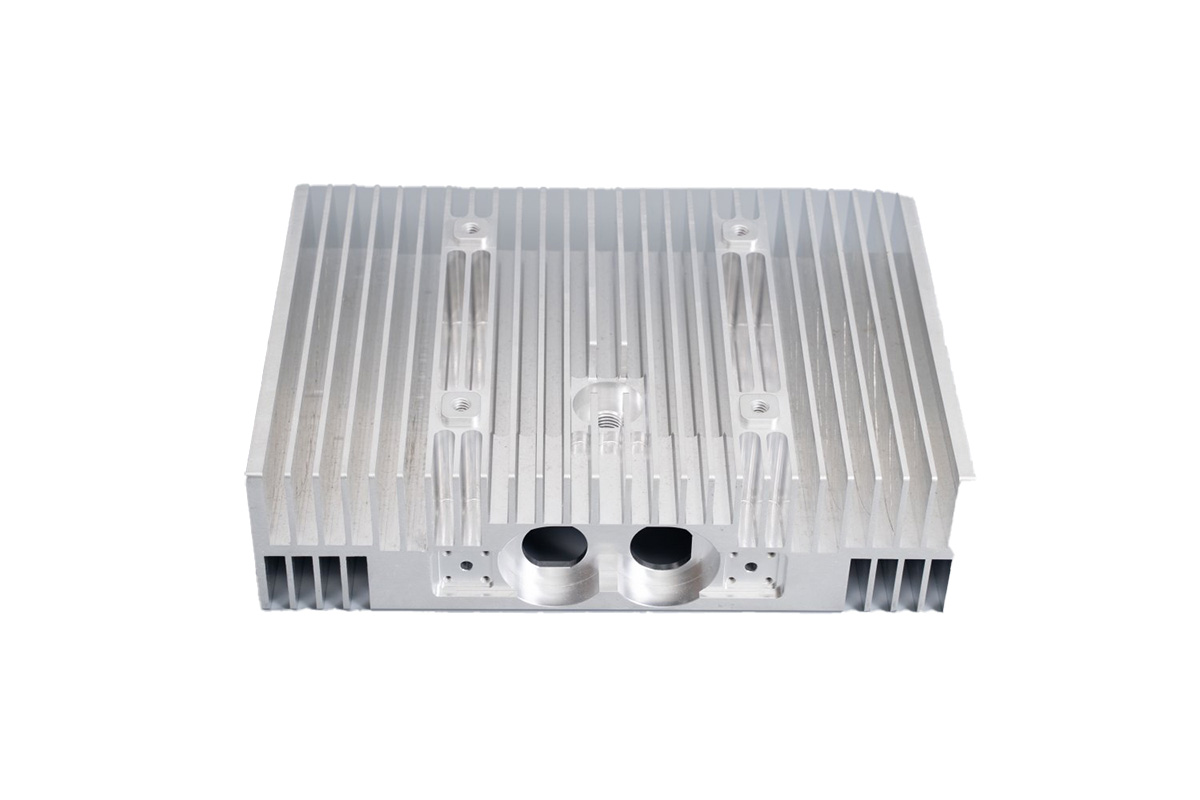
The Battery Pack Liquid Cooling Plate is a high-efficiency thermal management component designed to control battery temperature in electric vehicles, energy storage systems, and other high-power battery applications.
By combining a high thermal conductivity aluminum substrate with optimized internal liquid flow channels, the battery cooling plate transfers heat away from battery cells and modules while helping maintain a more uniform temperature across the entire battery pack.
As battery energy density and charging power continue to increase, effective battery thermal management becomes increasingly important. A properly designed battery Liquid Cooling Plate can help control hotspots, reduce temperature differences between cells, and support stable operation during fast charging and high-power discharging.
Typical applications include:
Electric vehicle battery packs
800V high-voltage EV platforms
Battery energy storage systems
Hybrid electric vehicles
Commercial vehicle battery systems
High-power battery modules
Industrial battery systems
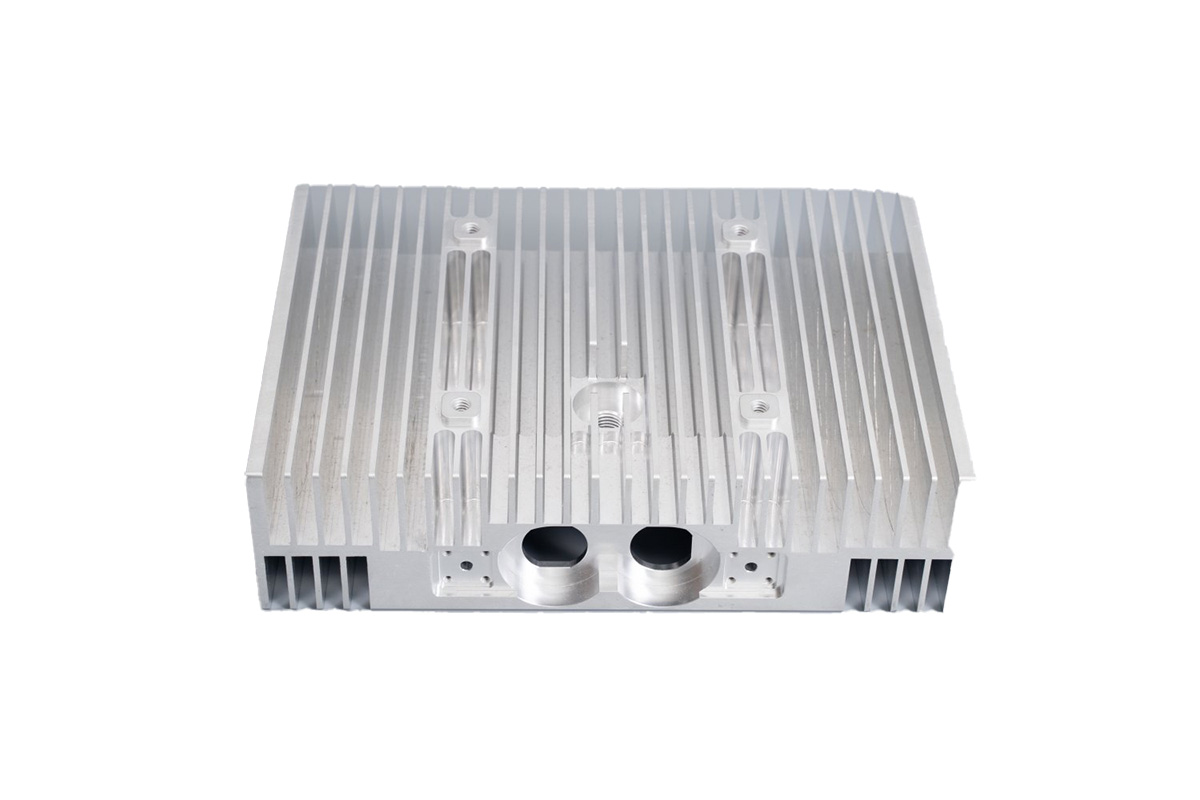
A battery cooling plate uses circulating coolant to absorb and remove heat generated by battery cells.
The basic heat transfer process includes:
Heat is generated during battery charging and discharging.
Heat passes from the battery cell or module into the cooling plate through a thermal interface material.
The aluminum or copper-aluminum substrate spreads the heat across the cold plate.
Coolant flows through internal microchannels or cooling channels.
Heat is transferred from the metal structure into the coolant.
Heated coolant is transported to a radiator, chiller, or other heat exchanger.
This process combines thermal conduction and forced convection to provide much higher cooling capacity than natural air cooling.
For high-energy-density battery packs, the liquid cooling system can be optimized to maintain a small temperature difference between individual cells and modules.
Temperature uniformity is one of the most important design goals of an EV battery cooling plate.
Large temperature differences inside a battery pack can lead to uneven cell aging, reduced charging efficiency, and inconsistent battery performance.
To improve thermal uniformity, the liquid cooling plate can use:
Dual-inlet and dual-outlet flow paths
Parallel channels
Serpentine channels
Microchannel structures
Gradient-width channels
Wavy flow-guiding structures
Localized hotspot cooling channels
Typical microchannel dimensions can be customized with channel widths around 0.5–2.0 mm and depths around 1–3 mm, depending on flow rate, pressure drop, manufacturing process, and cooling requirements.
An optimized channel design helps balance coolant flow distribution, convective heat transfer coefficient, pressure drop, and temperature uniformity.
The material of the battery liquid cold plate directly affects heat spreading, system weight, corrosion resistance, and manufacturing cost.
Aluminum 6061-T6 is widely used for battery cooling plates because it provides a strong combination of:
Good thermal conductivity
Low density
Mechanical strength
Good machinability
Welding compatibility
Corrosion resistance
Cost efficiency
With a density of approximately 2.7 g/cm³, aluminum is particularly attractive for EV battery systems where lightweight construction is important.
For applications with higher local heat flux, a copper-aluminum composite cooling plate can improve heat spreading.
Copper has significantly higher thermal conductivity than aluminum, making it useful near concentrated heat sources.
A hybrid structure can combine:
Copper for rapid heat spreading
Aluminum for lightweight construction
Optimized channels for coolant distribution
This can provide a balance between thermal performance, weight, and cost.
| Parameter | Typical Specification |
|---|---|
| Main Material | Aluminum 6061-T6 / 6063 / Copper-Aluminum Composite |
| Cooling Method | Liquid Cooling |
| Channel Width | Approx. 0.5–2.0 mm / Custom |
| Channel Depth | Approx. 1–3 mm / Custom |
| Cooling Medium | Water-Glycol / Custom Coolant |
| Manufacturing Process | CNC + FSW / Stamping + Brazing / Laser Welding |
| Surface Treatment | Anodizing / Nickel-Phosphorus Plating / Protective Coating |
| Temperature Range | -40°C to 120°C or Custom |
| Pressure Drop | Optimized According to Flow Requirements |
| Leak Testing | Pressure Test / Helium Leak Test |
| Mounting Structure | Customizable |
| OEM / ODM | Available |
Actual specifications should be determined according to battery layout, cooling capacity, coolant flow rate, system pressure, and operating environment.
The internal flow channel is one of the most important parts of a microchannel battery cooling plate.
If channels are too narrow, cooling surface area may increase but pressure drop can become excessive.
If channels are too large, coolant resistance may decrease, but heat transfer efficiency and temperature uniformity may be reduced.
Important hydraulic and thermal parameters include:
Coolant flow rate
Channel width
Channel depth
Hydraulic diameter
Flow velocity
Pressure drop
Reynolds number
Heat transfer coefficient
Heat flux
Inlet coolant temperature
For complex battery packs, CFD simulation can be used to optimize channel geometry and coolant distribution before mass production.
Gradient flow channels can also be designed to compensate for flow imbalance and improve cooling uniformity across large battery modules.
Reducing battery pack weight is important for electric vehicle efficiency and driving range.
An aluminum battery cooling plate provides a significant weight advantage compared with a full copper cold plate.
At the same time, properly selected aluminum alloys can provide the mechanical strength required for:
Battery module support
Vehicle vibration
Thermal cycling
Road impact
Long-term operation
The cooling plate structure can also integrate:
Battery module mounting points
Positioning features
Insulation layers
Fixing slots
Connection ports
Structural reinforcement features
This allows the cooling plate to function as both a thermal and mechanical component within the battery pack.
Coolant leakage is a critical concern in battery thermal management systems.
Depending on the design, battery cooling plates can be manufactured using:
Friction Stir Welding (FSW)
Vacuum brazing
Laser welding
Stamping and brazing
CNC-machined channel sealing
An FSW liquid cold plate is particularly suitable for aluminum structures because Friction Stir Welding joins the material in the solid state without fully melting the base metal.
Advantages can include:
Strong weld integrity
Low porosity
Reduced thermal distortion
Good dimensional stability
Reliable sealing
Suitable for complex aluminum flow channels
After manufacturing, the cooling plate can undergo pressure testing, helium leak testing, flow testing, and dimensional inspection.
Battery cooling plates must operate reliably over long service periods while continuously contacting coolant.
Available surface treatments can include:
Anodizing
Nickel-phosphorus plating
Passivation
Nano-ceramic coatings
Protective conversion coatings
The appropriate surface treatment depends on the substrate material, coolant chemistry, corrosion requirements, and operating environment.
For low-temperature environments, water-glycol coolant can also be used to improve freeze protection.
Proper coolant selection helps reduce:
Corrosion
Scaling
Channel blockage
Galvanic corrosion
Long-term material degradation
The EV battery liquid cooling plate is positioned beneath or between battery modules to remove heat generated during charging and discharging.
It is especially important for:
High-energy-density battery packs
NCM battery systems
LFP battery packs
Fast-charging vehicles
High-performance EVs
800V battery platforms
The cooling plate can help maintain consistent cell temperatures and reduce localized hotspots during high-current operation.
Large battery energy storage systems require reliable temperature control across hundreds or thousands of cells.
An energy storage liquid cooling plate can help maintain temperature uniformity during repeated charging and discharging cycles.
Applications include:
Containerized ESS
Commercial energy storage
Utility-scale battery systems
Renewable energy storage
Battery cabinets
Hybrid vehicles, buses, trucks, and industrial electric vehicles can also use customized liquid cooling plates to manage battery temperature under variable load conditions.
| Feature | Liquid Cooling Plate | Air Cooling |
|---|---|---|
| Cooling Medium | Liquid Coolant | Air |
| Heat Removal Capacity | High | Moderate |
| Temperature Uniformity | Better | More Limited |
| High Heat Flux Capability | High | Lower |
| Fast-Charging Support | Better Suited | More Limited |
| Packaging Density | Compact | Requires Air Channels |
| System Complexity | Higher | Lower |
| Typical Application | EV / ESS / High-Power Batteries | Lower-Power Battery Systems |
As battery power density increases, liquid cooling generally provides better temperature control than conventional forced-air cooling.
As a custom liquid cooling plate manufacturer, the cold plate can be developed according to the complete battery thermal management system.
Customization options include:
Cooling plate dimensions
Aluminum alloy
Copper-aluminum composite structure
Channel width and depth
Serpentine or parallel channels
Gradient flow channels
Inlet and outlet position
Port type
Mounting holes
Surface flatness
Surface treatment
Operating pressure
Coolant type
Integrated battery mounting structures
Engineering support can also include:
CFD flow simulation
Thermal analysis
Pressure-drop optimization
Prototype development
Thermal performance testing
Flow testing
Pressure testing
Helium leak testing
A properly engineered Battery Pack Liquid Cooling Plate provides several advantages for modern battery systems:
High thermal conductivity
Improved temperature uniformity
High heat removal capacity
Lightweight aluminum construction
Optimized microchannel design
Low pressure drop
Reliable leak-proof structure
Good mechanical strength
Corrosion resistance
Flexible OEM and ODM customization
For electric vehicles, ESS, fast-charging battery packs, and high-power battery systems, liquid cooling provides an efficient way to control battery temperature and improve overall thermal management.
The Battery Pack Liquid Cooling Plate is a critical component in modern EV and energy storage thermal management systems.
By combining high-conductivity aluminum or composite materials with optimized internal coolant channels, the plate helps remove heat, improve battery temperature uniformity, and support high-power charging and discharging.
Technologies such as microchannel cooling, CFD flow optimization, Friction Stir Welding, precision CNC machining, corrosion-resistant surface treatment, and helium leak testing can further improve thermal performance and long-term reliability.
For battery manufacturers, EV system integrators, and energy storage companies, a custom battery liquid cooling plate can be engineered according to battery layout, heat load, coolant flow, pressure drop, weight, and installation requirements.

Kingka Tech Industrial Limited
We specialize in Heat Sink、Liquid Cold Plate、precision CNC machining and our products are widely used in telecommunication industry, aerospace, automotive, industrial control, power electronics, medical instruments, security electronics, LED lighting and multimedia consumption.


Address:
Da Long New Village, Xie Gang Town, Dongguan City, Guangdong Province, China 523598
Email:
WhatsAPP: