
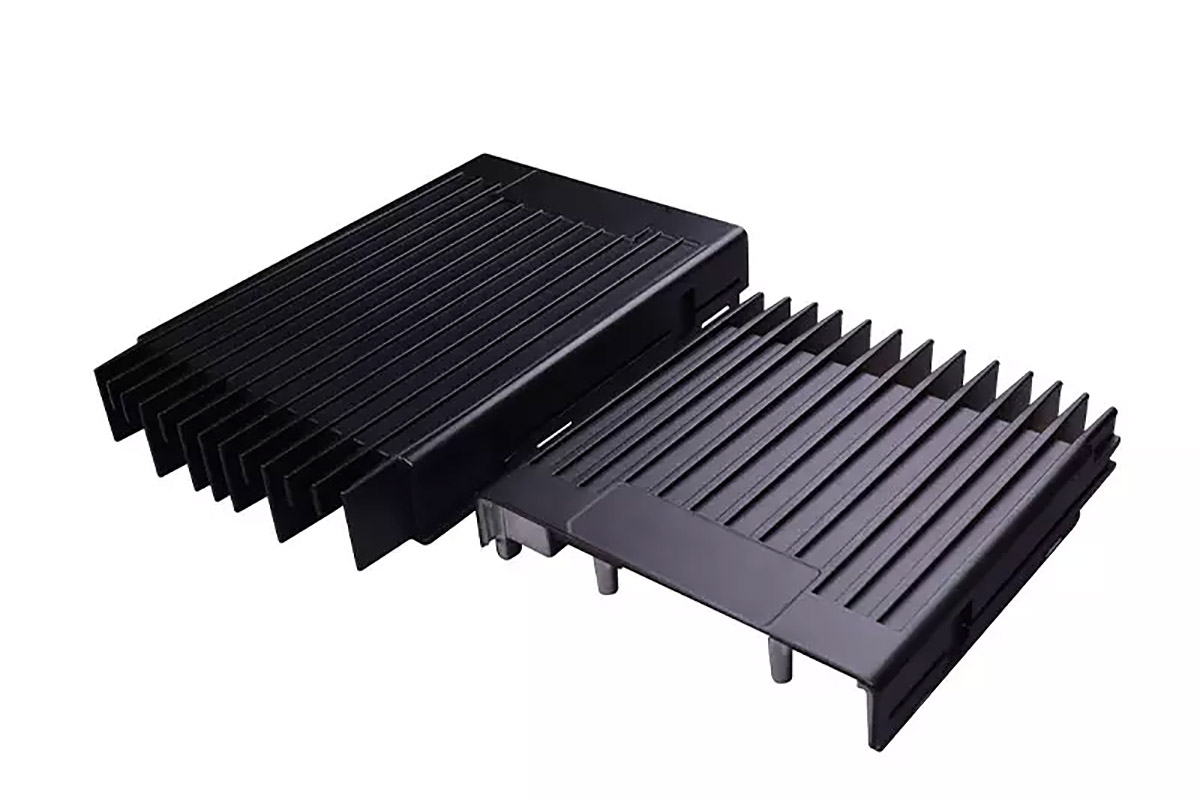
A Die Casting Heat Sink is a highly efficient thermal management solution manufactured using high-pressure die casting technology. By injecting molten aluminum alloy into precision steel molds under high pressure, complex heat sink structures with excellent dimensional accuracy, high mechanical strength, and outstanding production consistency can be produced. Compared with traditional extrusion heat sinks, Die Casting Heat Sinks offer greater design flexibility, allowing integrated mounting features, complex fin geometries, and customized cooling structures. As a professional heat sink manufacturer, KINGKA provides high-quality custom die casting heat sinks with OEM and ODM services for LED lighting, automotive electronics, industrial equipment, telecommunications, and power electronics.
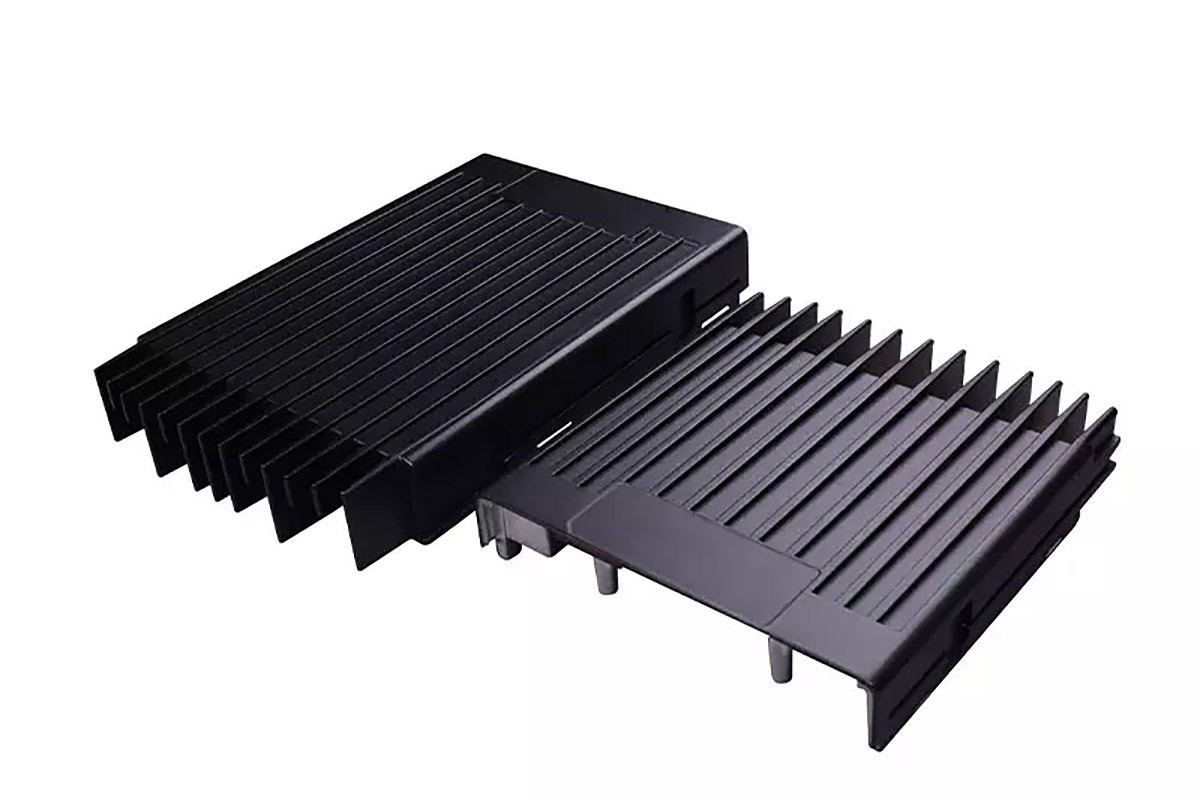
A Die Casting Heat Sink is a metal heat dissipation component manufactured by forcing molten aluminum alloy into a hardened steel die under high pressure. Once the molten metal cools and solidifies, it forms a one-piece heat sink with intricate fin structures and integrated mounting features that would be difficult or impossible to achieve using conventional extrusion processes.
Compared with other manufacturing methods, Die Casting Heat Sinks provide several advantages:
Complex three-dimensional fin designs
Excellent dimensional consistency
High production efficiency
Cost-effective mass production
Lightweight yet durable construction
Minimal secondary machining
These characteristics make die casting an ideal manufacturing process for medium- and high-volume production of custom heat sinks.
The primary function of a Die Casting Heat Sink is to absorb, transfer, and dissipate heat generated by electronic components.
Heat generated by LEDs, CPUs, power modules, inverters, or other electronic devices is transferred from the heat source to the base of the heat sink through direct contact or a thermal interface material (TIM).
The aluminum base rapidly spreads heat throughout the entire heat sink because aluminum alloys offer excellent thermal conductivity and lightweight performance.
The precisely designed cooling fins maximize the surface area exposed to the surrounding air. Heat is then released through natural convection or forced airflow from cooling fans, keeping electronic components within safe operating temperatures.
This efficient heat transfer process improves equipment reliability, enhances performance, and extends product lifespan.
KINGKA follows strict quality standards throughout the manufacturing process to ensure every Die Casting Heat Sink delivers reliable thermal performance and consistent quality.
Premium aluminum alloys such as ADC12, ADC10, and A380 are carefully inspected for:
Chemical composition
Mechanical properties
Material certification
Surface quality
High-precision die-casting molds are designed according to customer drawings or thermal simulation results. Before production, every mold is preheated and tested to ensure stable casting quality.
Molten aluminum alloy is injected into precision molds under high pressure, producing complex heat sink structures with excellent dimensional accuracy and repeatability.
After casting, flash removal, trimming, deburring, and surface cleaning are performed to prepare the parts for secondary processing.
Critical surfaces such as mounting interfaces, threaded holes, and installation features can be precision machined to meet tighter tolerances.
Available surface treatments include:
Natural Anodizing
Black Anodizing
Powder Coating
Chemical Passivation
Sand Blasting
These finishes improve corrosion resistance while enhancing appearance and durability.
Every Die Casting Heat Sink undergoes comprehensive inspection, including:
CMM dimensional inspection
Flatness measurement
Surface quality inspection
Thermal performance verification
Mechanical strength testing
| Parameter | Specification |
|---|---|
| Manufacturing Process | High Pressure Die Casting |
| Material | ADC12, ADC10, A380 Aluminum Alloy |
| Optional Material | Magnesium Alloy |
| Surface Treatment | Natural Anodizing, Powder Coating, Passivation |
| Fin Height | 5–50 mm |
| Base Thickness | 3–10 mm |
| Operating Temperature | -40°C to +150°C |
| Thermal Resistance | 0.05–0.20 K/W |
| Dimensional Tolerance | ±0.05 mm |
| Certification | ISO9001, CE, RoHS |
| OEM & ODM | Available |
| Production Capacity | 50,000 PCS / Month |
| Port | Shenzhen, China |
Optimized fin geometry increases the effective cooling surface area, allowing efficient heat dissipation for high-power electronic devices.
High-pressure die casting enables integrated mounting bosses, threaded holes, reinforcement ribs, and sophisticated fin structures to be formed in a single component.
Although die casting requires an initial tooling investment, the cost per unit decreases significantly in medium- and high-volume production, making it one of the most economical manufacturing methods.
Aluminum alloys provide an excellent balance between thermal conductivity, corrosion resistance, strength, and lightweight construction.
Precision steel molds ensure excellent repeatability and stable quality throughout the production process.
Integrated structural features eliminate the need for additional brackets or welded components, reducing assembly costs and improving product reliability.
The cooling performance of a Die Casting Heat Sink depends on fin geometry, airflow, material selection, and installation conditions.
Typical cooling capacity is shown below:
| Heat Sink Type | Typical Heat Dissipation |
|---|---|
| LED Heat Sink | 20–80 W |
| Power Supply Heat Sink | 80–200 W |
| Industrial Electronics | 200–500 W |
| Custom High-Power Heat Sink | 500 W+ |
For applications with higher thermal requirements, Die Casting Heat Sinks can also be integrated with heat pipes, vapor chambers, or liquid cooling technologies to further enhance heat dissipation.
Die Casting Heat Sinks are widely used across various industries, including:
LED Lighting
High Bay Lights
Street Lights
Automotive Electronics
Power Modules
Inverters
Power Supplies
Telecommunications Equipment
Network Devices
Renewable Energy Systems
Consumer Electronics
Medical Equipment
Industrial Automation
Industrial Control Systems
Every project has unique thermal requirements. As a trusted custom heat sink manufacturer, KINGKA provides comprehensive customization services to meet specific application needs.
Heat sink length, width, base thickness, and fin height can all be customized according to your installation space and cooling requirements.
Our engineering team performs CFD thermal simulations to optimize fin geometry, airflow, and heat transfer efficiency before production.
We provide complete OEM and ODM services, including:
Custom dimensions
Fin structure optimization
CNC machining
Surface treatment selection
Logo engraving
Prototype manufacturing
Mass production
Whether you provide CAD drawings, STEP files, or physical samples, KINGKA can develop a customized Die Casting Heat Sink that meets your performance goals.
KINGKA is a professional heat sink manufacturer specializing in advanced thermal management solutions for customers worldwide.
Our strengths include:
High-pressure die casting manufacturing
Precision CNC machining
Professional thermal engineering support
Rapid prototyping
Strict quality control
Competitive factory pricing
Stable monthly production capacity
Global OEM & ODM manufacturing services
From concept design and thermal simulation to production and quality inspection, KINGKA delivers reliable cooling solutions that improve product performance and reduce manufacturing costs.
Q1: What is the difference between a Die Casting Heat Sink and an extruded heat sink?
A: A Die Casting Heat Sink offers greater design flexibility, allowing complex fin structures and integrated mounting features. It is especially suitable for medium- and high-volume production, while extruded heat sinks are better suited for simple, linear profiles.
Q2: What materials are commonly used for Die Casting Heat Sinks?
A: The most commonly used materials are ADC12, ADC10, and A380 aluminum alloys due to their excellent casting properties, thermal conductivity, and corrosion resistance.
Q3: Can you manufacture custom Die Casting Heat Sinks?
A: Yes. KINGKA provides complete OEM and ODM services, including customized dimensions, fin structures, surface treatments, CNC machining, and thermal optimization.
Q4: What industries commonly use Die Casting Heat Sinks?
A: They are widely used in LED lighting, automotive electronics, industrial equipment, telecommunications, renewable energy systems, power electronics, and consumer electronics.
Q5: Do you provide prototype manufacturing before mass production?
A: Yes. We offer prototype development, thermal simulation, design optimization, and product validation before proceeding to full-scale production.

Kingka Tech Industrial Limited
We specialize in Heat Sink、Liquid Cold Plate、precision CNC machining and our products are widely used in telecommunication industry, aerospace, automotive, industrial control, power electronics, medical instruments, security electronics, LED lighting and multimedia consumption.


Address:
Da Long New Village, Xie Gang Town, Dongguan City, Guangdong Province, China 523598
Email:
WhatsAPP: