
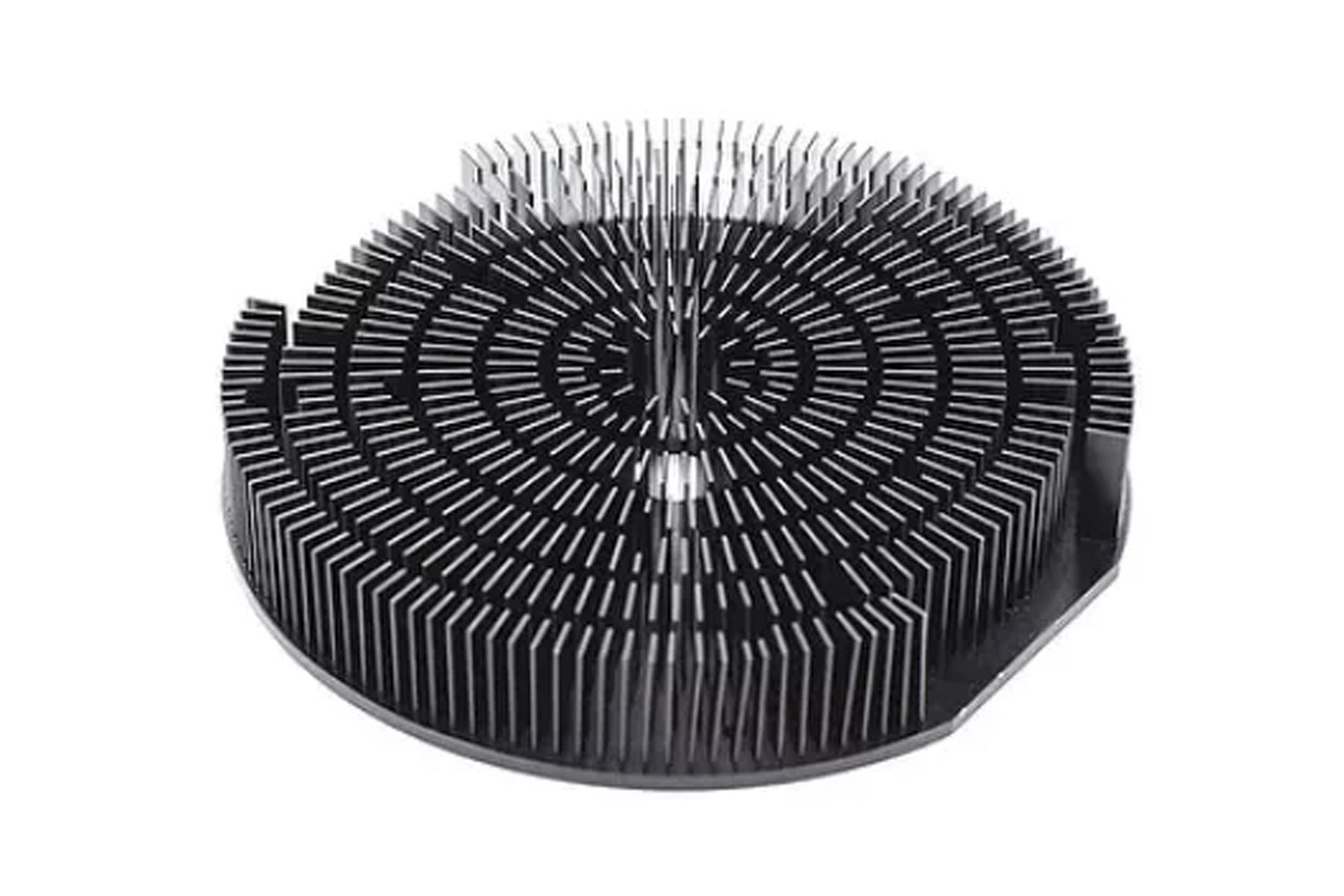
A cold forged heat sink is a high-performance thermal management component manufactured through an advanced cold forging process. Unlike traditional heat sink manufacturing methods that require heating the raw material, cold forging forms aluminum, copper, or alloy materials at temperatures below their recrystallization point (typically room temperature) through precision tooling.
This manufacturing process improves material strength, surface quality, dimensional accuracy, and production efficiency, making cold forged heat sinks an ideal solution for high-performance cooling applications such as LED lighting, electronic devices, power modules, and industrial equipment.
As a professional custom heat sink manufacturer, we provide OEM and ODM cold forged heat sink solutions with optimized designs for different thermal requirements.
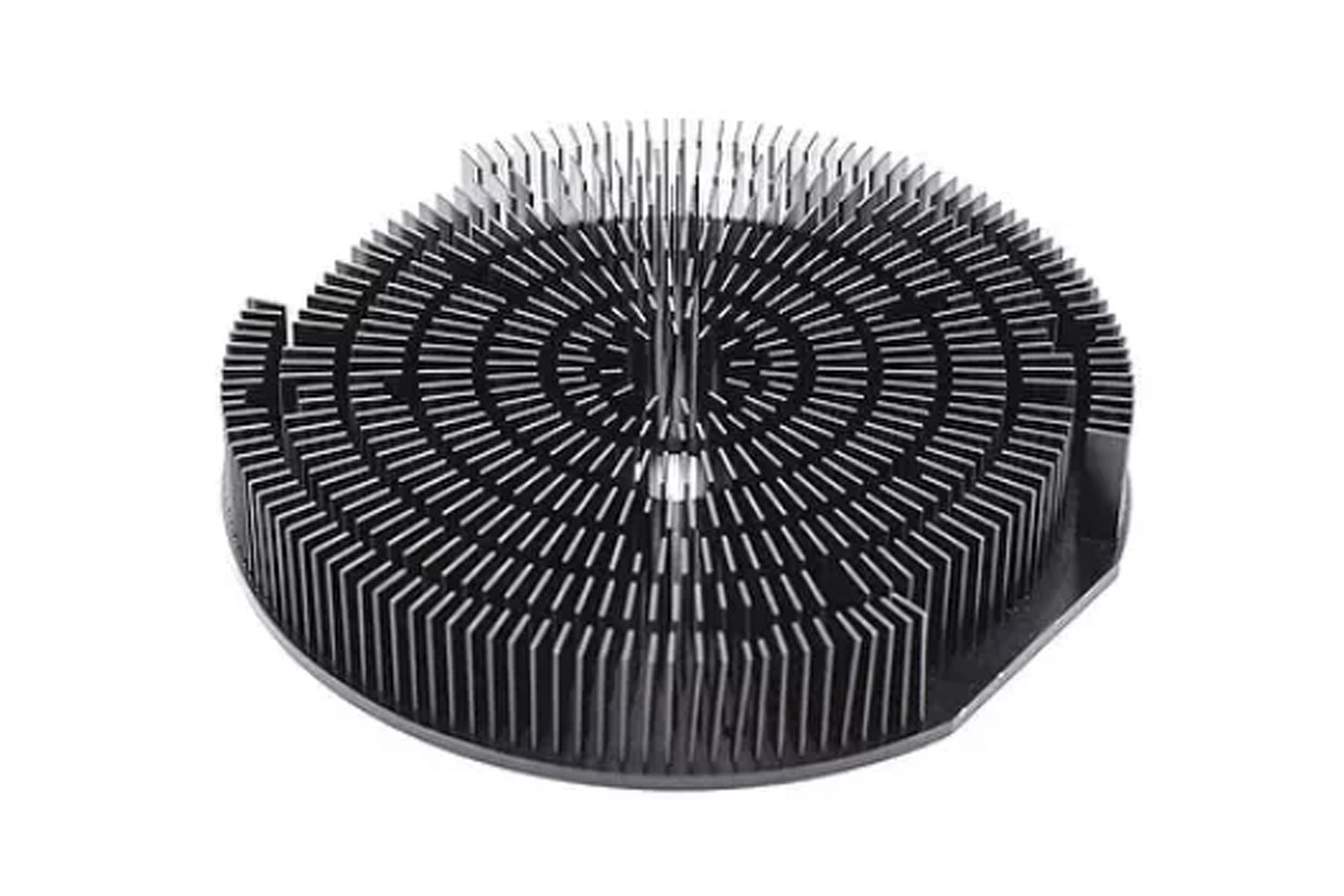
A cold forged heat sink is a type of heat sink produced by pressing metal materials into a customized mold without heating the material.
Common cold forging materials include:
Aluminum and aluminum alloys
Copper and copper alloys
During the cold forging process, the material undergoes work hardening (strain hardening), which improves:
Mechanical strength
Surface hardness
Structural reliability
Compared with conventional manufacturing processes, cold forging enables manufacturers to produce heat sinks with better performance and higher material utilization.
A cold forged heat sink works by transferring heat away from electronic components through conduction and convection.
Electronic components such as LED chips, processors, and power modules generate heat during operation.
The heat is transferred to the heat sink base through thermal interface materials.
The aluminum or copper body of the cold forged heat sink distributes heat across the entire structure.
The high-density fin design increases the heat dissipation area and improves cooling efficiency.
The heat is released into the surrounding environment through natural or forced airflow.
The optimized fin structure allows better airflow and reduces thermal resistance.
The production process of a cold forged aluminum heat sink includes:
Suitable materials are selected according to thermal requirements.
Common materials include:
Aluminum
AL6061
AL6063
Copper
Copper alloys
These materials provide excellent plasticity and low deformation resistance at room temperature, making them suitable for cold forging.
During forming, the raw material is placed into a precision tooling mold and shaped under high pressure.
Unlike die casting, cold forging does not require melting the material.
Benefits include:
Improved material density
Enhanced mechanical strength
Better dimensional accuracy
Optional surface treatments include:
Anodizing
Black coating
Nickel plating
Powder coating
These treatments improve:
Corrosion resistance
Surface durability
Appearance
Each cold forged heat sink undergoes strict inspection to ensure:
Accurate dimensions
Surface quality
Structural reliability
Consistent thermal performance
Cold forging creates smooth surfaces and precise dimensions.
Advantages include:
Reduced machining requirements
Better assembly accuracy
Improved product consistency
The cold forging process creates work hardening, increasing the strength and hardness of the material.
This provides:
Higher mechanical reliability
Better durability
Longer service life
Compared with machining processes, cold forging produces less material waste.
The near-net-shape manufacturing process helps:
Reduce material consumption
Lower production costs
Improve manufacturing efficiency
Cold forging is especially suitable for mass production.
It provides:
Fast production cycles
Stable quality
Lower unit cost for large quantities
This makes it an ideal choice for high-volume custom heat sink manufacturing.
Aluminum is the most commonly used material for cold forged heat sinks due to:
Lightweight properties
Good thermal conductivity
Excellent corrosion resistance
Easy processing
Common aluminum materials:
| Material | Features |
|---|---|
| AL6061 | High strength and good thermal performance |
| AL6063 | Excellent surface quality and forming capability |
| Aluminum Alloy | Lightweight and cost-effective |
Copper provides higher thermal conductivity compared with aluminum.
Advantages:
Excellent heat transfer capability
Suitable for high-power applications
Improved thermal spreading
Copper cold forged heat sinks are commonly used in applications requiring higher cooling performance.
| Manufacturing Method | Features |
|---|---|
| Cold Forging Heat Sink | High strength, high fin density, excellent surface quality |
| Extrusion Heat Sink | Cost-effective, suitable for standard profiles |
| Die Cast Heat Sink | Suitable for complex structures and mass production |
| Skived Fin Heat Sink | High thermal performance with thin fins |
Cold forging is especially suitable for applications requiring both high thermal performance and mechanical strength.
Cold forged heat sinks are widely used in:
Including:
LED light source heat sinks
High-power LED modules
Commercial lighting systems
Used for:
CPUs
GPUs
Semiconductor devices
Power supplies
Applications include:
Inverters
Power modules
Industrial controllers
Suitable for:
Automation systems
Communication equipment
High-power electronic devices
As an experienced heat sink manufacturer, we provide customized thermal management solutions for global customers.
Our capabilities include:
Custom heat sink design
Cold forged aluminum heat sink production
OEM heat sink manufacturing
Prototype development
Mass production
Maximum product capability:
W250 × L250 × H150 mm
We work with customers from design evaluation to final production to ensure optimized thermal performance and reliable quality.
| Parameter | Specification |
|---|---|
| Product Name | Cold Forged Heat Sink |
| Material | Aluminum, Aluminum Alloy, Copper, Copper Alloy |
| Manufacturing Process | Cold Forging |
| Forming Temperature | Below Material Recrystallization Temperature |
| Maximum Size | W250 × L250 × H150 mm |
| Surface Quality | High Precision Smooth Surface |
| Application | LED Lighting, Electronics Cooling, Power Modules |
| Service | OEM / ODM Custom Manufacturing |
| Production Type | Prototype & Mass Production |
A cold forged heat sink is a thermal component produced by forming aluminum or copper materials at room temperature using precision tooling, improving strength, accuracy, and thermal performance.
Common materials include aluminum, aluminum alloys, copper, and copper alloys due to their good plasticity and thermal conductivity.
Cold forged heat sinks offer excellent surface quality, accurate dimensions, enhanced material strength, high material utilization, and efficient mass production capability.
Yes. Cold forged heat sinks are widely used for LED light sources and high-power LED applications because they provide efficient heat dissipation and reliable performance.
Yes. Custom cold forged heat sinks can be designed according to customer drawings, size requirements, thermal performance targets, and application conditions.

Kingka Tech Industrial Limited
We specialize in Heat Sink、Liquid Cold Plate、precision CNC machining and our products are widely used in telecommunication industry, aerospace, automotive, industrial control, power electronics, medical instruments, security electronics, LED lighting and multimedia consumption.


Address:
Da Long New Village, Xie Gang Town, Dongguan City, Guangdong Province, China 523598
Email:
WhatsAPP: