
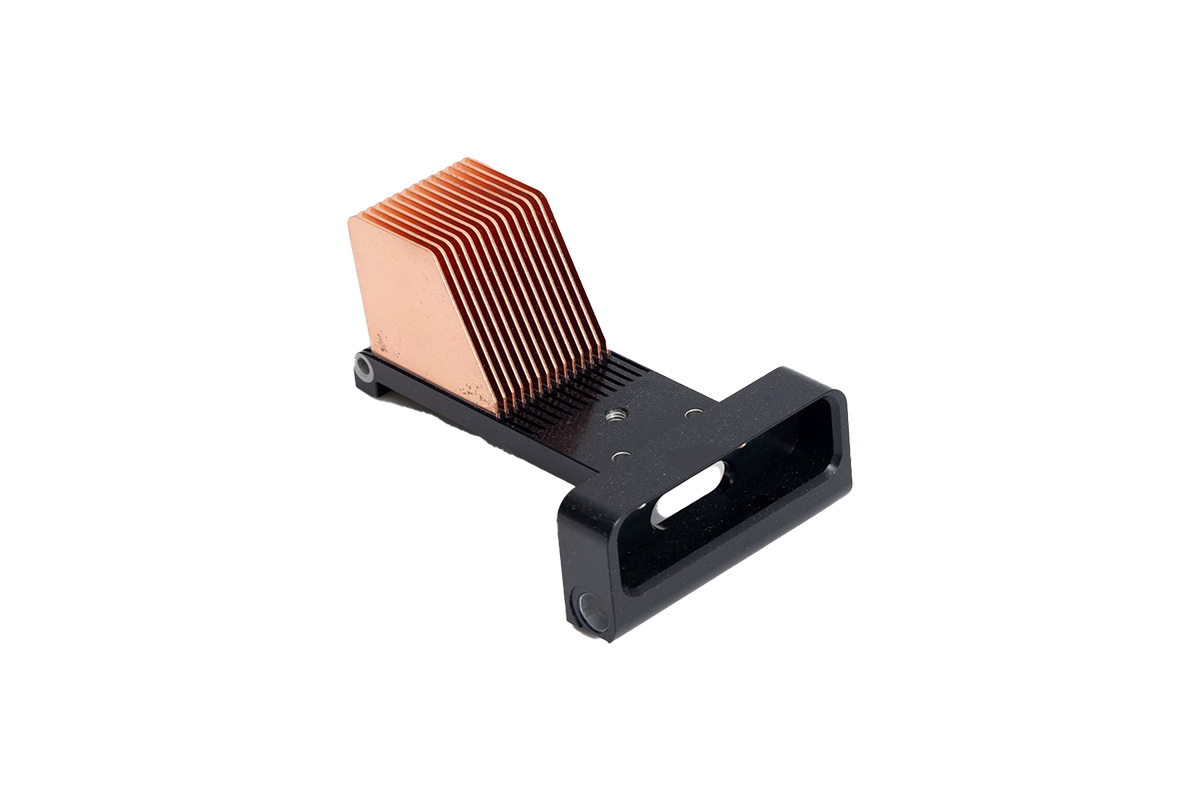
Bonded Fin Heat Sink Parts are high-performance thermal management components designed for electronic systems that require high heat dissipation, compact dimensions, and flexible fin geometry.
Unlike conventional extruded heat sinks, a bonded fin heat sink is manufactured by separately producing the base plate and cooling fins, then joining them through thermal adhesive bonding, soldering, or brazing. This manufacturing method allows engineers to use taller fins, thinner fin thicknesses, tighter fin spacing, and higher fin density than many traditional extrusion profiles.
KINGKA Tech Industrial Limited provides customized Bonded Fin Heat Sink Parts for IGBT modules, EV chargers, inverters, power conversion systems, telecom equipment, industrial automation, and other high-power electronic applications.
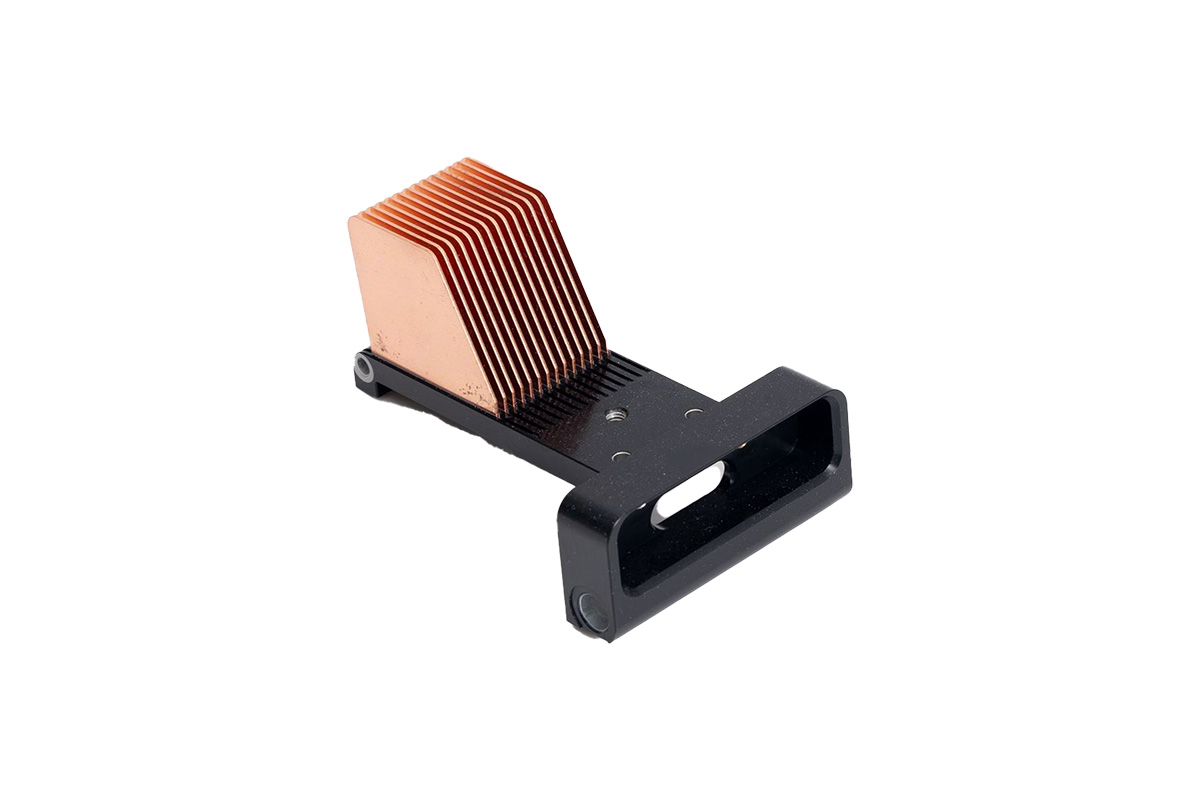
A bonded fin heat sink consists of two main parts:
Heat sink base plate
Individual cooling fins
The base plate transfers heat from the electronic component and spreads it across the heat sink. The fins increase the available surface area, allowing heat to dissipate into the surrounding air through natural convection or forced convection.
The fins are bonded to the base using processes such as:
Thermal epoxy bonding
Soldering
Vacuum brazing
Depending on the application, the heat sink can be manufactured from aluminum, copper, or a combination of both materials.
This flexibility makes custom bonded fin heat sinks suitable for applications where conventional extrusion cannot achieve the required fin height, fin density, or thermal performance.
One of the main advantages of a bonded fin structure is greater freedom in fin design.
Engineers can optimize:
Fin height
Fin thickness
Fin pitch
Fin spacing
Fin orientation
Airflow direction
Higher fin density increases the available heat transfer surface area, which is especially beneficial in forced air cooling heat sink applications.
Bonded fin heat sinks can use high thermal conductivity materials such as:
Aluminum 6061
Aluminum 6063
C1100 copper
Aluminum offers a good balance between thermal conductivity, weight, manufacturability, and cost.
Copper provides better heat spreading and is suitable for applications involving concentrated heat sources or high heat flux.
Different base and fin materials can be combined according to project requirements.
Typical configurations include:
Aluminum base + aluminum fins
Copper base + aluminum fins
Copper base + copper fins
For example, a copper base heat sink can improve heat spreading from an IGBT or power module, while aluminum fins help reduce overall weight and cost.
Bonded fin structures are particularly suitable for systems using fans or blowers.
By adjusting fin pitch and fin spacing, engineers can balance heat transfer surface area with airflow resistance and pressure drop.
This helps improve cooling performance in high-power systems without creating excessive airflow restriction.
Bonded aluminum heat sink parts can undergo additional CNC processing, including:
Drilling
Tapping
Slotting
Surface flattening
Mounting hole machining
Weight reduction machining
This makes the product suitable for customized mechanical assemblies and power electronic modules.
| Parameter | Typical Options |
|---|---|
| Base Material | Aluminum 6061 / 6063 / Copper C1100 |
| Fin Material | Aluminum / Copper |
| Base Thickness | Approx. 3–20 mm / Custom |
| Fin Thickness | Approx. 0.2–1.2 mm / Custom |
| Joining Process | Epoxy Bonding / Soldering / Brazing |
| Surface Treatment | Anodizing / Nickel Plating / Natural Finish |
| Machining | CNC Milling / Drilling / Tapping |
| Cooling Method | Natural / Forced Air Cooling |
| Power Application | Approx. 100 W–10 kW, Design Dependent |
| Customization | OEM / ODM Available |
Actual dimensions and thermal performance should be determined according to heat load, airflow, heat source location, installation space, and operating conditions.
A reliable bonded fin heat sink manufacturing process requires accurate control of both mechanical dimensions and thermal interfaces.
The aluminum or copper base plate and fin material are prepared according to the design requirements.
Material properties, dimensions, flatness, and surface quality are checked before production.
The heat sink base can be CNC-machined to create:
Mounting holes
Threaded holes
Component contact surfaces
Positioning features
Weight reduction pockets
Surface flatness is particularly important because good contact between the heat source and base helps reduce contact thermal resistance.
Individual fins are cut and formed according to the required height, thickness, and geometry.
Because the fins are manufactured separately, the design is not constrained by conventional extrusion ratios.
Depending on thermal and mechanical requirements, fins can be joined to the base through different processes.
Thermal adhesive bonding is suitable for many general industrial applications and provides flexible manufacturing.
Soldering can provide lower interface thermal resistance and higher temperature resistance.
Brazing creates a strong metallurgical connection and is suitable for demanding high-reliability thermal management applications.
After bonding, additional operations may include:
Surface cleaning
CNC finishing
Flatness correction
Anodizing
Nickel plating
Dimensional inspection
Bonding strength inspection
Thermal performance testing
Both bonded fin and extruded heat sinks are widely used for electronic cooling, but their manufacturing methods and design capabilities are different.
| Feature | Bonded Fin Heat Sink | Extruded Heat Sink |
|---|---|---|
| Fin Structure | Individual bonded fins | Integral extruded fins |
| Fin Height | Greater flexibility | Limited by extrusion process |
| Fin Thickness | Can be thinner | Limited by extrusion die |
| Fin Density | High | Moderate |
| Material Combination | Aluminum / Copper / Hybrid | Mainly Aluminum |
| Forced-Air Cooling | Excellent | Good |
| Design Flexibility | High | Moderate |
| Typical Use | High-power compact systems | General electronic cooling |
An extruded heat sink is generally more economical for standard profiles and high-volume production.
A bonded fin heat sink is more suitable when the design requires high fin density, tall fins, narrow spacing, or specialized material combinations.
IGBTs, MOSFETs, and SiC power modules can generate high heat flux during operation.
A customized IGBT heat sink helps spread heat from the semiconductor module and transfer it efficiently to the cooling fins.
An EV charger heat sink must handle high power density while fitting within a limited enclosure.
Bonded fin technology allows larger cooling surface areas to be integrated into compact power conversion systems.
Solar inverters, PCS units, and battery energy storage systems require reliable cooling for power semiconductor components.
A power electronics heat sink helps maintain stable operating temperatures and improve system reliability.
Telecom base stations, communication power supplies, and network equipment often use forced-air cooling.
High-density bonded fins can improve heat dissipation while fitting into compact chassis designs.
Bonded fin heat sink parts are also suitable for:
Servo drives
Motor controllers
Industrial computers
Frequency converters
Automation equipment
Power supplies
As a custom heat sink manufacturer, KINGKA Tech can develop Bonded Fin Heat Sink Parts according to customer drawings, heat dissipation requirements, and installation conditions.
Customization options include:
Heat sink dimensions
Aluminum or copper materials
Fin height and thickness
Fin pitch and spacing
Base thickness
Bonding process
Mounting holes
CNC machining
Surface treatment
Airflow direction
For demanding applications, thermal analysis, prototype testing, airflow evaluation, and thermal resistance testing can also be used to optimize the design before mass production.
KINGKA Tech provides customized thermal management parts for high-power electronics and industrial cooling systems.
Our Bonded Fin Heat Sink manufacturing capabilities include:
Aluminum and copper material options
Epoxy bonding, soldering, and brazing
Precision CNC machining
Custom fin geometry
Prototype and volume production
OEM and ODM support
Dimensional and thermal inspection
Custom surface treatment
Whether your project requires a bonded aluminum heat sink, copper base heat sink, IGBT heat sink, inverter heat sink, or high power heat sink, the structure can be optimized according to heat load, airflow, installation space, and production requirements.
Bonded Fin Heat Sink Parts provide greater fin design flexibility than conventional extrusion, allowing taller fins, thinner fin structures, higher fin density, and optimized airflow.
By combining aluminum or copper bases with individually bonded fins, these heat sinks can provide efficient thermal management for IGBT modules, EV chargers, inverters, telecom equipment, energy storage systems, and industrial electronics.
For high-power applications where compact size, forced-air cooling, and flexible thermal design are required, a custom bonded fin heat sink can provide an effective balance between thermal performance, mechanical reliability, weight, and manufacturing cost.

Kingka Tech Industrial Limited
We specialize in Heat Sink、Liquid Cold Plate、precision CNC machining and our products are widely used in telecommunication industry, aerospace, automotive, industrial control, power electronics, medical instruments, security electronics, LED lighting and multimedia consumption.


Address:
Da Long New Village, Xie Gang Town, Dongguan City, Guangdong Province, China 523598
Email:
WhatsAPP: