
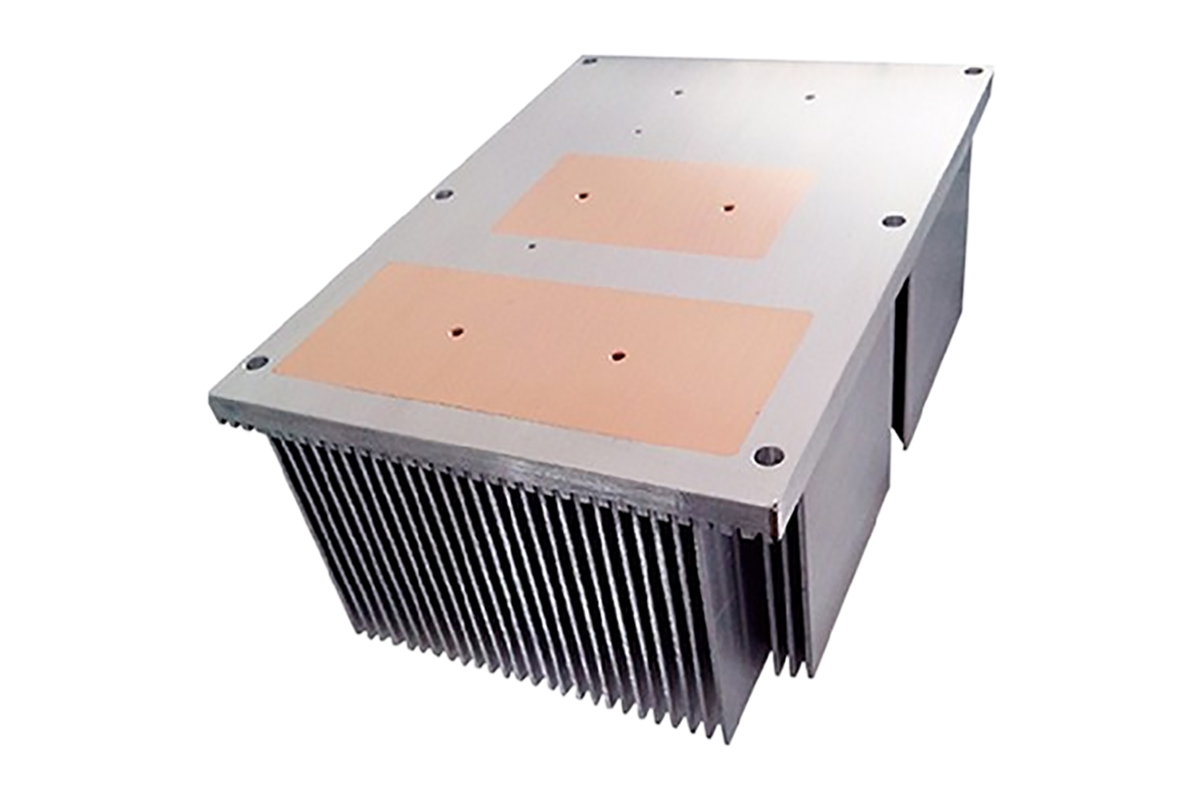
A Bonded Fin Heat Sink is a high-efficiency air-cooled heat sink constructed by bonding multiple thin fins onto a solid base plate using high-strength thermal adhesives or metallurgical bonding techniques. Compared with traditional extruded heat sinks, bonded fin heatsinks enable higher fin density, better airflow utilization, and improved thermal performance, especially in high-power and space-constrained applications.
This type of bonded heat sink is widely used in power electronics, industrial equipment, EV systems, telecom, and data center hardware, where reliable heat dissipation is critical.
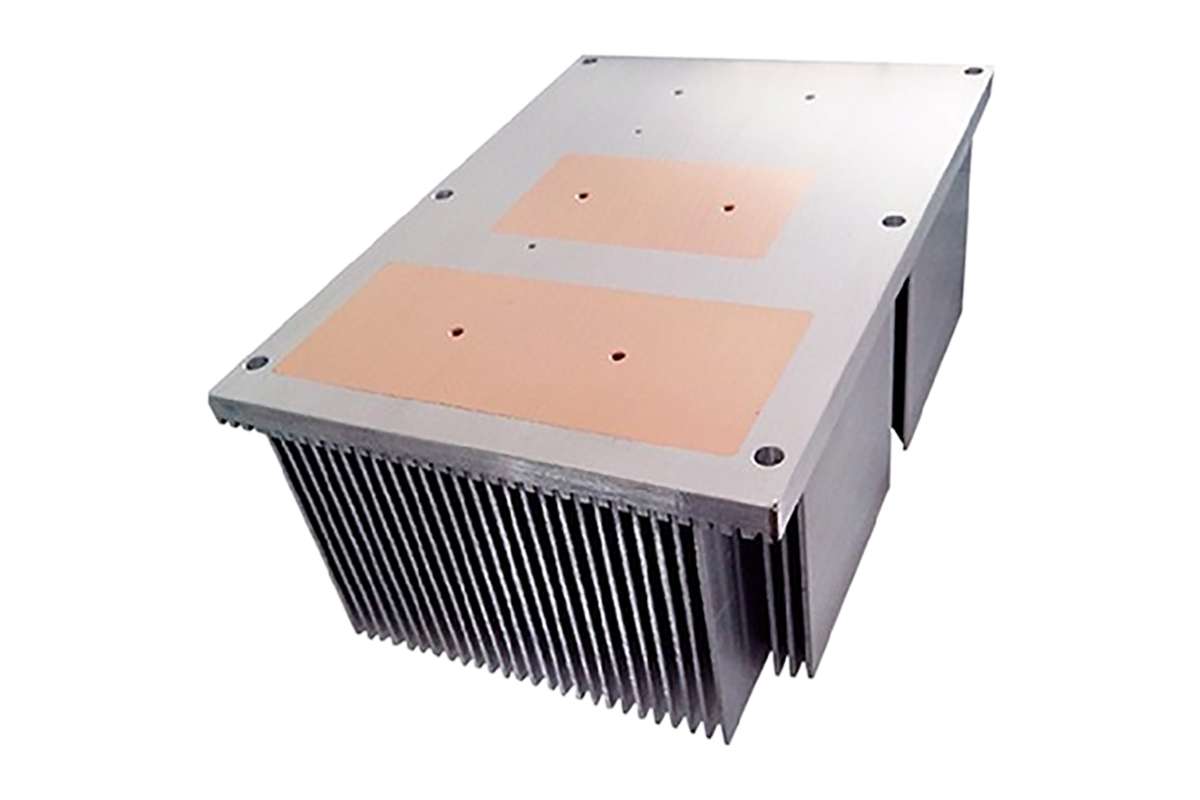
A bonded fin heat sink consists of two main components:
Base Plate: Aluminum or copper, providing direct thermal contact with the heat source
Fins: Thin aluminum or copper fins, bonded vertically to the base
Unlike extruded or stamped heat sinks, bonded fin structures allow:
Thinner fins
Smaller fin spacing
Much higher fin count per unit area
As a result, bonded fin heat sinks achieve superior heat dissipation while maintaining mechanical strength.
Fins are manufactured via stamping, shearing, or folding
Fin thickness typically ranges from 0.2 mm to 0.5 mm
Solid aluminum or copper base plate
Machined flat for optimal thermal contact
Thermally conductive epoxy bonding or metallic bonding
Each fin is precisely aligned and bonded into grooves or onto the base
High bond strength and low thermal resistance at the fin-base interface
CNC machining for mounting features
Surface treatments: anodizing, black coating, nickel plating (optional)
The term folded fin heat sink is often mentioned together with bonded fin designs, but they are structurally different:
| Aspect | Bonded Fin Heat Sink | Folded Fin Heat Sink |
|---|---|---|
| Fin Structure | Individual fins bonded to base | Continuous folded fin sheet |
| Fin Density | Very high | High |
| Thermal Contact | Excellent (direct bonding) | Good |
| Structural Strength | High | Medium |
| Customization | Highly flexible | Moderate |
| Typical Use | High-power electronics | Medium to high power |
Bonded fin heat sinks offer greater design flexibility and higher reliability for demanding applications.
High fin density increases heat transfer surface area
Efficient airflow through narrow fin spacing
Ideal for forced-air cooling systems
Fin height, thickness, and spacing can be customized
Aluminum fins with copper base or full copper construction possible
Excellent solution for limited installation space
Higher performance than extruded heat sinks of similar size
High bonding strength prevents fin loosening
Suitable for vibration and industrial environments
Lower tooling cost compared to skived or forged heat sinks
Ideal for medium-volume production
Aluminum bonded fin heat sink (Al base + Al fins)
Copper base bonded fin heat sink (Cu base + Al fins)
Full copper bonded fin heat sink (maximum thermal conductivity)
Anodized aluminum
Black coating for enhanced radiation
Nickel-plated copper for corrosion resistance
| Parameter | Specification |
|---|---|
| Base Material | Aluminum / Copper |
| Fin Material | Aluminum / Copper |
| Fin Thickness | 0.2 – 0.5 mm |
| Fin Height | 5 – 60 mm |
| Fin Spacing | ≥0.8 mm |
| Fin Density | Up to 30 fins/inch |
| Bonding Method | Thermal adhesive / metallic bonding |
| Thermal Resistance | Customized per design |
| Cooling Method | Natural or forced air |
| Mounting | Screws, clips, custom brackets |
Power supplies and converters
EV onboard chargers & inverters
Industrial automation equipment
Telecom and networking hardware
Data center power modules
LED lighting systems
Renewable energy inverters
Higher fin density
Better cooling in forced airflow
More flexible material combinations
Lower cost
Slightly lower peak performance
Better for medium to high power at scale
Easier customization
Lower tooling investment
Faster development cycle
Optimized for high power density electronics
Excellent balance between performance and cost
Flexible structure for customized thermal solutions
Proven reliability in industrial environments
A Bonded Fin Heat Sink is a versatile and high-performance cooling solution that bridges the gap between traditional extruded heat sinks and advanced skived fin designs. By enabling higher fin density, flexible material combinations, and reliable thermal bonding, bonded fin heatsinks are an ideal choice for power electronics, EV systems, and industrial cooling applications.
A bonded fin heat sink is a type of air-cooled heat sink where individual fins are bonded to a solid base plate using thermally conductive bonding technology. This structure allows higher fin density and better thermal performance compared with extruded heat sinks.
A bonded fin heat sink uses separate fins bonded directly to the base, while a folded fin heat sink is made from a continuous folded metal sheet. Bonded fin heatsinks generally offer stronger fin attachment, better customization, and higher reliability for industrial applications.
Common bonding methods include:
Thermally conductive epoxy bonding
Metallic bonding processes
These methods ensure low thermal resistance and high mechanical strength between the fin and the base.
Yes. Bonded fin heat sinks are widely used for medium to high power electronics, especially in forced-air cooling systems, where high fin density and airflow efficiency are required.
Typical configurations include:
Aluminum base + aluminum fins
Copper base + aluminum fins
Full copper bonded fin heat sink
Material selection depends on thermal performance requirements, weight, and cost.
A skived fin heat sink offers higher peak thermal performance, while a bonded fin heat sink provides better cost efficiency, flexible design options, and easier scalability for production.
Bonded fin heat sinks can be used in:
Natural convection cooling
Forced-air cooling (with fans or blowers)
They perform best in forced airflow environments.
Yes. Bonded fin heatsinks can be fully customized in terms of:
Base dimensions and thickness
Fin height, thickness, and spacing
Mounting features and surface treatments
Yes. Properly bonded fins provide strong mechanical attachment, making bonded heat sinks suitable for industrial and automotive environments with vibration and thermal cycling.
Key advantages include:
High fin density
Compact design
Flexible material combinations
Strong thermal and mechanical performance
Lower tooling cost compared to advanced machining methods

Kingka Tech Industrial Limited
We specialize in precision CNC machining and our products are widely used in telecommunication industry, aerospace, automotive, industrial control, power electronics, medical instruments, security electronics, LED lighting and multimedia consumption.


Address:
Da Long New Village, Xie Gang Town, Dongguan City, Guangdong Province, China 523598
Email:
Tel:
+86 137 1244 4018