When buyers search for a custom heat sink manufacturer, they are usually not just looking for a metal part. They are trying to solve a practical thermal problem: overheating in a limited space, unstable temperatures in long-duty operation, insufficient airflow, tight tolerance requirements, or a need to balance thermal performance with production cost. Industry sources on custom heatsink development describe the process as one that begins by defining application-specific requirements such as power, temperature limits, environment, and mechanical constraints before a solution is designed and prototyped.
That is where a supplier like Kingka becomes more relevant than a simple machine shop. On its heat sink page, Kingka positions itself as a high-performance heat sink manufacturer focused on customized solutions for industries such as electronics, automotive, and telecommunications, and highlights CNC Machining services, a broad selection of materials and finishes, tight tolerance capability, and fast delivery.
What Buyers Usually Need from a Custom Heat Sink Supplier
In real projects, OEM buyers and engineers often ask questions such as:
Can this heat sink remove enough heat for my power level?
Which structure is better for my product: extruded, skived, bonded, forged, or heat pipe?
Can the part fit my installation space and mounting layout?
Can the supplier support drawing-based customization?
Can tolerances, flatness, and finish quality be controlled consistently?
Can prototyping move quickly enough for our project schedule?
These questions align closely with how reputable custom heatsink developers frame the process. Celsia’s development guidance says the first step is gathering application-specific data, and its design pages emphasize balancing thermal performance, cost, size, weight, and durability rather than optimizing only one variable.
How Kingka Matches Different Buyer Needs
One strength visible on Kingka’s website is that it does not present only one heat sink type. Instead, it offers multiple product directions, including extruded heat sink, Skived Fin Heat Sink, bonded fin heat sink, cold forged heat sink, heat pipe thermal module, and die cast heat sink. This matters because different buyers come with different priorities.
| Buyer Need | Common Concern | Kingka Direction |
|---|
| Cost-effective standard-like customization | Need practical solution with controlled cost | Extruded heat sink |
| Higher fin density in limited space | Need stronger air-cooling performance | Skived fin heat sink |
| Flexible fin/base configuration | Need better thermal performance and geometry freedom | Bonded fin heat sink |
| Compact robust form | Need dense metal structure for LEDs or compact modules | Cold forged heat sink |
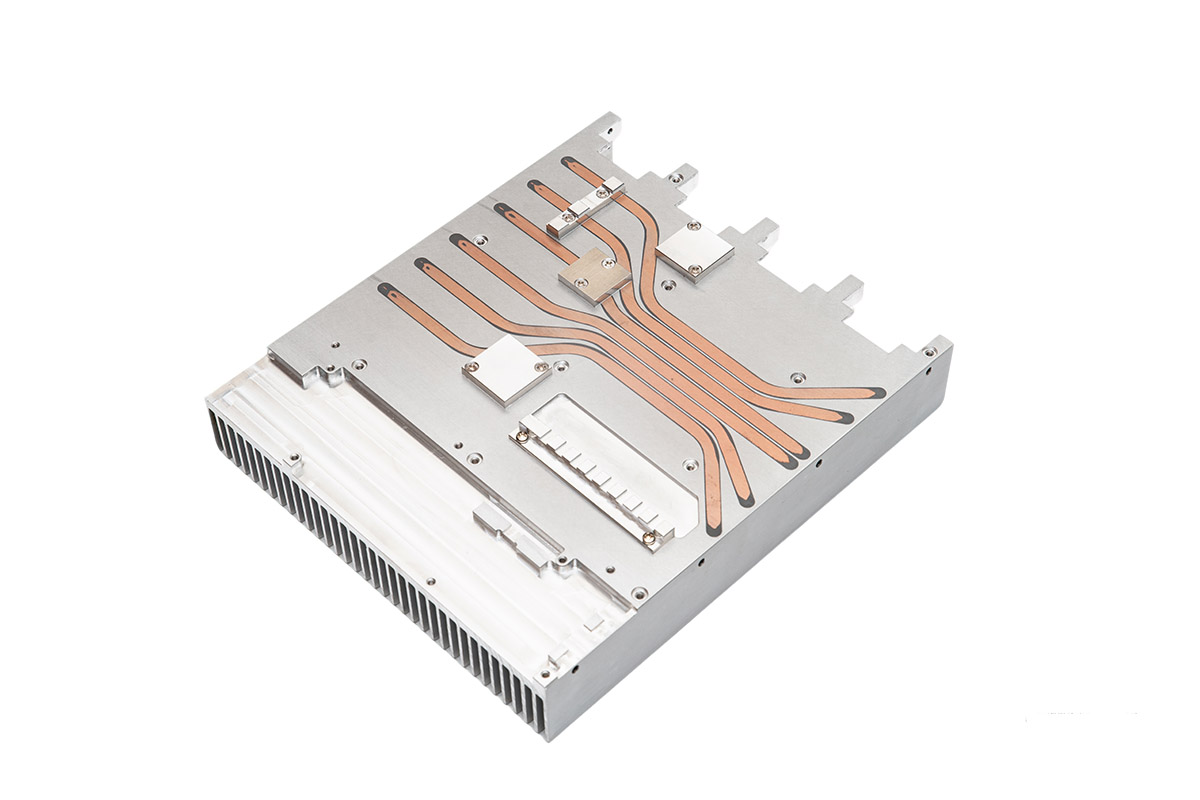
| Hotspot spreading | Need improved heat transport from concentrated heat source | Heat pipe thermal module |
| Complex shapes / volume production | Need integrated form and repeatability | Die cast heat sink |
This kind of product matrix gives buyers more confidence because it suggests process matching rather than a one-solution-fits-all approach.
Scenario One: The Buyer Wants a Cost-Effective Aluminum Heat Sink
A large number of buyers start with a simple need: they want an aluminum heat sink that is reliable, manufacturable, and reasonably priced. They may not need the highest-end thermal solution. They may just need the right geometry for electronics, industrial control, or telecom equipment.
In these cases, an extruded heat sink is often a practical solution. Boyd explains that extruded heat sinks are made by pushing softened aluminum through a profile die, which defines fin density, pitch, base height, and width, after which the bars can be machined and finished into custom parts. This makes extrusion a strong option for many applications that need a balance of cost and performance.
For this kind of project, Kingka’s stated combination of cnc machining services, material and finish options, and fast delivery is commercially useful because buyers often need machining after the base profile is produced, along with mounting features, finishing, and quicker response times.
Scenario Two: The Buyer Has Limited Space but Higher Heat Load
Some buyers face a tougher problem: the product is compact, the heat load is rising, and standard fin structures are not enough. In those situations, skived fin heat sink solutions can become more attractive because they can support higher fin density and expanded cooling surface within a compact envelope. Kingka explicitly lists skived fin heat sinks among its heat sink offerings, which makes this a natural route for buyers with performance-oriented air cooling needs.
This matters because heat sink performance is strongly influenced by fin geometry and airflow. Celsia notes that fin spacing, thickness, and height must be matched to airflow conditions; fins that are too close can increase pressure drop and reduce thermal efficiency, while fins that are too wide also become inefficient.
So when a buyer asks, “I need better cooling but I cannot enlarge the product,” the right response is not simply “make the sink bigger.” It is to evaluate fin structure, airflow path, base spreading, and manufacturing method together.
Scenario Three: The Buyer Has a Concentrated Hotspot
Some products do not generate heat evenly. Instead, they have a highly concentrated heat source, such as a processor, power module, or hotspot on a compact electronic assembly. In those cases, spreading heat effectively across the sink becomes critical.
That is where a heat pipe thermal module can help. Kingka lists heat pipe thermal modules among its thermal product offerings, while Celsia and Boyd both describe advanced heat-spreading technologies such as heat pipes and vapor chambers as useful when high local performance is required or where heat must be moved more efficiently from a concentrated source to a larger dissipation area.
For the buyer, the value is not just higher performance. It is better matching of the thermal architecture to the real heat map of the product.
Scenario Four: The Buyer Needs Design Flexibility and Assembly Compatibility
Sometimes the main challenge is not only thermal. Buyers may also need compatibility with their assembly layout, housing shape, or fastening structure. That can make bonded fin heat sink, cold forged heat sink, or die cast heat sink solutions more relevant, depending on the application. Kingka’s site shows each of these as part of its available service range, giving buyers multiple routes depending on whether they prioritize geometry, robustness, or production repeatability.
This is important because custom heat sink development is almost always a tradeoff exercise. Celsia’s design guidance states that thermal engineers balance performance and cost while also meeting size, weight, durability, and other targets. A good manufacturer therefore adds value by helping buyers choose the best compromise rather than simply producing a drawing without feedback.
What Kingka Signals to Buyers on Capability
From a conversion standpoint, industrial buyers usually look for proof that a supplier can do more than basic fabrication. On its heat sink page, Kingka highlights several trust signals:
| Capability Signal | Why Buyers Care |
|---|
| Customized heat sink positioning | Suggests project-based rather than catalog-only support |
| CNC machining services | Supports detailed features, finishing machining, and customization |
| Tolerance of +1/-0.015 | Indicates attention to dimensional control |
| Wide material and finish options | Helps fit different design and corrosion requirements |
| Fast delivery | Useful for prototyping and urgent project schedules |
| Multi-industry application experience | Builds confidence across electronics, automotive, telecom, medical, and power sectors |
All of these are relevant because buyers often evaluate a supplier based on technical responsiveness, manufacturability support, and quality consistency as much as on price.
What Information Buyers Should Send to Kingka
To get a more accurate recommendation from a custom heat sink manufacturer, buyers should prepare as much project detail as possible. Celsia’s custom development process recommends defining items such as application type, heat source power, temperature limits, and environmental conditions early. Kingka’s inquiry form also asks customers to provide detailed requirements and supports file uploads, which suggests a quote flow built around technical project information rather than only a simple SKU inquiry.
| Information to Provide | Why It Helps |
|---|
| 2D / 3D drawings | Clarifies geometry and mounting features |
| Heat load or power data | Helps estimate required thermal resistance |
| Max operating temperature | Defines thermal target |
| Airflow condition | Distinguishes passive vs forced convection design |
| Space envelope | Determines feasible sink type |
| Material preference | Affects cost, weight, and performance |
| Finish requirement | Helps with corrosion resistance and appearance |
| Project quantity | Supports process and cost planning |
The more complete the input, the easier it becomes to decide whether the project is best suited to extrusion, skiving, bonding, forging, die casting, or a heat pipe-based solution.
Why This Matters for OEM and Industrial Projects
A custom heat sink is not just a cooling accessory. It affects product stability, power density, service life, and even packaging freedom. That is why thermal-management guidance stresses calculating the thermal budget and required thermal resistance early in development. Celsia provides the example logic of deriving allowable thermal resistance from ambient conditions, allowable case temperature, and heat load, while DigiKey also emphasizes temperature limits at the device level.
For an OEM buyer, the real benefit of working with a supplier like Kingka is not only access to machining. It is the ability to align structure, process, and cooling objective more efficiently.
A good custom heat sink manufacturer should help buyers solve thermal problems, not just deliver metal parts. Kingka’s current heat sink offering suggests that it is positioned around this project-based model: multiple heat sink types, CNC support, material and finish flexibility, tolerance control, and fast delivery, backed by application relevance across electronics, telecom, automotive, medical, industrial control, power electronics, and LED lighting.
For buyers, that means a more useful sourcing path. Instead of forcing every application into one standard design, they can match the solution to the real requirement, whether that requirement points to an extruded heat sink, skived fin heat sink, bonded fin heat sink, cold forged heat sink, heat pipe thermal module, or die cast heat sink.