Why More Buyers Need a Custom Liquid Cold Plate Manufacturer
As thermal loads continue to rise across electronics, power systems, AI servers, and new energy equipment, many buyers find that standard cooling parts are no longer enough. Off-the-shelf components may not fit the actual installation space, may not match the real heat source distribution, or may not deliver the thermal performance required for long-term stable operation.
That is why more OEMs, engineers, and purchasing teams are looking for a custom liquid cold plate manufacturer rather than a simple machining vendor. They need a supplier that can understand the application, evaluate the cooling target, recommend the right structure, and deliver a solution that is both thermally effective and manufacturable.
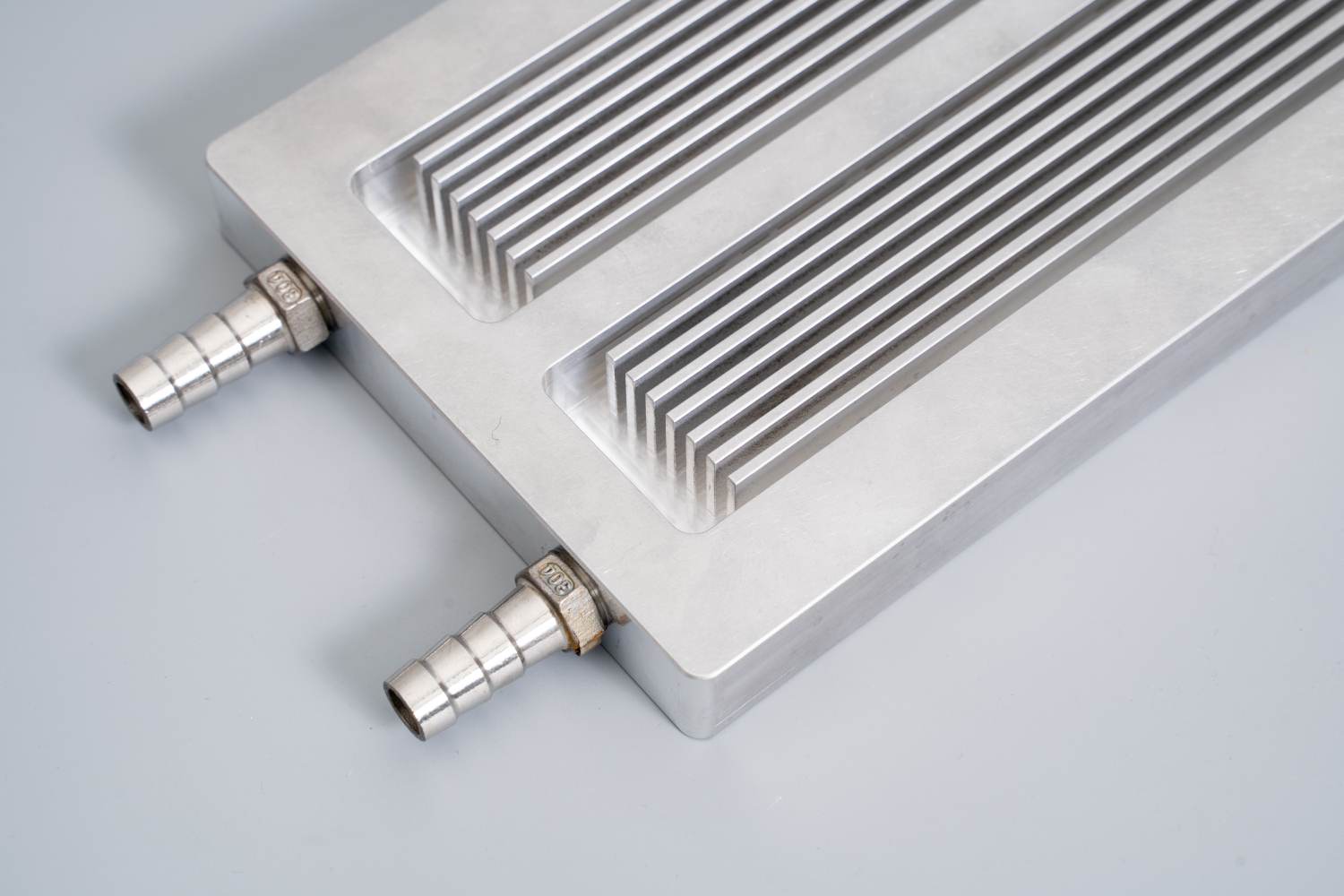
At Kingka, the liquid cold plate offering is already positioned around this custom approach. Instead of presenting only one fixed design, Kingka provides multiple solution routes such as FSW Liquid Cold Plate, Tube Liquid Cold Plate, and brazed liquid cold plate, making it easier to match different customer requirements.
What Problems Do Buyers Usually Face?
In real B2B projects, buyers are often not just asking for “a cold plate.” They are trying to solve a series of practical engineering and supply-chain problems.
Common Buyer Concerns
| Buyer Question | What It Really Means |
|---|
| Can this cold plate remove enough heat? | Thermal performance must match the real heat load |
| Which process is better for my project? | The buyer needs guidance, not just a quote |
| Can the design fit my limited installation space? | Mechanical layout is often a key restriction |
| How can I reduce leakage risk? | Reliability and sealing performance matter |
| Can you support customization from drawing to production? | The buyer wants engineering cooperation |
| Can you control tolerance and consistency? | Quality stability matters for assembly and long-term use |
These are exactly the kinds of questions that make a custom liquid cooling plate project different from a standard parts purchase.
How Kingka Responds to Different Customer Needs
A strong supplier should not force every project into the same process. Different applications have different cooling priorities, and the best solution often depends on thermal target, structure, cost, and reliability requirements.
Kingka addresses this by offering different liquid cold plate structures for different use cases.
Kingka’s Main Liquid Cold Plate Options
| Product Type | Suitable For | Customer Need It Solves |
|---|
| FSW Liquid Cold Plate | New energy, industrial automation, communication equipment, medical devices | Better sealing reliability and strong structural performance |
| Tube Liquid Cold Plate | Electronics cooling, industrial equipment, high-performance computing, new energy systems | Cost-effective cooling with stable and proven structure |
| Brazed Liquid Cold Plate | Power electronics, photovoltaic inverters, high-performance computing, aerospace, automation | More complex channel design and stronger thermal performance |
| CPU Water Block | High-performance electronics and processor cooling | Compact cooling for concentrated heat sources |
This product structure is important because buyers often come with very different priorities. Some care most about sealing and long-term reliability. Some focus on cost and manufacturability. Others need better thermal performance under high heat density. Kingka’s category structure helps answer those different needs more clearly.
Scenario 1 – The Buyer Needs Better Sealing and Structural Reliability
Some customers are working on applications where leakage risk and structural stability are major concerns. This is common in new energy systems, industrial power equipment, and projects with long-duty thermal cycles.
In these cases, buyers may ask questions such as:
Will the cooling channel remain reliable under long-term use?
Is the sealing method stable enough for continuous operation?
Can the structure maintain performance in demanding environments?
How Kingka Solves It
For this type of requirement, an FSW liquid cold plate can be a suitable direction. This structure is often preferred where reliable sealed channels and solid mechanical performance are important. Instead of recommending a generic cold plate, Kingka can guide the customer toward a process route that is better aligned with reliability-focused applications.
This makes the conversation more valuable for the buyer, because they are not only receiving a manufacturing quote, but also a process recommendation based on the actual working condition.
Scenario 2 – The Buyer Needs a Cost-Effective and Practical Cooling Solution
Not every project needs the most complex structure. Many buyers need a cooling solution that performs well, is relatively straightforward to manufacture, and fits budget expectations.
Typical buyer questions include:
Is there a more economical solution for my project?
Do I really need a complex channel design?
Can I get stable cooling performance without overdesigning the part?
How Kingka Solves It
For projects like this, a tube liquid cold plate is often a practical option. This type of structure is commonly used when the customer wants a stable and proven cooling solution with good cost-performance balance.
By offering tube liquid cold plate solutions alongside other process routes, Kingka is in a better position to recommend a structure that matches both technical and commercial expectations. This helps buyers avoid paying for an unnecessarily complex design when a more efficient manufacturing route may already meet the application needs.
Scenario 3 – The Buyer Needs Higher Thermal Performance or a More Complex Flow Path
In some industries, especially power electronics, AI server cooling, and certain high-density systems, buyers may face higher heat flux, more concentrated hotspots, or more demanding channel-design requirements.
They may ask:
Can the cold plate handle higher thermal density?
Can the internal channel be designed more efficiently?
Do I need a more advanced structure for this application?
How Kingka Solves It
For these requirements, a brazed liquid cold plate may be a better choice. This route is more suitable for applications that need stronger heat dissipation capability or more complex internal channel configurations.
Instead of offering only one standard solution, Kingka’s product range allows the customer to choose a more suitable path depending on the real thermal challenge. For buyers, this creates more confidence because the supplier appears capable of matching the process to the application, rather than treating every project the same way.
Why Buyers Prefer Suppliers That Support Engineering Communication
When sourcing a custom liquid cold plate, many buyers are not ready to finalize the design on day one. They may only have drawings, a heat-load estimate, or a general application concept. What they need is a supplier who can communicate clearly and help move the project forward.
What Buyers Usually Expect from the Supplier
| What Buyers Need | Why It Matters |
|---|
| Engineering and design support | Helps improve solution feasibility |
| DFM feedback | Reduces production risk and unnecessary cost |
| Tolerance control | Ensures better assembly fit |
| Fast quotation response | Supports project speed |
| Multiple process options | Improves solution flexibility |
| Prototype to mass production support | Helps buyers move from development to delivery |
Kingka’s liquid cold plate page already communicates several of these support points, including engineering and design support, instant pricing/DFM, and tight tolerances. These are important trust signals for buyers because they suggest that Kingka can participate in the project beyond simple fabrication.
How Kingka Builds Buyer Confidence
For industrial buyers, trust is built not only through product photos but through signals of process control, customization capability, and manufacturing discipline.
Kingka strengthens this trust in several ways:
Key Confidence Factors
clear product segmentation by process type
focus on custom liquid cold plates rather than only standard models
support for technical communication and manufacturability review
emphasis on tight tolerances
visible inspection and testing capability on product-related pages
application coverage across electronics cooling, power systems, new energy, industrial automation, and high-performance equipment
These points help answer a buyer’s unspoken concerns:
“Can this supplier really understand my application?”
“Can they make the part consistently?”
“Can they help me choose the right structure?”
What Information Buyers Should Prepare Before Contacting Kingka
To get more accurate feedback and a more suitable recommendation, buyers should ideally provide the following project details.
| Information | Why It Helps |
|---|
| 2D/3D drawings | Clarifies structure and dimensions |
| Heat load data | Helps evaluate cooling requirement |
| Coolant type | Affects material and design choice |
| Flow rate requirement | Impacts channel and thermal design |
| Pressure drop limit | Important for liquid loop design |
| Installation space | Determines structural feasibility |
| Surface/tolerance requirements | Helps confirm manufacturing capability |
| Estimated quantity | Supports process and quotation planning |
The more complete the project input is, the easier it is for Kingka to recommend whether an FSW liquid cold plate, tube liquid cold plate, or brazed liquid cold plate is more suitable.
Why This Matters for Electronics, Power Systems, and AI Server Buyers
The demand for custom liquid cooling plate solutions is increasing because modern equipment is becoming more compact, more powerful, and more thermally sensitive.
Typical Industries That Benefit
| Industry | Why Custom Liquid Cold Plates Matter |
|---|
| Electronics Cooling | Higher power density in compact devices |
| Power Systems | Stable cooling for inverters and converters |
| New Energy | Better thermal control for battery and ESS applications |
| AI Servers / HPC | Direct cooling for concentrated processor heat |
| Industrial Automation | Reliable heat management under long-duty operation |
| Medical Equipment | Stable temperature control for precision systems |
In these industries, cooling design directly affects efficiency, reliability, service life, and even product competitiveness. This is why buyers increasingly want a supplier that can combine thermal understanding + process flexibility + manufacturing support.
Choosing a custom liquid cold plate manufacturer is not just about finding someone who can machine metal. It is about finding a supplier who can understand your project requirements, recommend the right cooling structure, and support the path from design to production.
Kingka’s liquid cold plate offering is valuable because it is not limited to a single process. With FSW liquid cold plate, tube liquid cold plate, and brazed liquid cold plate solutions, Kingka is in a stronger position to respond to different buyer needs across electronics cooling, power systems, new energy, and AI-related applications.
For buyers, that means a more practical sourcing experience: fewer mismatched solutions, better engineering communication, and a higher chance of getting a cooling component that truly fits the application.