Why Thermal Management Is Critical in EV and Power Electronics
In EV systems and modern power electronics, heat is one of the most important factors affecting performance, reliability, and service life. As battery packs become more energy-dense and electronic control systems operate under higher loads, the demand for efficient cooling continues to rise.
This is why the Liquid Cold Plate for EV battery has become a widely used solution. It helps control temperature in battery modules, inverters, IGBT assemblies, converters, and charging systems, where stable thermal conditions are essential for safe and efficient operation.
Without proper cooling, high temperatures can lead to power loss, accelerated aging, reduced efficiency, and even serious safety risks.
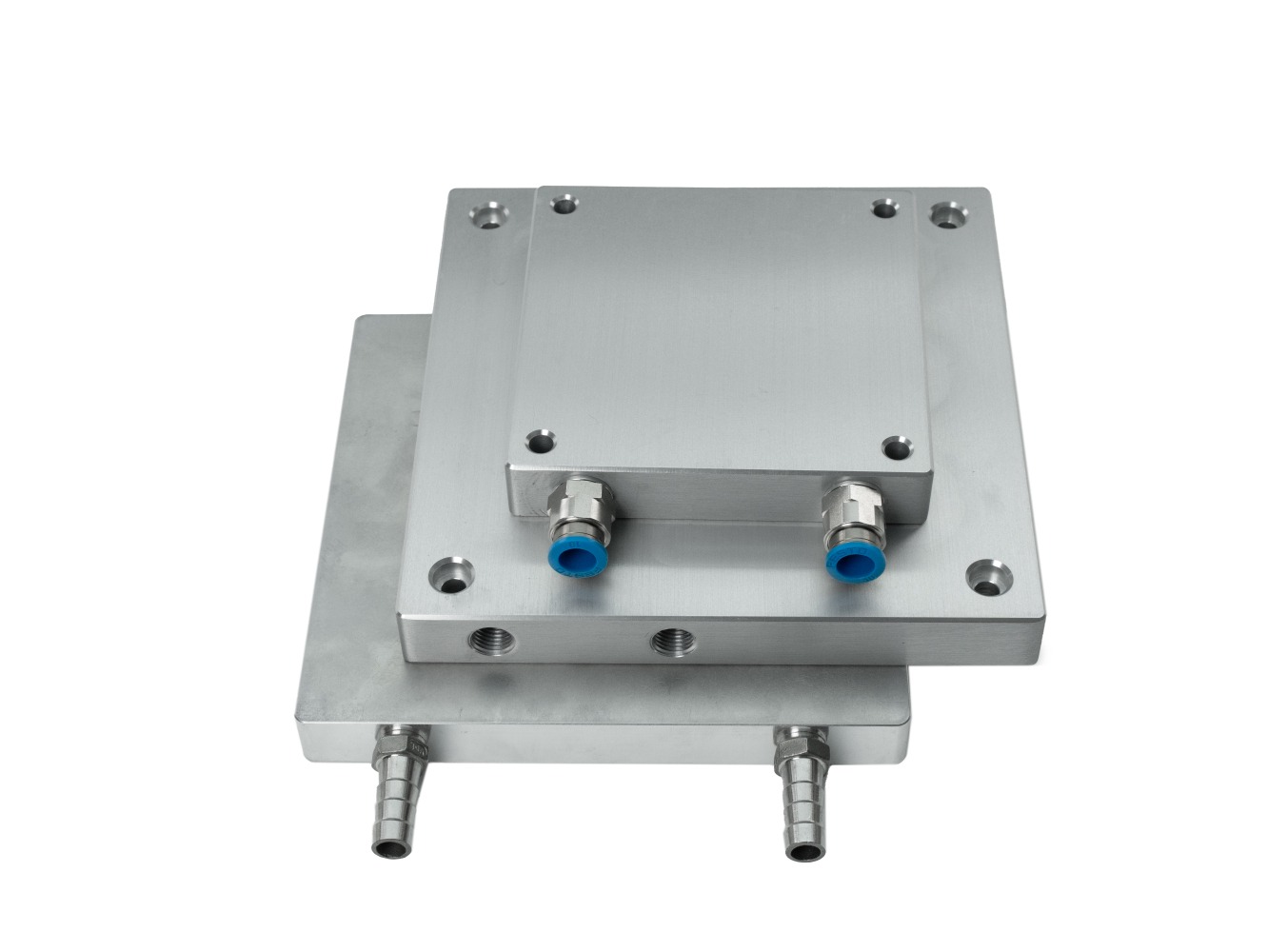
A battery cooling plate is a cold plate installed beneath or alongside battery cells or modules to remove excess heat through a circulating coolant loop.
Unlike air cooling, which depends heavily on ambient conditions and airflow design, a liquid cold plate provides more direct heat removal. This makes it especially suitable for battery systems where thermal uniformity is just as important as absolute cooling performance.
Main Functions of an EV Battery Cooling Plate
| Function | Why It Matters |
|---|
| Remove excess heat | Prevent overheating during charge and discharge |
| Improve temperature uniformity | Reduce cell imbalance and uneven aging |
| Support battery safety | Lower risk of thermal stress and performance instability |
| Extend battery life | Better temperature control improves long-term durability |
| Maintain efficiency | Stable battery temperature helps preserve output performance |
Why EV Battery Packs Need Liquid Cooling
Battery systems generate heat during charging, discharging, high-speed driving, and repeated cycling. If this heat is not controlled properly, battery performance can decline over time.
A liquid cold plate for EV battery is often chosen because it can:
cool battery modules more directly
improve thermal consistency between cells
handle higher heat loads than air cooling
fit into compact pack structures
support demanding duty cycles
In new energy vehicles, battery temperature management is directly linked to safety, range, charge efficiency, and cycle life.
Liquid Cold Plate for Power Electronics Cooling
In addition to batteries, power electronics cooling is another major application for liquid cold plates.
Components such as IGBT modules, MOSFET assemblies, inverters, and DC-DC converters often work under high electrical and thermal stress. Their performance can be highly sensitive to temperature changes.
A properly designed IGBT cooling plate or cold plate for inverter helps:
reduce junction temperature
improve conversion efficiency
increase operating stability
support high-power continuous operation
extend component service life
Because these parts are usually compact and power-dense, liquid cooling is often much more effective than air-based solutions.
Main Application Areas
| Application | Cooling Challenge | Why Liquid Cold Plate Is Suitable |
|---|
| EV Battery Pack | Heat accumulation and thermal imbalance | Direct, uniform cooling |
| Inverter | High power density | Efficient heat transfer in compact space |
| IGBT Module | High junction temperature | Lower thermal resistance |
| On-board Charger | Continuous thermal load | Stable long-term cooling |
| Energy Storage System | Repeated cycling heat | Reliable temperature control |
| Industrial Drives | Heavy-duty operation | High cooling efficiency and reliability |
Common Liquid Cold Plate Structures for New Energy Applications
Different applications require different structural solutions. Choosing the right design depends on thermal target, space, cost, and manufacturing requirements.
An FSW liquid cold plate is often selected for applications that require reliable sealing, good mechanical strength, and stable cooling performance.
A tube liquid cold plate is widely used for cost-effective cooling solutions with durable structure and straightforward channel design.
Brazed Liquid Cold Plate
A brazed liquid cold plate is suitable for more complex internal flow paths and higher thermal-performance requirements.
Comparison Table
| Cold Plate Type | Suitable For | Main Advantage |
|---|
| FSW Liquid Cold Plate | Power systems, EV cooling, industrial automation | Strong sealing and structural reliability |
| Tube Liquid Cold Plate | Electronics cooling, industrial equipment | Cost-effective and stable |
| Brazed Liquid Cold Plate | Power electronics, AI servers, complex thermal designs | High thermal performance and flexible channel design |
Key Design Considerations for EV Battery and Power Electronics Cooling
A custom liquid cooling plate should not be designed based only on total heat load. A successful design must also consider the entire thermal system.
Important Design Factors
For example, a battery cooling plate may require better temperature uniformity across a large area, while an inverter cold plate may need more focused cooling under specific hotspots.
Why Customization Matters
There is no universal cooling solution for every EV or power electronics project. A custom liquid cold plate allows engineers to optimize the design according to:
module footprint
heat source distribution
mounting requirements
coolant conditions
thermal target
production volume
This is why many OEMs and system integrators prefer suppliers that provide both manufacturing and engineering support.
Benefits of Liquid Cold Plate in New Energy Systems
| Benefit | Value for EV and Power Electronics |
|---|
| Higher thermal efficiency | Better cooling performance in compact structures |
| Improved reliability | Less thermal stress on sensitive components |
| Better system safety | Lower overheating risk |
| Longer service life | Reduced temperature-related degradation |
| Flexible integration | Can be designed for batteries, inverters, or ESS systems |
A liquid cold plate for EV battery and power electronics cooling is not just a supporting component. It is a critical part of modern thermal management strategy.
Whether the application involves battery packs, IGBT modules, inverters, energy storage systems, or industrial power equipment, the right battery cooling plate or custom liquid cooling plate can improve safety, performance, and long-term reliability.
As electrification continues to grow, efficient liquid cold plate solutions will play an even more important role in next-generation energy systems.